Short answer
A full siding replacement in Cleveland, TN usually runs $12,000 to $25,000 installed, and that figure covers the cladding along with trim, soffit, fascia and house wrap. Where a specific house lands in that range depends on square footage, number of stories, how much trim detail the elevations carry, and what the sheathing looks like once the old siding comes off. The itemized number comes from a free in-home estimate, because no two walls are found in the same condition.
A full siding replacement in Cleveland, Tennessee typically runs $12,000 to $25,000 installed. That number covers the cladding itself plus the parts homeowners forget to ask about: tear-off and disposal, house wrap, trim, soffit, fascia and the flashing details at every window, door and roof-to-wall junction. It is a whole envelope number, not a square footage number with surprises bolted on afterward.
What moves a Cleveland house up or down inside that range is fairly predictable. Square footage, how many stories, how much trim detail the elevations carry, the material you choose, and the condition of the sheathing underneath once the old siding comes off. Four of those five can be measured before anyone starts. The fifth is the one that needs the walls open.
What does the Cleveland, TN siding price range actually cover?
When we quote a full siding replacement, the scope is the entire exterior cladding system as one assembly. That means:
- Removal and disposal of the existing siding down to the sheathing
- Inspection of the sheathing and framing, with any rot or water damage identified before new material goes up
- A full house wrap and flashing system, integrated at windows, doors, penetrations and roof intersections
- New siding installed to manufacturer specification for fastening, clearances and course layout
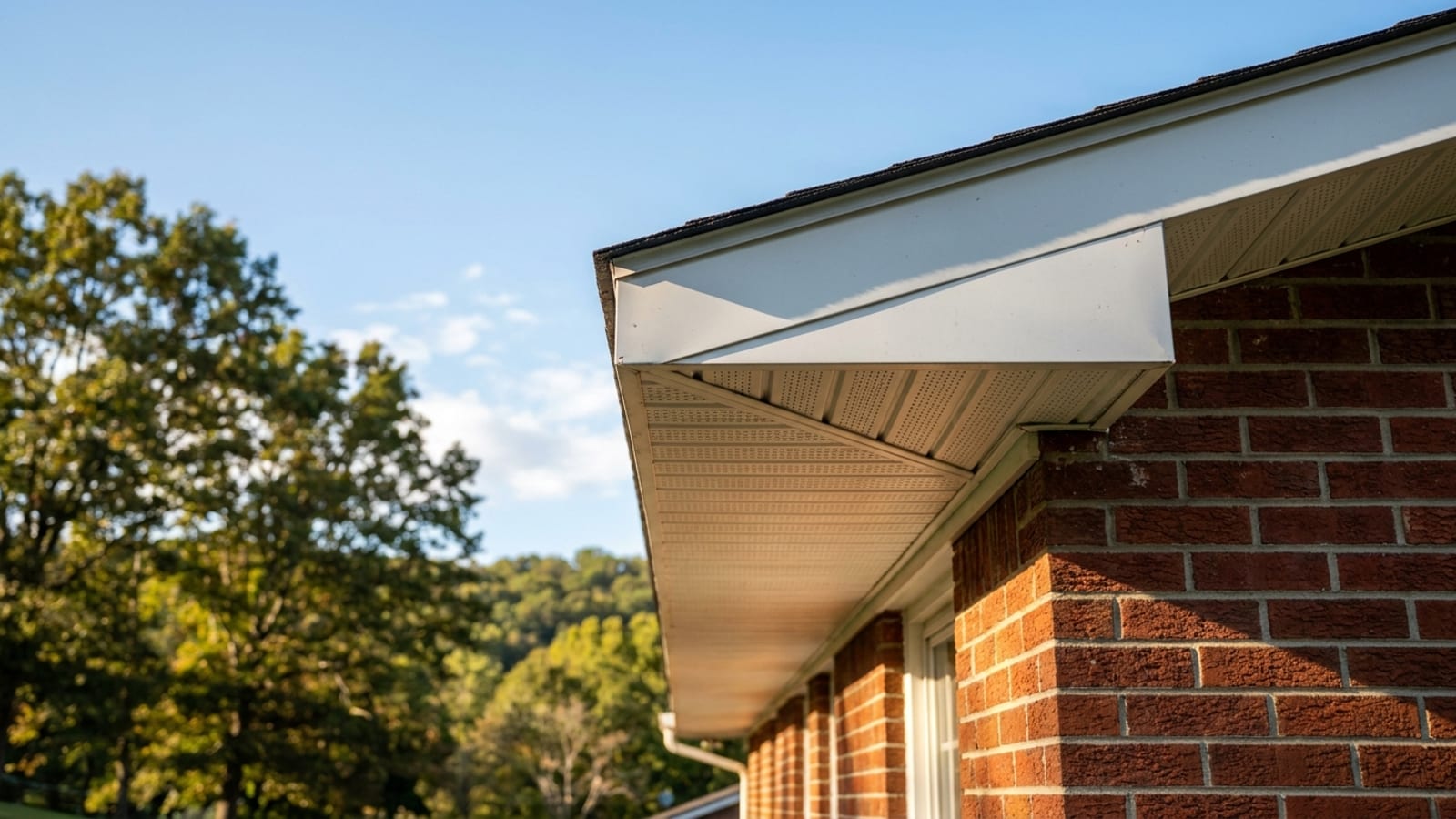
- New trim, corner boards, soffit and fascia
- Caulking, cleanup and a final walk-through
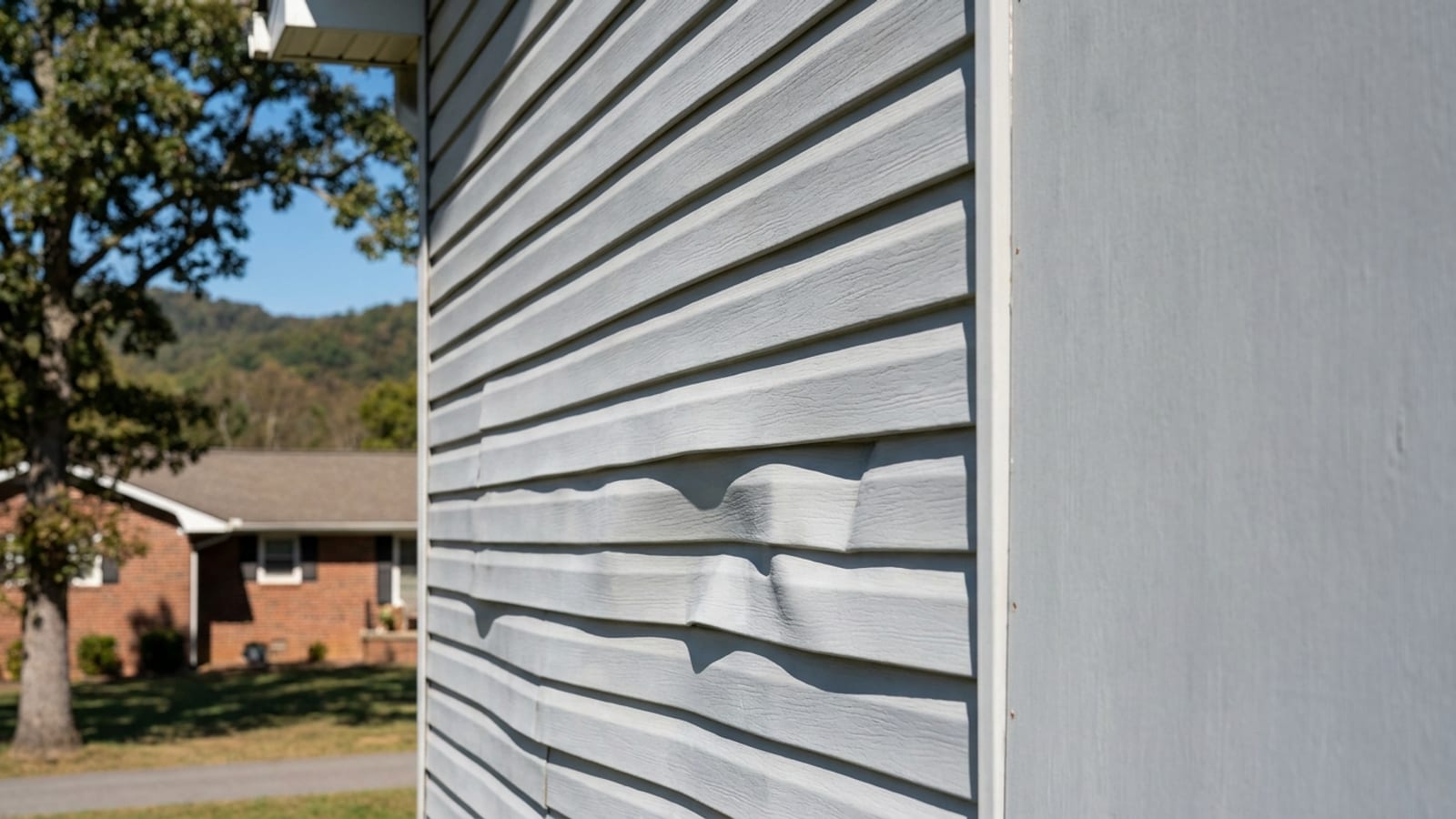
We do not side over existing siding, and we do not patch a failing system. Both approaches hide the wall instead of fixing it, and both put the manufacturer warranty at risk. Replacing the envelope as one system is the only version of this job that carries a real warranty behind it. Our siding work is covered for 30 years on material and labor under The Patriot's Promise.
If you want pricing and project detail specific to your part of Bradley County, the Cleveland siding page covers how we work in this market.
How do siding materials compare on cost and lifespan?
The material decision is the largest single lever on your total. Here is how the categories we install compare.
| Material | Relative installed cost | Typical lifespan | Best fit |
|---|---|---|---|
| Vinyl (Royal, Mastic) | Lowest | 20 to 40 years | Budget priority, simpler elevations, owners not staying forever |
| Insulated vinyl | Low to moderate | 20 to 40 years | Vinyl budget with a thicker panel and a flatter wall appearance |
| Everlast composite | Moderate to high | Long | Impact and moisture resistance with low maintenance |
| James Hardie fiber cement | Highest of the lap options | 30 to 50 years | Forever homes, detailed elevations, maximum durability |
| Stone veneer accents | Priced per area | Very long | Foundation bands, gables, column wraps and entry features |
Quality vinyl is roughly 40 to 70 percent cheaper installed than fiber cement, which is why the two ends of the $12,000 to $25,000 range are so far apart. Both are legitimate products. The honest deciding question is how long you plan to own the house. Under five years, vinyl usually makes more financial sense. Ten years or more, fiber cement tends to win on total cost of ownership because it holds color, resists impact and fire, and does not need a repaint cycle the way wood or aged vinyl does.
Where mixing materials makes sense
A common and perfectly reasonable compromise is fiber cement on the street-facing elevations and vinyl on the sides and rear. You get the appearance and durability where the house is seen and judged, and you hold the total down on the walls nobody photographs. We price it both ways so you can see what the upgrade actually costs rather than guessing.
What makes one Cleveland house cost more than another?
Square footage and number of stories
Wall area is the starting multiplier. A single-story ranch with simple rectangular elevations is the least expensive house shape to side. A two-story with gables, dormers and a bump-out costs more for the same floor plan, because the wall area is larger and the staging takes longer.
Trim and detail count
Trim is where siding quotes quietly diverge. Window and door surrounds, corner boards, frieze boards, rake trim, gable vents, light blocks and dryer vent blocks all take labor and material. A house with twenty openings costs meaningfully more to trim than a house with twelve, even if the siding square footage is identical.
Soffit and fascia condition
On older Cleveland homes, the fascia is often the first thing to fail because gutters overflow and water runs behind the board. If the fascia is soft, it gets replaced, not covered. Wrapping bad wood in aluminum is a short-term appearance fix and a long-term moisture problem.
What the sheathing looks like underneath
This is the honest variable. Until the old siding comes off, nobody knows what the wall looks like. Most houses are fine. Some have localized rot under a window, behind a gutter outlet, or at a deck ledger. We identify it, show you, and price the repair as its own line before we proceed. Nothing gets covered up quietly.
Does the Cleveland climate change the material decision?
Cleveland sits in the same Southeast Tennessee conditions as the rest of our service area: hot humid summers, long UV exposure on south and west walls, heavy spring and summer storms, and freeze and thaw cycles in winter. Three practical implications:
Color holding matters more here than in a milder climate. Fiber cement with a factory-applied ColorPlus finish holds color against Southeast sun better than field-painted wood or older vinyl. Chalked, faded vinyl that no longer cleans up is one of the most common reasons homeowners in this market call us.
Moisture management is the real job. The siding is a rain screen. The house wrap and flashing behind it are what keep the wall dry. A good crew spends as much attention on the water-resistive barrier and the window head flashing as on the panel layout, because that is the part you cannot inspect once the siding goes up.
Impact resistance earns its keep. Hail and wind-driven debris are a real factor in Bradley County springs. Fiber cement and composite handle impact better than thin vinyl, which is worth weighing if you have had storm damage before.
How long does the project take and what is it like to live through?
Most siding installations run 4 to 7 days depending on the size of the house and the amount of trim detail. The crew works elevation by elevation. The house stays livable the entire time, and your dates are committed in a signed timeline agreement between both parties before work begins, not a verbal estimate that slides.
Practical preparation on your side is modest: clear roughly six feet around the perimeter, move grills and patio furniture, take down anything hanging on exterior walls, and plan for vehicles to be parked away from the work zone.
How do homeowners in Cleveland pay for a siding project?
Siding is harder to phase than windows, because the envelope comes off and goes back on as a single system. That makes the conversation about spreading one number rather than splitting the work.
We offer financing through the GreenSky program, including no-interest-if-paid-in-full plans at 6, 15 or 18 months, a fixed 6.99 percent APR option over 60 months, and longer fixed-rate terms up to 144 months. Zero down is available for most approved homeowners, subject to credit approval. A second option is available through LevelCore. Promotional no-interest plans reward a payoff date you can realistically hit. Fixed-rate terms are for spreading the cost on purpose over years.
One budgeting note worth stating plainly: there is no federal tax credit for siding on work performed in 2026. Do not build a credit into your numbers.
What should a siding quote spell out before you sign?
Ask every bidder to put these in writing, then compare line by line instead of comparing bottom-line totals:
- The exact product line and manufacturer, not just "vinyl" or "fiber cement"
- Whether house wrap is included and which product
- Whether trim, soffit and fascia are included or quoted separately
- What happens if rotted sheathing is found, and at what rate
- The warranty term on labor, stated separately from the material warranty
- Who physically installs the job
- The start and completion dates, in writing
A lifetime material warranty paired with a one-year labor warranty is a much weaker promise than it sounds. Read the labor term first.
What is the next step?
Get one itemized number from a free in-home estimate. We measure the elevations, look at the current condition of your trim, soffit and fascia, show you actual siding samples in the light they will live in, and give you a single honest price with the scope spelled out. It is a sales appointment and we say so, but there is no two-hour pitch and no price that expires that night.
Schedule your free estimate at /get-estimate/ or call the Chattanooga office directly at (423) 654-4565.