Short answer
Replace the siding first in almost every case. A full siding replacement includes the trim, soffit and fascia, so any trim you paint beforehand gets pulled off and hauled away with the old cladding. Paint the trim first only when the siding itself is sound and you are simply refreshing an exterior you plan to keep for years.
Replace the siding first. In almost every case, painting the trim before a siding project is money spent on material that is about to be removed, because a full siding replacement takes the corner boards, window and door trim, frieze, soffit and fascia off with the old cladding and puts new ones back.
That is the short answer. The longer answer is worth reading, because the order of operations on an exterior project decides how much of your budget survives to the finished house, and the homeowners who get this wrong usually do it in good faith. The trim looked tired, a painter was available, and the siding conversation was still six months away.
Why does trim painting come after siding?
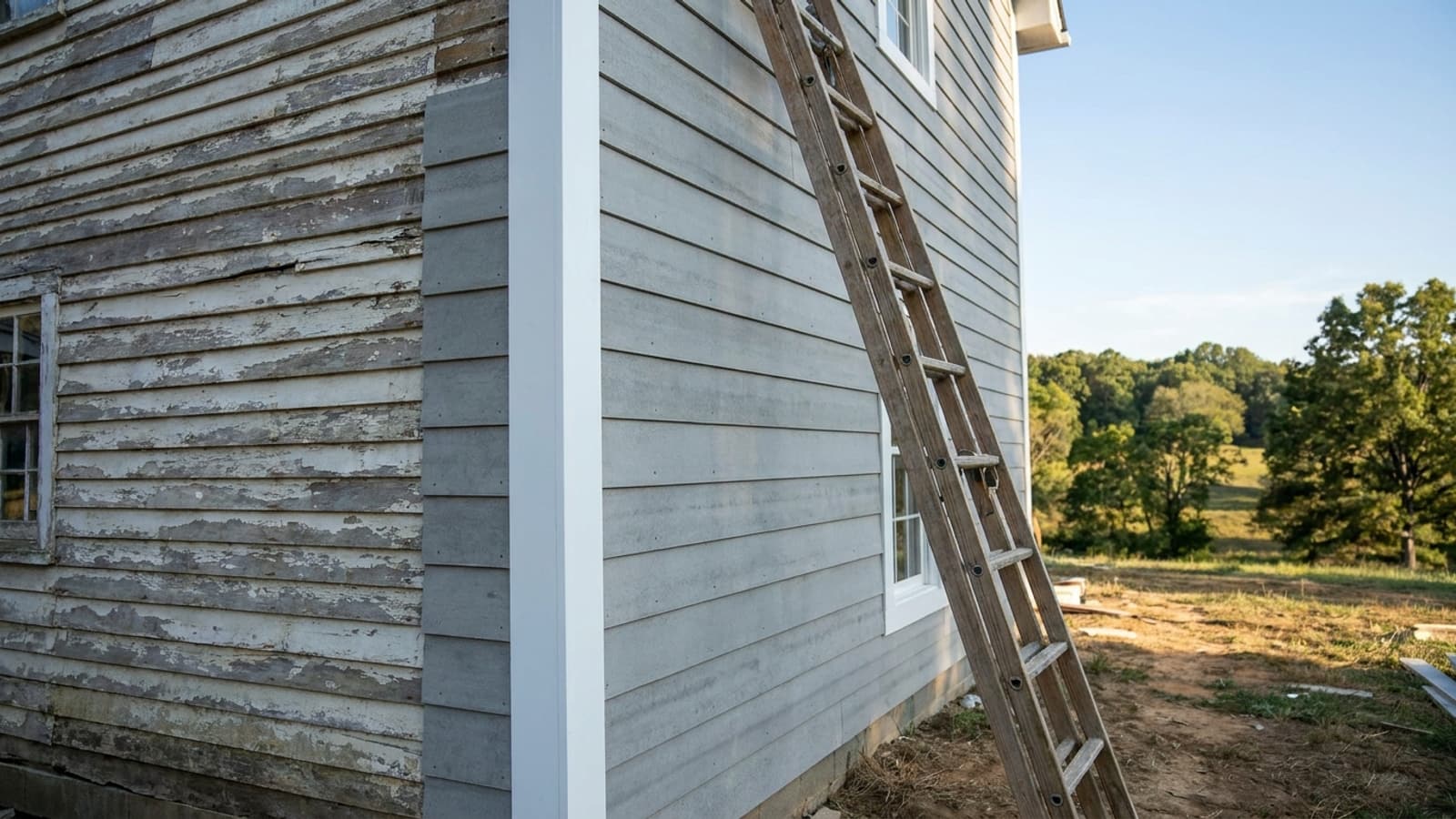
Trim is not a decoration applied to the wall after the siding goes up. It is part of the cladding system. Corner boards receive the cut ends of every course. Window and door trim establishes the plane the panels butt into and carries the flashing detail above the opening. The frieze board closes the top of the wall where it meets the soffit. On a full siding replacement, all of that comes off, because you cannot reliably install new panels into trim that was sized, fastened and sealed for the old ones.
So a trim paint job completed in spring gets demolished in fall. The paint was fine. The sequence was backwards.
There is a second reason that matters more over time. Painted wood trim on a Southeast exterior is a maintenance item forever. Sun, humidity and driving rain work on the south and west elevations constantly, and the butt joints and nail heads are where failure starts. When trim is replaced as part of a siding project, you get the chance to move to a material that is not on a repaint cycle at all. Fiber cement and composite trim, factory finished, changes the long-term math on the house. Painting the old wood first removes that choice before you have made it.
What actually counts as trim on a siding job?
Homeowners usually picture the white boards around the windows. The real list is longer, and every item on it affects the quote.
- Outside and inside corner boards
- Window and door surrounds, including head flashing and sill trim
- Frieze board where the wall meets the eave
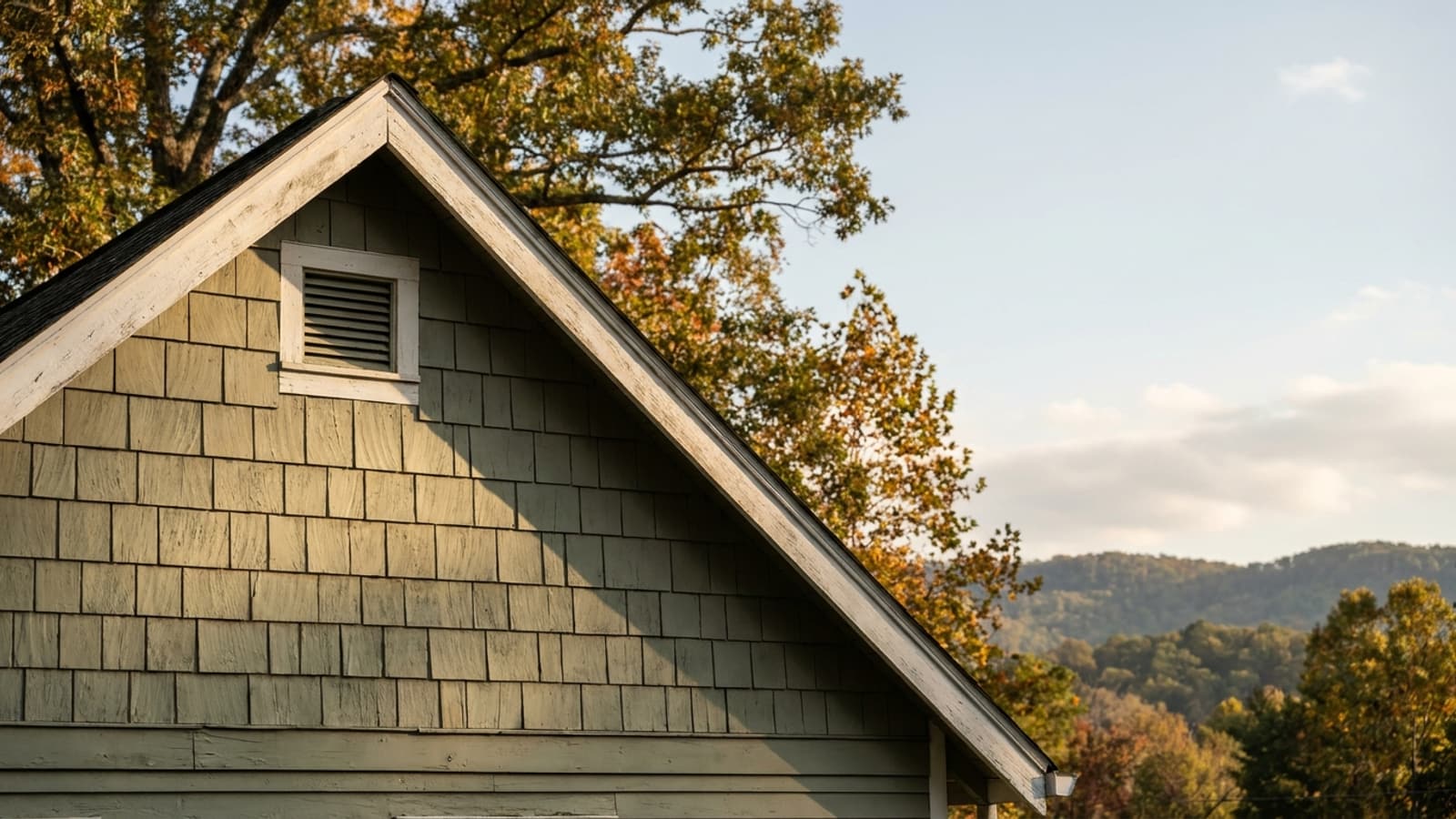
- Rake and gable trim
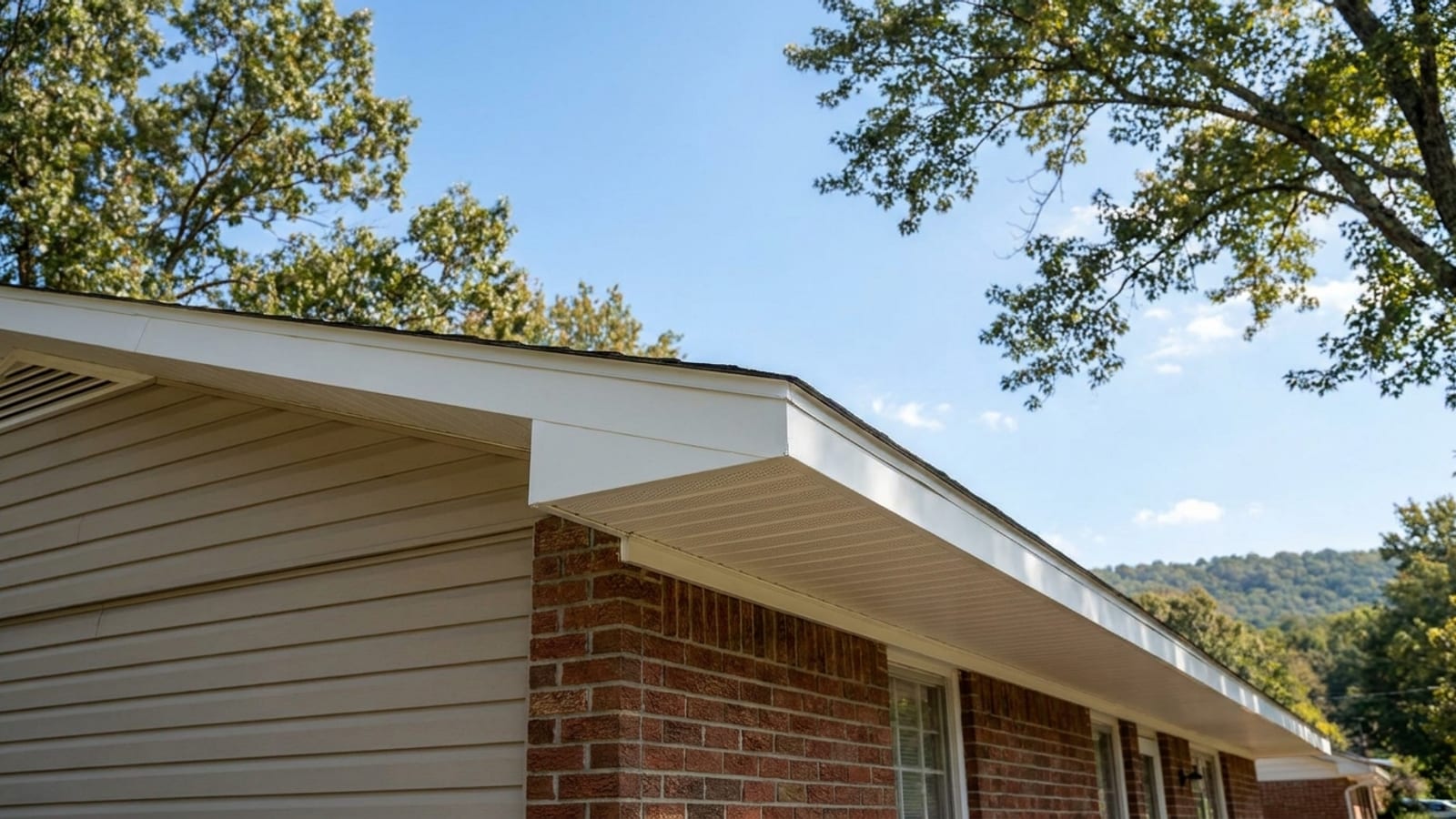
- Fascia along the eave and rake edges
- Soffit panels and their vents
- Band board between stories
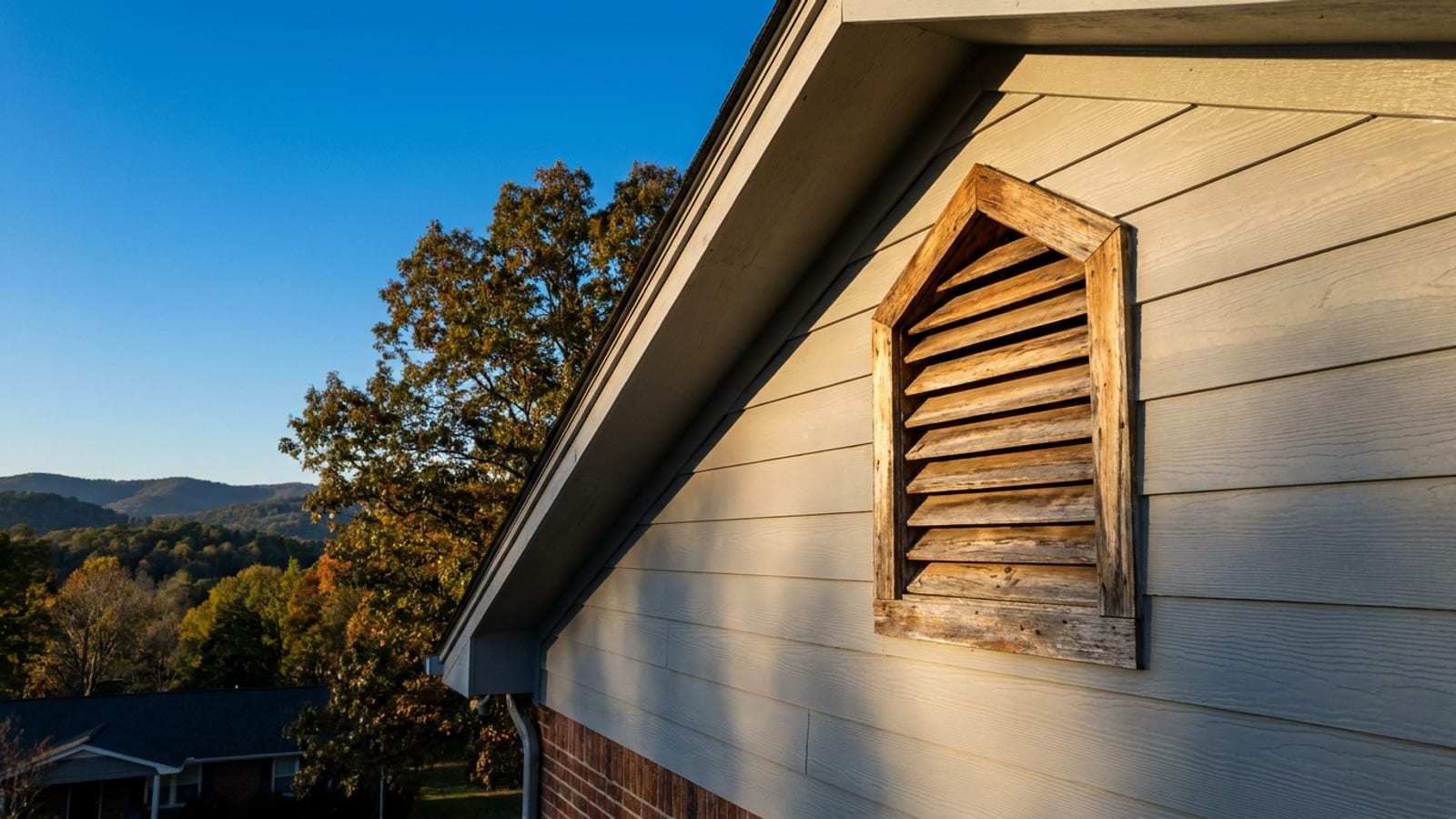
- Trim around gable vents, hose bibs, lights, meters and dryer vents
That list is why trim and detail work moves a siding price as much as square footage does. A simple two-story box with four corners and ten openings is a fast job. A house with dormers, bay projections, multiple gables and a wrapped porch has three times the linear footage of trim on roughly the same wall area, and trim is slower work than running courses of siding.
What is the correct order for an exterior project?
Work from the structure outward, and from the top of the wall down. The sequence below is the one that avoids rework.
- Roof repairs, if the roof is at the end of its life or leaking at the edge.
- Gutters removed so the fascia is accessible.
- Old siding and trim removed, sheathing inspected, any rot repaired.
- House wrap and flashing integrated as a continuous drainage plane.
- Windows and doors replaced, if they are part of the plan.
- New trim, soffit and fascia installed.
- New siding installed into the trim.
- Caulking, touch up and any site painting.
- Gutters reinstalled on sound fascia.
Step five is the one people forget. If new windows are anywhere in your five year plan, doing them while the siding is off is the cheapest version of that project you will ever be offered, because the exterior trim and flashing around every opening is already open and getting replaced anyway.
When does painting the trim first actually make sense?
There are real cases where paint comes first, and they all share one condition. The siding is staying.
| Situation | Do this first | Why |
|---|---|---|
| Siding is sound, trim looks tired | Paint the trim | Nothing is being removed, so paint survives |
| Siding is being fully replaced | Replace siding and trim together | Painted trim gets demolished |
| Selling in under a year, siding is serviceable | Paint and clean | Fastest cosmetic return on a sound wall |
| Soft spots, buckling, repeat patching | Replace, do not paint | Paint hides the symptom and seals in the moisture |
| Only one elevation has failed | Get the whole house evaluated | A single failed wall is often a water path issue |
| Chalked, faded vinyl | Replace | Once color has chalked, cleaning and coating are not durable answers |
The honest dividing line is whether the problem is appearance or performance. Appearance is a paint problem. Soft fascia, spongy walls, panels that have cupped away from the sheathing, moisture showing up on the inside of an exterior wall, or the same patch getting redone every two years are all performance problems, and paint has never fixed one.
What about soffit and fascia in the sequence?
Soffit and fascia sit above the siding and get hit by every gutter overflow and packed valley the roof produces. They are also the two pieces most often painted in isolation, because they are the easiest to reach from a ladder.
If the fascia is soft enough that a screwdriver sinks in, or the soffit panels sag or have separated at the frieze, that is replacement work, not paint. Doing it as part of the siding job is both cheaper and better sequenced, because the crew is already staged at that height, the gutters are already down, and the new fascia goes on before the gutters are rehung rather than around them.
Does prefinished trim change the decision?
It changes it significantly. Factory-finished trim and panels arrive with a coating applied under controlled conditions, which is a different product than paint rolled onto a wall in August humidity. As a James Hardie Alliance Select contractor, we install fiber cement to manufacturer spec, and we also offer Everlast composite along with Royal and Mastic vinyl, plus stone veneer where an elevation calls for it.
The practical effect is that for many homeowners, the trim painting question disappears entirely after a siding replacement. There is no trim to paint. That is worth knowing before you book a painter for boards that are coming off.
What does this cost and how do people pay for it?
A full siding replacement in our market typically runs $12,000 to $25,000 installed, and that number includes trim, soffit, fascia and house wrap rather than treating them as extras. Where a house lands in the range depends on square footage, number of stories, how much trim detail the elevations carry, and what the sheathing looks like once the old siding is off. Install time is usually four to seven days.
Siding is hard to phase, because the envelope comes off and goes back on as one system. That is why most homeowners treat it as one number to spread rather than a project to split. We offer financing through the GreenSky program, including no-interest-if-paid-in-full plans and fixed-rate terms, and the details are on our financing page. Zero down is available for most approved homeowners, subject to credit approval.
The work is backed under The Patriot's Promise, which on siding is a 30-year material and labor warranty with a signed timeline agreement and $2M insurance on the job.
What should you do if the siding decision is still a year out?
If the walls are genuinely sound and you simply want the house to look better this season, painting the trim is a reasonable move and it will hold. Clean the siding first, check the butt joints and the J-channel after storms, and keep gutters clear so water is not running behind the fascia all winter.
If you are not sure whether the walls are sound, that is the thing to resolve before you spend anything on paint. Press on the wall below windows and near the bottom course. Look at the north and east elevations, where mildew and moisture show first. Pull a downspout and look at what is behind it.
What is the next step?
Have someone walk the whole exterior and tell you which of the two projects you actually have. Schedule a free in-home estimate at /get-estimate/ or call (423) 830-7138. The estimator measures the elevations, checks the trim, soffit and fascia condition, and gives you one itemized number so you can decide the order of operations with a real figure in front of you instead of a guess.