Short answer
Shake and shingle siding costs more per square foot than lap siding of the same material, because the courses are shorter, the cut work is heavier and the corners take longer. Most homeowners in this region use it as an accent on gables, dormers, entry bump-outs and porch walls rather than on an entire house. A full siding replacement here typically runs $12,000 to $25,000 installed, and a shake accent sits toward the upper end of whatever scope you choose.
Shake and shingle siding costs more per square foot installed than lap siding made of the same material, and in most cases the sensible way to use it is as an accent rather than as the whole house. The texture reads beautifully on a gable, a dormer or a porch wall. Across 2,000 square feet of flat wall, it mostly reads as a much larger invoice.
That is the short version. Here is what actually drives the number, which material makes sense in this climate, and where the profile earns its cost on a Southeast home.
What is the difference between shake and shingle siding?
The two words get used interchangeably, and in product catalogs they usually mean two different textures of the same thing.
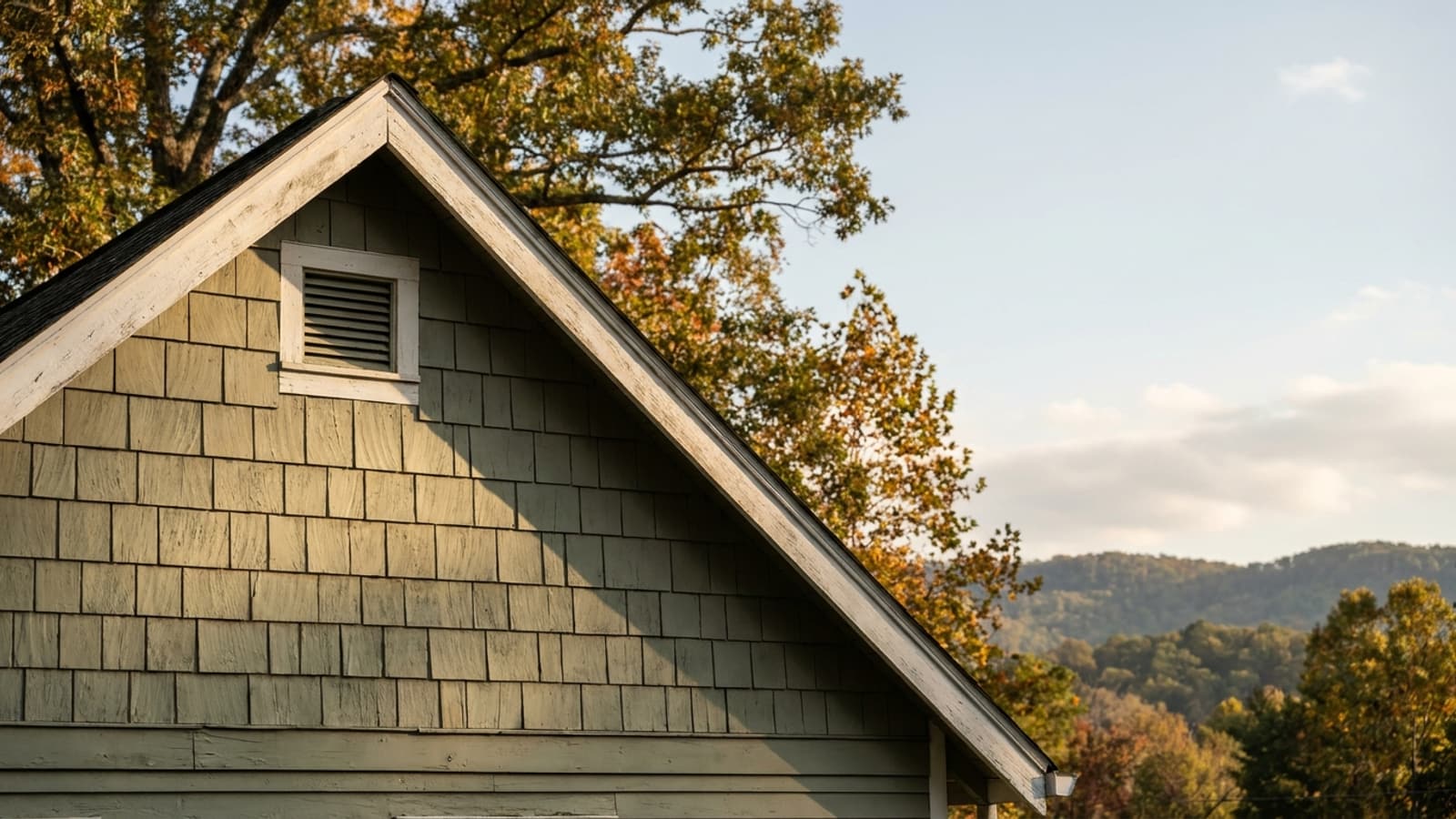
- Shake has a rough, hand-split look with irregular grain and varied thickness. It reads rustic, and it throws a heavier shadow line.
- Shingle is smoother and more uniform, with cleaner butt edges. It reads traditional, coastal or craftsman depending on how it is trimmed.
- Staggered edge describes how the butt ends line up at the bottom of each course. A straight edge is crisp and formal, a staggered edge is casual.
Modern siding in these profiles almost never comes as individual pieces. It comes in panels, typically several courses wide, that lock together and get nailed to the wall. The panel format is what makes the product affordable enough to consider at all, because installing true individual shakes one at a time is a labor bill most homeowners would not sign.
What does shake and shingle siding cost?
A full siding replacement in our Tennessee, Georgia and Alabama service area typically runs $12,000 to $25,000 installed, and that figure includes trim, soffit, fascia and house wrap, not just the panels. Where a specific house lands depends on square footage, number of stories, how much trim detail the elevations carry and what the sheathing looks like once the old cladding comes off.
Shake and shingle profiles move that number in a predictable direction. Expect the material itself to cost more per square than lap siding in the same product family, and expect the labor line to be higher on top of that.
Why the labor line is higher
Four things slow a shake installation down compared with lap siding.
- Shorter coverage per piece. More panels to handle, more fasteners, more alignment checks per wall.
- More cut work. Gables are where shake usually goes, and gables are all angles. Every course meets a rake at a different cut.
- Corner and trim detail. The texture has to die cleanly into corner boards and window trim, which takes more care than a flat lap edge.
- Pattern management. On staggered-edge product, the crew has to watch the repeat so the wall does not develop a visible pattern of identical panels.
None of that is exotic work. It is simply slower, and slower is what you are paying for.
Which material should the shake be?
All three of the material families we install are available in a shake or shingle profile. The right one depends mostly on how long you are staying and how much sun the wall takes.
| Material | Relative installed cost | Typical lifespan | Maintenance | Best fit |
|---|---|---|---|---|
| Vinyl shake panel | Lowest | 20 to 40 years | Annual soft wash | Budget-conscious accents, shaded gables, shorter ownership horizon |
| Composite shake | Middle | Long with low upkeep | Wash, occasional finish check | Homeowners who want deep texture without masonry-weight material |
| Fiber cement shingle | Highest | 30 to 50 years | Wash, repaint on primed product only | Forever homes, street-facing elevations, full-sun walls |
Fiber cement is the durability answer here. It will not melt against reflected heat, it resists impact and fire, and ordered with the factory ColorPlus finish it holds color through Southeast sun and humidity. We are a James Hardie Alliance Select contractor, which means the fiber cement goes on to the fastening, clearance and flashing details the manufacturer warranty requires rather than to whatever the crew did last week. James Hardie makes a shingle profile alongside its lap product, and the two are designed to be mixed on the same elevation.
Vinyl shake is a legitimate product and the right call on a budget, particularly on a shaded gable where heat and fade pressure are lower. Everlast composite sits between the two. We price more than one option at the estimate rather than steering every house to the same answer.
Where does shake siding actually look right?
The profile has specific jobs on a Southeast house, and it does them well.
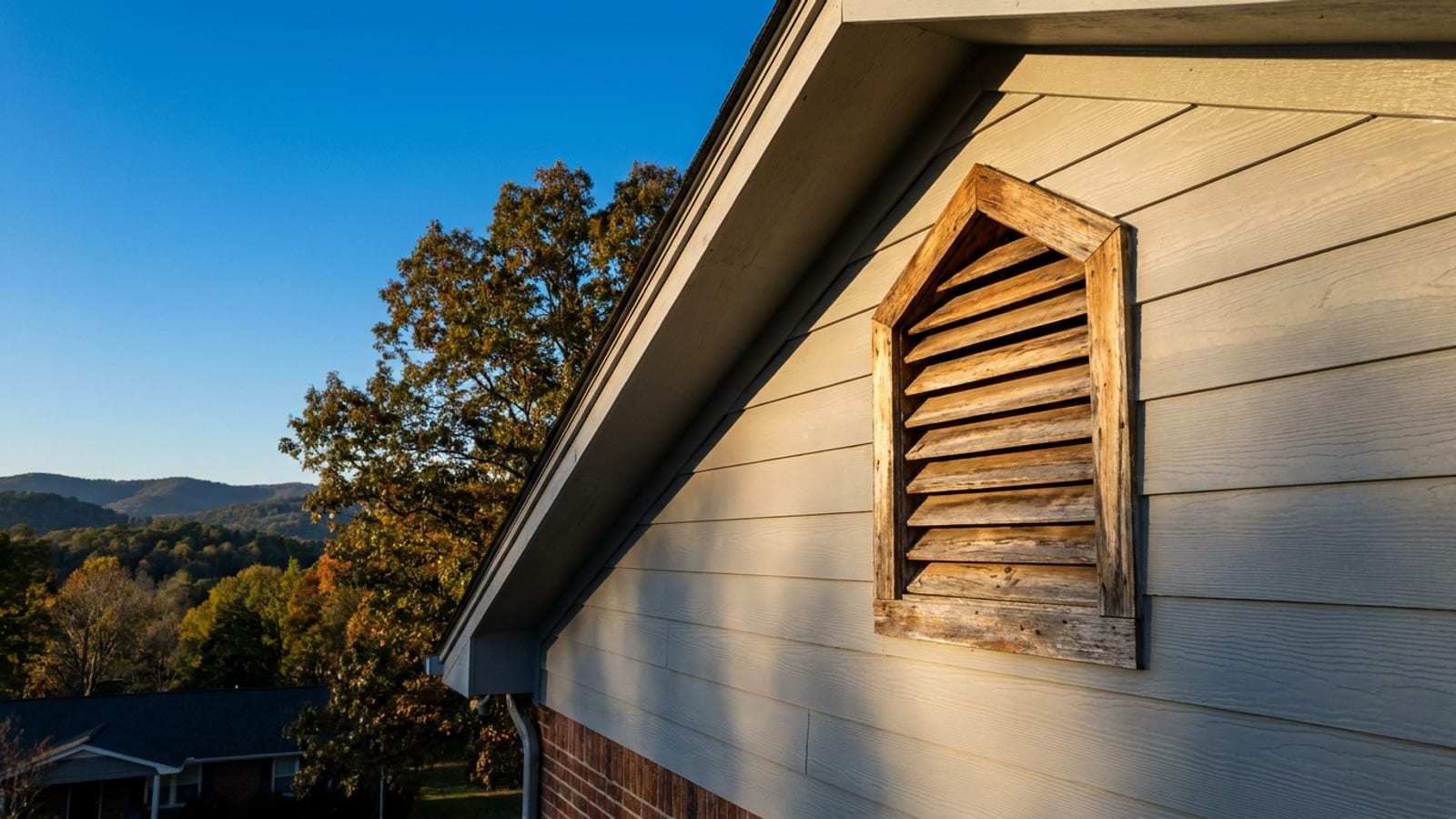
- Gable ends above lap siding. The single most common and most reliable use. It breaks up a two-story wall and gives the roofline something to do.
- Dormers. Small surfaces where texture reads at full strength and the square footage stays tiny.
- Entry bump-outs and porch walls. The area a visitor stands closest to, which is where texture pays.
- Craftsman and cottage elevations. Shingle over a belt band is close to the original vocabulary of the style.
- Bay and bow window skirting. A small, visible surface that lap siding tends to make look busy.
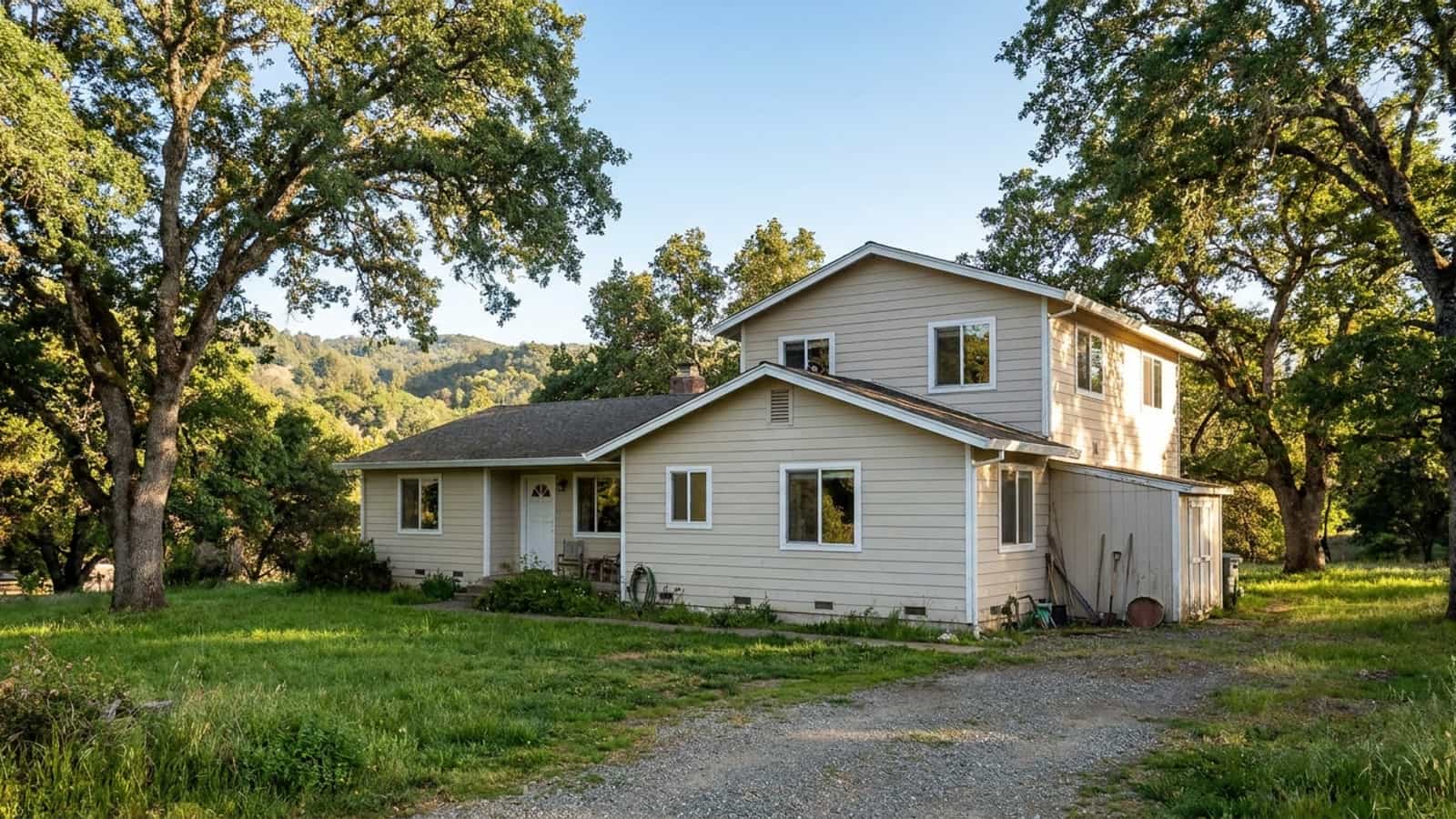
Where it tends to miss: wrapping an entire 1990s two-story subdivision house. The texture loses impact when there is nothing plain next to it, and the cost climbs the whole way around.
How does it hold up in our climate?
The failure mode to worry about in Tennessee, Georgia and Alabama is not the panel. It is water getting behind the panel and staying there. Gables are high, hot and exposed to wind-driven rain, and the rake and roof-to-wall junctions above them are where leaks start.
That is why we do full envelope replacement only. The old cladding comes off, the sheathing gets inspected and repaired where it is soft, house wrap goes on, flashing gets tied in at every penetration and transition, and then the siding goes up. Shake panels installed over a wall nobody looked at will perform exactly as well as the wall underneath them, which is to say eventually not at all.
Clearances matter too. Fiber cement wants its specified gap at roofs, decks and grade. Vinyl needs room to move with temperature, which is why the nailing is deliberately not tight. Both details are invisible on install day and decisive ten years later.
Is a shake accent worth the upcharge?
Usually yes, if it is contained. A gable and dormer package in a shingle profile over lap siding on the field walls adds a modest percentage to a siding project and changes the elevation more than any paint color will. The same money spread as an all-shake wrap buys far less visible change per dollar.
The upkeep math also favors the accent. Factory-finished fiber cement and quality vinyl both want about the same annual soft wash that the rest of your siding gets, so a mixed elevation does not create a second maintenance schedule. Our siding work carries a 30-year material and labor warranty under The Patriot's Promise, and a mixed-profile job is warranted as one system, not as two separate products stuck to the same house.
How do homeowners pay for it?
Siding is hard to phase, because the whole envelope comes off and goes back on at once. Most homeowners here either pay cash, use a home equity line, or use contractor-arranged financing through the GreenSky program, which includes no-interest-if-paid-in-full plans at 6, 15 or 18 months and fixed-rate terms starting at 6.99% APR, with zero down for most approved homeowners and credit approval required. If you can realistically clear the balance inside the promotional window, the short plans are the cheapest money available. If you cannot, pick the fixed term on purpose rather than by accident.
One budgeting note: there is no federal tax credit to plan around for siding work performed now. Budget the real number.
What is the next step?
Get the elevations measured and priced with the shake areas broken out as their own line, so you can see exactly what the texture is costing you and decide where it goes. Schedule a free in-home estimate at get an estimate or call the office, and you will get one itemized number covering the siding, the trim, the soffit and fascia and the house wrap, with the install dates committed in writing before anyone starts.