Short answer
A full siding replacement on a 2,000 square foot house typically runs $12,000 to $25,000 installed in our market, including trim, soffit, fascia and house wrap. Vinyl jobs land in the lower part of that range and James Hardie fiber cement lands in the upper part. The biggest swing factors are how many stories the house has, how much trim detail the elevations carry, and what the sheathing looks like once the old siding comes off.
A full siding replacement on a 2,000 square foot house typically runs $12,000 to $25,000 installed across Tennessee, North Georgia and Northeast Alabama, and that figure includes trim, soffit, fascia and house wrap rather than just the panels on the wall. Where your house lands inside that range comes down to four things: the actual wall area, the number of stories, how much trim and detail the elevations carry, and what the crew finds under the old siding.
That is a wide spread, and homeowners are right to want it narrowed. The rest of this post explains what moves the number in each direction so you can tell roughly where your house sits before anyone measures it.
Why does floor square footage not equal siding square footage?
This is the first thing to straighten out, because "2,000 square feet" describes the inside of the house and siding is sold and installed by the square foot of exterior wall. The two numbers are rarely close.
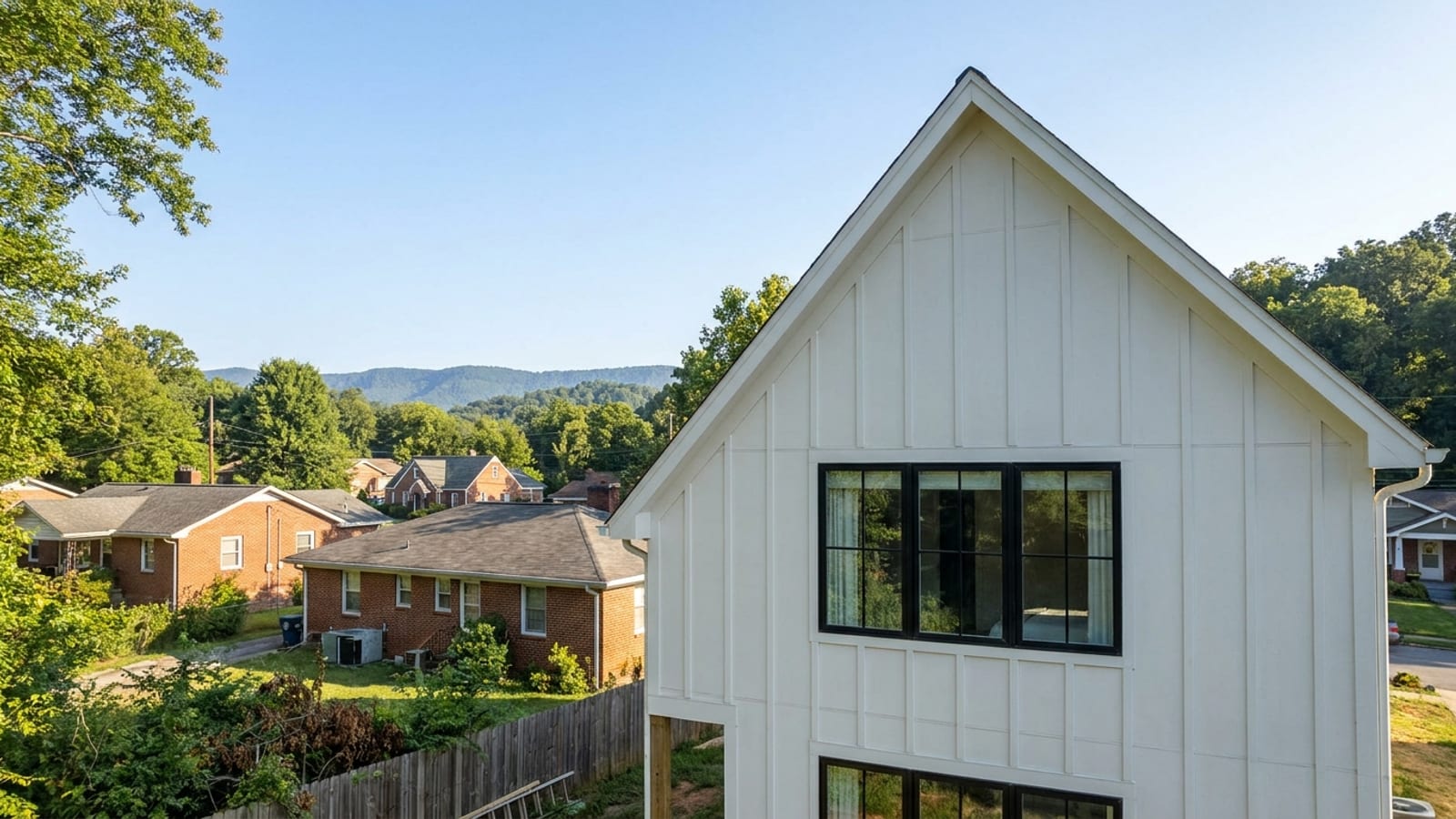
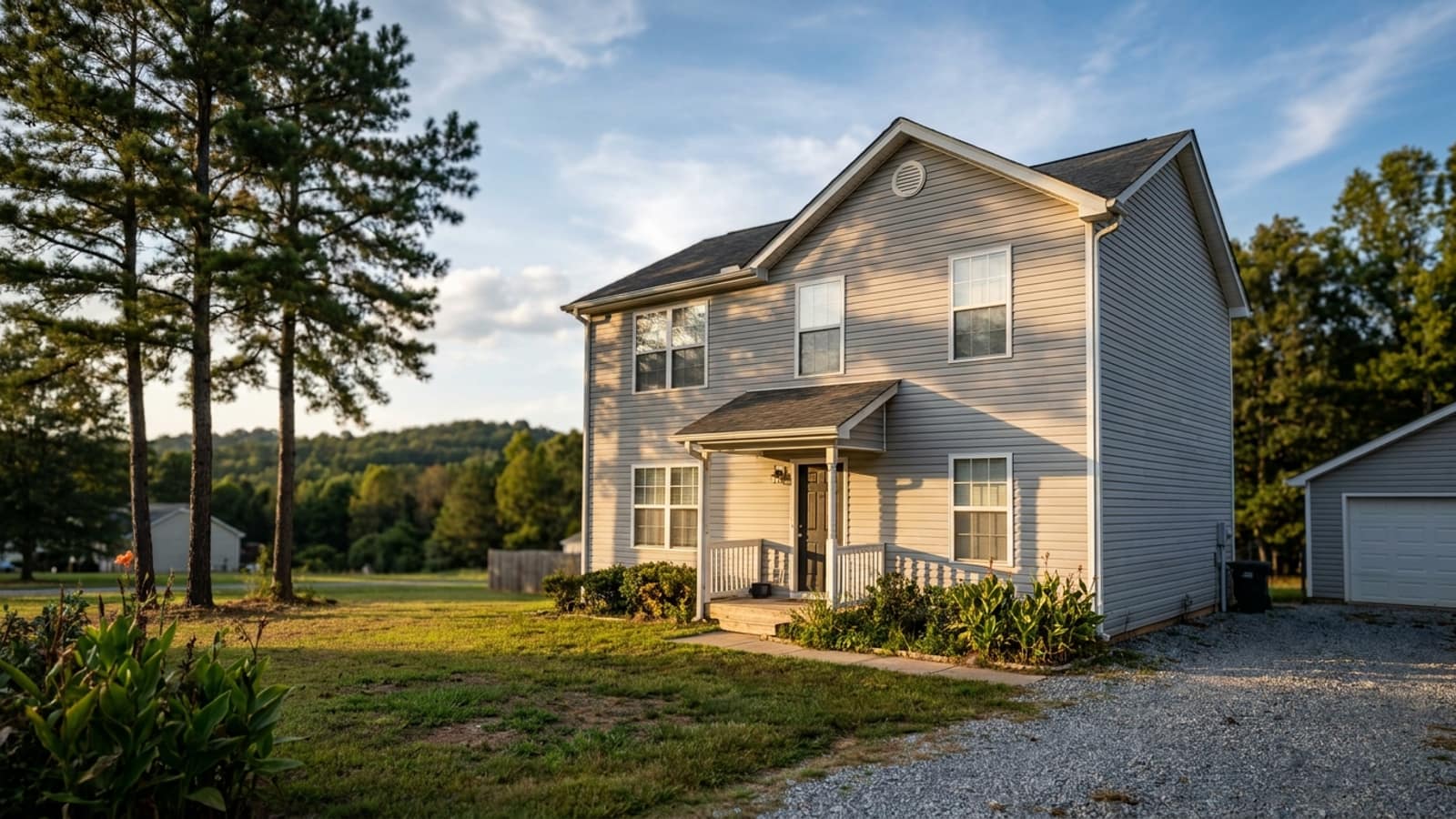
A two-story 2,000 sq ft house has a footprint of roughly 1,000 square feet, so the walls that need cladding wrap a smaller box twice as high. A one-story 2,000 sq ft ranch has a footprint of 2,000 square feet, which means a longer perimeter and more wall to cover at ground level. Gables, dormers, bump-outs and a walkout lower level all add wall area that never shows up in the floor plan.
How to estimate your own wall area
A rough estimate you can do in ten minutes with a tape measure:
- Walk the perimeter of the house and add the wall lengths to get the total perimeter in feet.
- Multiply the perimeter by the wall height — roughly 9 to 10 feet per story.
- Add about 40 to 60 square feet for each gable end.
- Do not subtract for windows and doors. Those openings still require trim, flashing and cut work, so the labor does not go away.
Most 2,000 sq ft homes we price on siding replacement come out somewhere between 1,800 and 2,600 square feet of wall. That is the number a crew actually works from.
What does each material cost on a house this size?
The material decision moves the total more than anything else you control. Everything below sits inside the same $12,000 to $25,000 installed envelope for a typical home — the difference is where in that envelope it lands.
| Material | Where it lands in the range | Typical lifespan | Maintenance |
|---|---|---|---|
| Royal or Mastic vinyl | Lower portion | 20–40 years | One soft wash a year |
| Everlast composite | Middle | Long-term; see product literature | Wash; holds color well |
| James Hardie fiber cement | Upper portion | 30–50 years | Wash; ColorPlus finish holds color |
| Stone veneer accents | Adds to any of the above | Very long | Minimal |
Quality vinyl is roughly 40 to 70 percent cheaper installed than fiber cement, so on a 2,000 sq ft house the gap between a good vinyl job and a full James Hardie job is the single largest line item in the decision. Both are legitimate products. The honest deciding question is how long you plan to own the house: under five years, vinyl usually makes more sense; ten years or more, or a forever home, fiber cement generally wins on total cost of ownership.
Mixing is also a normal, legitimate answer. Fiber cement on the street-facing elevations and vinyl on the sides and rear gets most of the curb appeal for a good deal less than doing the whole envelope in fiber cement. Product literature for each line is in our brochures if you want to compare boards and profiles before the estimate.
What is actually included in an installed price?
A siding number that only covers panels is not a siding number. On a full replacement, the installed price should account for all of this:
- Removal and disposal of the existing siding
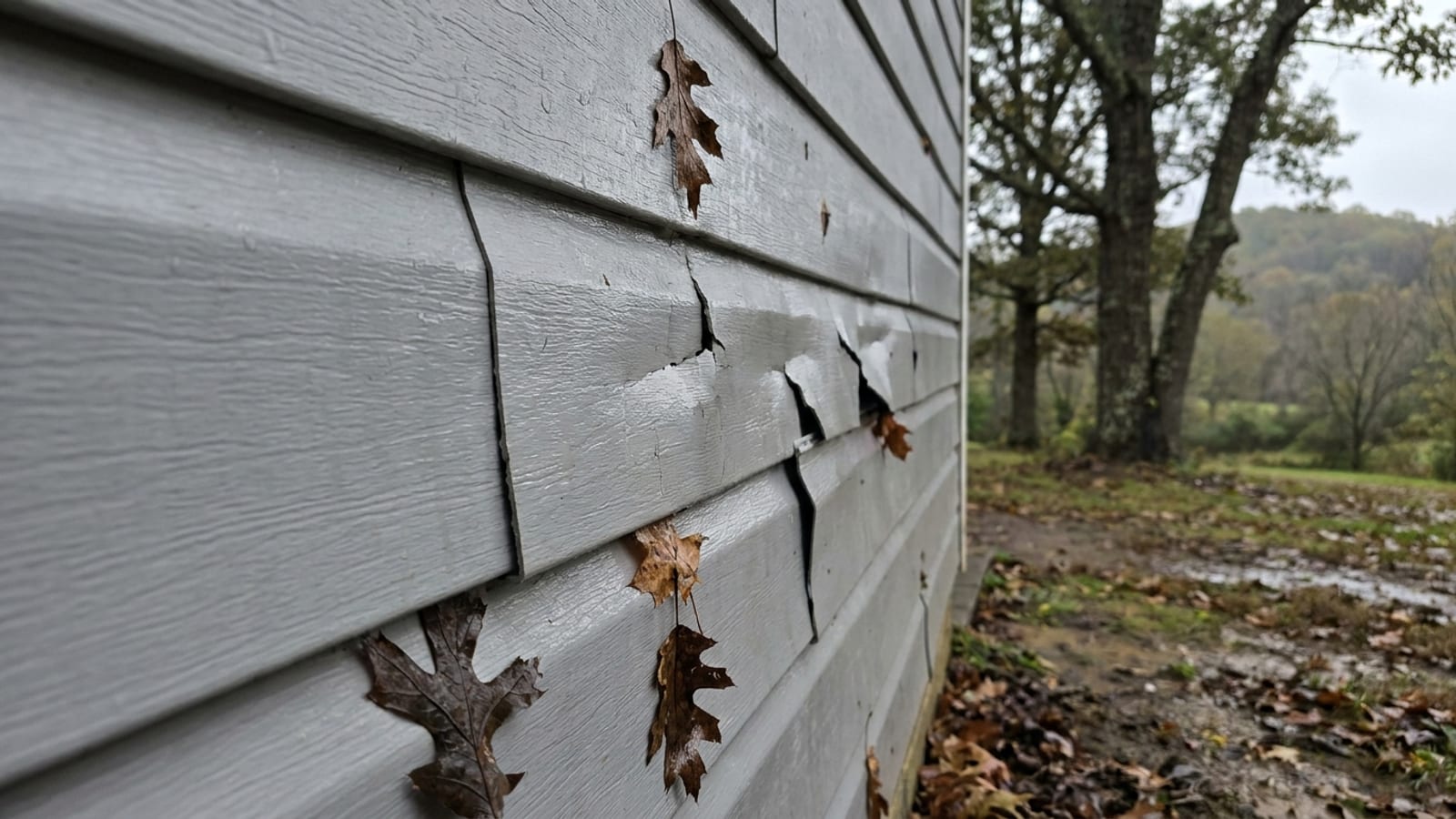
- Inspection of the sheathing, with rot and water damage addressed before anything new goes up
- A full house wrap system, properly lapped and integrated with flashing
- Flashing at every window, door, deck ledger and roof-to-wall transition
- Corner boards, band boards and window and door trim
- Soffit and fascia
- Fasteners, clearances and joint details installed to manufacturer spec
- Cleanup, including magnetic sweep for nails
That list is the difference between a cladding replacement and a wall system replacement. It is also why we do full replacement only and never side over an existing layer — covering old siding means nobody inspects the sheathing, no house wrap goes on, and most manufacturer warranties will not cover the assembly.
What pushes a 2,000 sq ft house toward the top of the range?
A second story
Two stories means staging, ladders and lifts, slower material handling, and more time per square foot than the same area at ground level. Two-story houses consistently price higher than single-story houses of similar wall area.
Trim and detail count
This is the factor homeowners underestimate most. A simple rectangular elevation with four windows goes fast. The same wall area broken up by bay windows, a wrapping porch, multiple gables, dormers, decorative brackets and a dozen small openings takes far longer, because every opening and every corner is a cut, a flash and a trim detail. Trim work is labor, and labor is where the hours pile up.
The condition of the sheathing
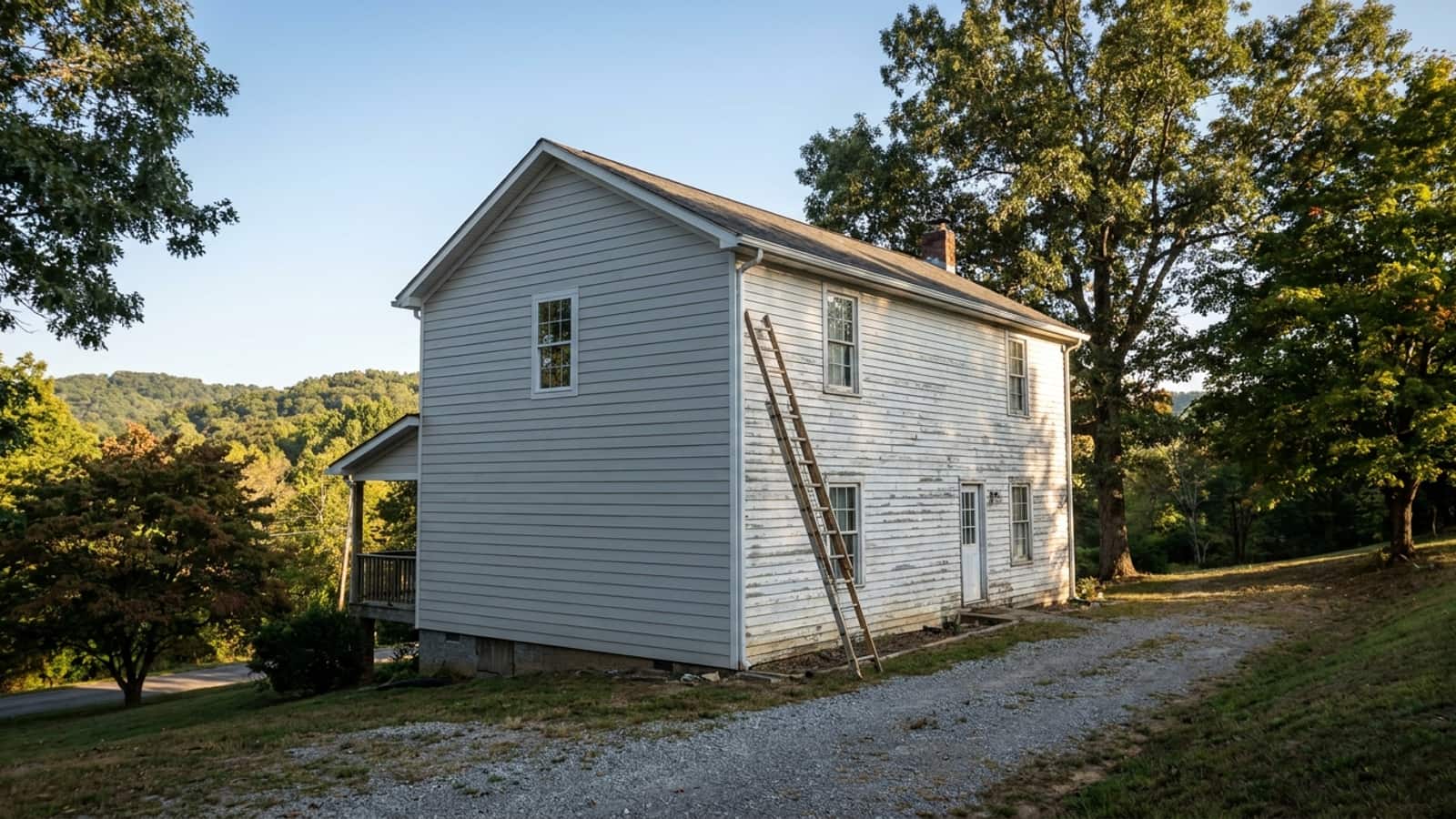
Nobody knows what is behind the old siding until it is off. If the sheathing is sound, you are on the original plan. If gutters have been overflowing for years, if a deck ledger was never flashed, or if a wall has soft spots, that repair is real work and it has to happen before new material goes on. Repairs are the most common reason a siding project moves within its range after the start date.
Access and site conditions
A house tight to a property line, built into a hillside, or surrounded by mature landscaping is slower to work than one with open ground on all four sides.
How long does the work take?
Most siding installations run four to seven days depending on size. A 2,000 sq ft house sits comfortably inside that window unless the sheathing needs substantial repair. You get committed dates in a signed timeline agreement rather than a verbal window, and the crew works the envelope in sections so the house is never left open.
The warranty term matters as much as the schedule. Siding through Patriots' Pride carries a 30-year material and labor warranty under The Patriot's Promise. When you compare quotes, read the labor term specifically — a long material warranty paired with a one-year labor warranty is a much weaker promise than it looks, and installation details are what most service calls turn out to involve.
How do homeowners pay for a project this size?
Siding is harder to phase than windows, because the whole envelope comes off and goes back on as one system. That means the decision is usually about how to spread one number rather than how to split the work.
Most homeowners use cash, contractor-arranged financing, a home equity line, or an insurance claim when the damage is storm-related. Our financing runs through the GreenSky program, with no-interest-if-paid-in-full plans at 6, 15 or 18 months and fixed rates starting at 6.99% APR, zero down for most approved homeowners and subject to credit approval. The promotional plans reward a payoff date you can realistically hit. The fixed-rate terms are for spreading the balance on purpose.
One budgeting note worth stating plainly: there is no federal tax credit for siding on work performed in 2026. Do not build one into your numbers.
What should the quote look like?
Ask for these lines in writing before you sign anything:
- Exact product line and profile, not just "vinyl" or "fiber cement"
- Measured wall area the price is based on
- Whether trim, soffit and fascia are included or priced separately
- The house wrap and flashing specification
- How sheathing repair is handled and priced if it is found
- Term for material and labor
- Who physically installs it
- Start and completion dates
Once two quotes agree on those lines, the price difference finally means something.
What is the next step?
A measured, itemized number takes a walk around your house. Schedule a free in-home estimate and we will measure the elevations, look at the trim and soffit condition, talk through vinyl versus fiber cement for how long you plan to stay, and leave you with one itemized price and a timeline. It is a sales appointment, and it is also the only way anyone can give you a real number for your walls instead of a range for somebody else's.