Short answer
Start with the brick, not the siding sample. Identify whether your brick leans warm (red, orange, pink, tan) or cool (gray, brown-gray, white-washed), then choose a siding color in that same temperature family so the two read as one house. Trim and soffit are a separate decision and usually do more visual work than the siding color itself.
Start with the brick. On a partial-brick house — brick on the first floor with siding above, or brick on the front with siding on the sides and gables — the brick is the fixed element. You are not choosing a siding color in a vacuum; you are choosing a color that has to live next to several thousand square feet of something you cannot change.
That sounds obvious, and homeowners still do it backward. They fall for a siding color in a brochure, hold the sample against the wall in the driveway, decide it looks fine, and then spend the next decade noticing that the house looks like two houses stapled together. The fix is a method, not a longer list of color names.
How do you read the undertone in your brick?
Brick is almost never one color. Pull up close to a wall and you will see a range — some units darker, some lighter, flashes of orange or purple or gray in individual bricks. Step back thirty feet and all of that blends into one impression. That blended impression is what your siding has to agree with.
The question to answer is simple: is the overall read warm or cool?
- Warm brick leans red, orange, salmon, pink, buff or tan. Most brick built in Tennessee and North Georgia from the 1950s through the 1980s is warm.
- Cool brick leans gray, charcoal, brown-gray, taupe or white. Newer construction, tumbled brick and lime-washed or German-schmear brick usually reads cool.
The reliable way to tell is comparison, not staring. Hold a sheet of plain white printer paper flat against the brick in daylight. Against true white, a warm brick will show its orange or pink immediately, and a cool brick will show its gray. Your eye adjusts to a wall it looks at every day; white paper does not.
The mortar is half the color
Homeowners underestimate mortar. On a standard wall, mortar joints are roughly 15 to 20 percent of the visible surface, and mortar is usually far lighter than the brick. Gray mortar cools a warm brick down. Buff or cream mortar warms it up further. White mortar on red brick reads pink from the street in a way that a single brick in your hand never does.
So read the wall, not the unit. Take a photo from the curb, look at it on your phone, and judge the color the way a neighbor driving past sees it.
Check it in two lights
Southeast sun is intense and directional. A brick wall that looks warm brown at 8 a.m. can look flat gray at 6 p.m. Look at your brick at least twice — once in direct sun and once in shade or overcast. If the two readings disagree, trust the shaded one, because that is the color with the sun's warmth removed.
Which siding colors work with which brick?
The general rule is to stay in the same temperature family. Warm brick wants warm-leaning siding. Cool brick wants cool-leaning siding. Mixing a cool gray siding over a distinctly orange-red brick is the single most common way a color scheme goes wrong, because the two colors fight instead of blending.
| Brick reads as | Common in this market | Siding directions that agree | Directions that usually fight |
|---|---|---|---|
| Red / orange | 1950s–1980s ranches and colonials | Warm creams, greige, soft sage, olive, warm tan, deep bronze | Cool blue-grays, stark bright white, lavender-grays |
| Salmon / pink | Mid-century brick, often with white mortar | Warm off-whites, khaki, muted green, warm brown | Cool grays, pure white, anything with a blue base |
| Buff / tan | Common on split-levels and 1970s builds | Warm whites, soft browns, sage, muted gold-greens | Cool charcoal, blue-gray |
| Brown / chocolate | Tudor-influenced and 1970s stock | Cream, warm beige, deep green, warm charcoal | Cool white, pastel tones |
| Gray / charcoal | Newer construction, tumbled brick | Cool whites, true grays, navy, black, cool greige | Warm creams, yellow-based tans |
| White / lime-washed | Painted and schmeared brick | Almost anything — treat brick as neutral | Very close near-whites that read as a mismatch |
The last row deserves a note. Painted or lime-washed brick behaves like a neutral background, which opens the whole palette. The trap is picking a siding white that is close to the brick white but not the same. Slightly-off matches look like a mistake. Either match closely and deliberately, or go clearly different.
Should the siding match the brick or contrast with it?
Three approaches work. Picking one and committing is more important than which one you pick.
Blend. Siding within a few shades of the brick, same temperature. The house reads as one mass. This is the safest choice on homes where the siding area is large — full second stories, big gable walls — because a strong contrast up high can make the house look top-heavy.
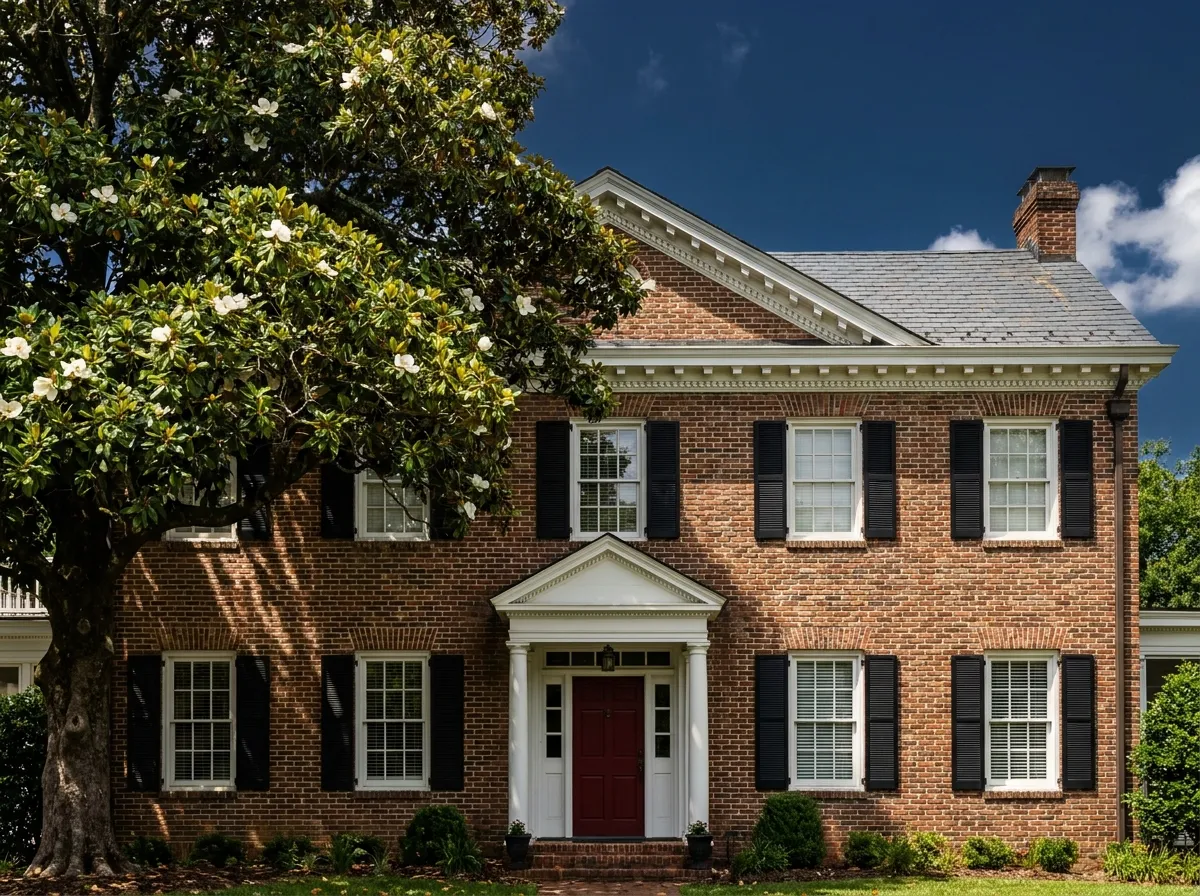
Step lighter. Siding noticeably lighter than the brick, same temperature. Cream over red brick, warm white over brown brick. This is the most common scheme on colonials and two-stories in this region, and it holds up because it is a value contrast rather than a color contrast.
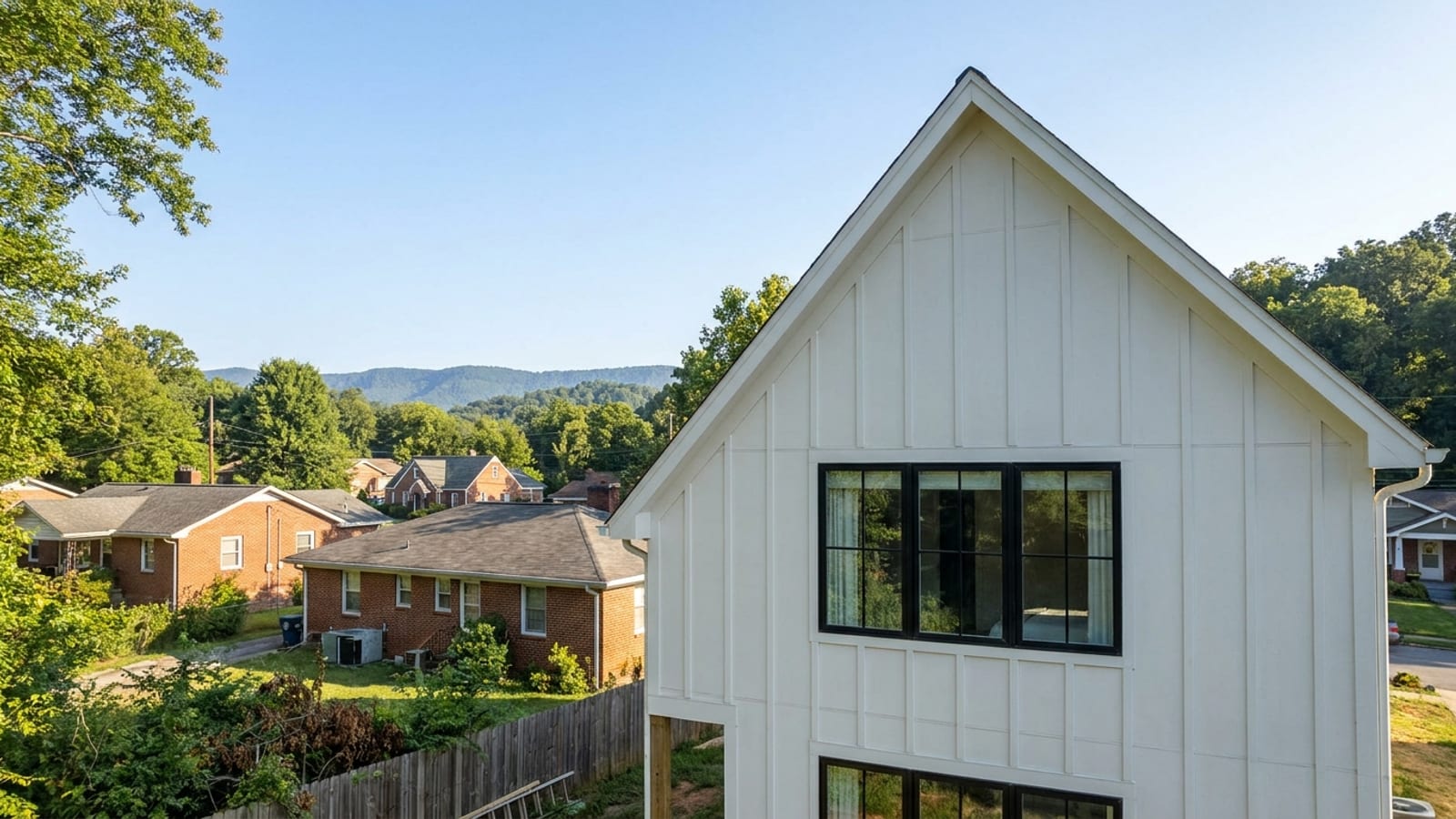
Deliberate contrast. A deep, saturated siding color against the brick — dark green, bronze, near-black on gables and dormers. This works when the siding area is limited to gables, dormers and accents. On a small area, a bold color reads intentional. On an entire second story, it reads heavy.
What rarely works is a mid-tone siding that is close to the brick in lightness but different in temperature. There is no contrast to explain the difference, so it just looks like the wrong color.
What do you do about trim, soffit and fascia?
This is where most of the visual work happens, and it is a separate decision from the field color.
On a brick house, trim does two jobs. It frames the windows and doors so they do not float against brick, and it draws the line between the brick and the siding. A crisp trim color at that transition — a water table, a band board, a belly band — makes the two materials look like a designed pairing instead of two things that met by accident.
A few practical rules:
- Trim wants to be the lightest or the darkest element, not the middle. Middle-value trim disappears.
- Match your trim white to your brick's temperature too. Warm brick takes a warm white; cool brick takes a cleaner white. There are dozens of whites and they are not interchangeable next to brick.
- Soffit does not have to match trim. Soffit sits in permanent shade and reads darker than the sample. Many homeowners go a shade lighter on soffit specifically so it does not go muddy up under the eave.
- Fascia should match trim, not soffit. Fascia is in direct sun and is one of the first things the eye reads on a roofline.
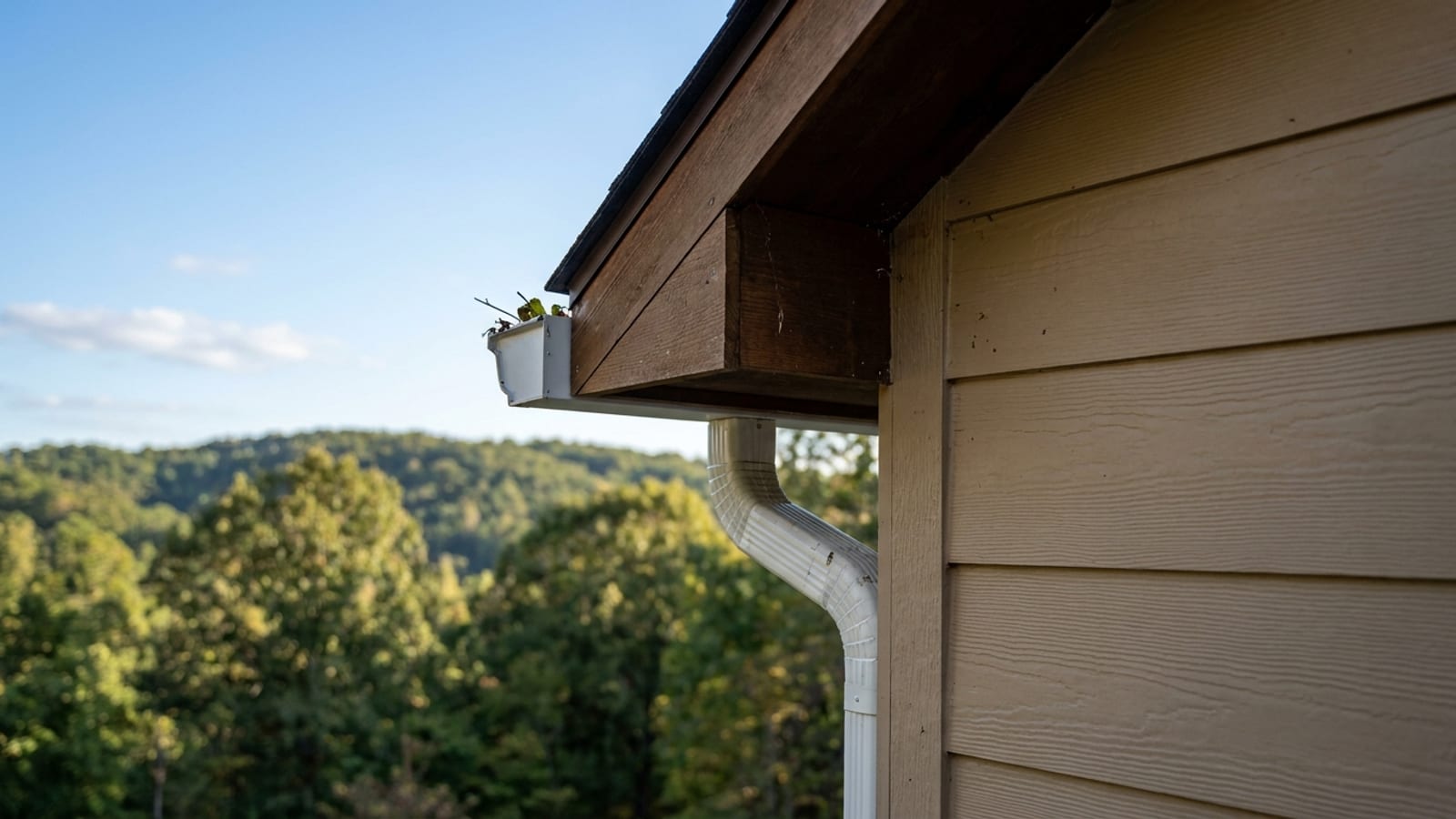
- Gutters and downspouts count. They run the full length of the fascia. If they are staying, they are part of the color scheme whether you planned for it or not.
We replace the full envelope on every siding job — trim, soffit, fascia and house wrap — so all of these are on the table at the same time rather than left as mismatched leftovers.
Does the siding material change the color decision?
Somewhat. James Hardie fiber cement in the ColorPlus finish is baked on at the factory, which is why it holds its color against Southeast sun and humidity better than field-applied paint. As a James Hardie Alliance Select contractor we install it to warranty spec, and the finish comes in a defined palette — a real constraint, but a helpful one, because those colors were chosen to work together.
Vinyl works differently. Royal and Mastic offer wide color selections, and quality vinyl is a legitimate product with a 20 to 40 year lifespan. Historically, dark vinyl colors have been more prone to fading than light ones, so if you are set on a deep color, ask specifically about the fade warranty on that shade. Everlast composite and stone veneer accents open further options if you want texture as well as color at the brick-to-siding transition.
Test the color on the actual house
Never choose from a two-inch chip. Get the largest sample your installer can provide, and look at it three ways:
- Vertically against the brick, not lying flat on the ground. Light hits a horizontal surface completely differently.
- On the elevation it will actually be on. A north gable and a west gable see completely different light.
- At different times of day, including late afternoon when the sun goes warm and every color shifts with it.
If you are choosing between two finalists, leave both up for a couple of days. One of them will start to feel wrong, and that is the answer.
What does a full siding job cost, and what is covered?
A full siding replacement in our market typically runs $12,000 to $25,000, including trim, soffit, fascia and house wrap. The spread comes from square footage, number of stories, how much trim and detail work the elevation carries, and what the sheathing looks like once the old siding comes off. Most jobs install in four to seven days. Siding carries a 30-year material and labor warranty under The Patriot's Promise, and there are financing options through GreenSky, including no-interest promotional terms and fixed-rate plans, with zero down for most approved homeowners.
Color is the part homeowners think about most and the part that costs the least to get right. What costs money is redoing it.
Your next step
Walk your house with a sheet of white paper, decide whether the brick reads warm or cool, and take a curbside photo in shade. Bring both to the estimate. Schedule a free in-home estimate and we will measure the elevations, show you full-size samples against your brick, and give you one itemized price for the full envelope.