Short answer
A full James Hardie fiber cement siding project typically runs $12,000 to $25,000 installed for an average home in our market, and that number covers tear-off, house wrap, trim, soffit, fascia and the labor to put the envelope back as one system. Where a house lands in that range comes down to square footage, number of stories, how much trim detail the elevations carry, and what the sheathing looks like once the old siding is off. The itemized figure comes from a free in-home estimate, because no one can price a wall they have not opened up.
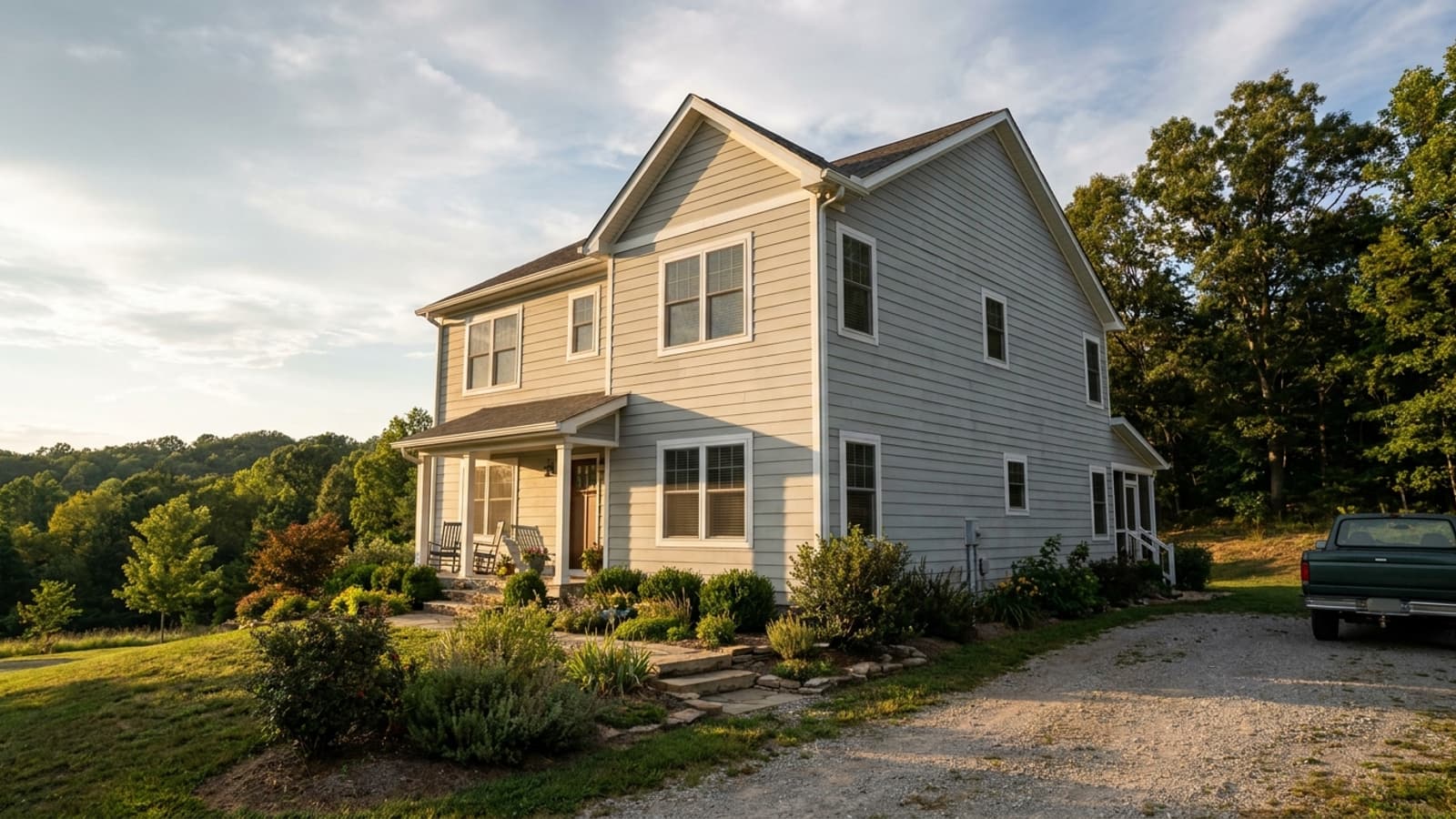
A full James Hardie fiber cement siding project runs $12,000 to $25,000 installed for a typical home across Southeast Tennessee, North Georgia and Northeast Alabama. That figure is the whole exterior envelope — old cladding off, sheathing inspected, house wrap on, new trim, soffit and fascia, and Hardie board fastened to manufacturer spec. It is not a material price with the real work billed later.
Most homeowners looking for a Hardie number online find a price per square foot and then open a quote that looks nothing like it. The reason is simple: fiber cement is a system, not a product you hang on a wall. The labor, the flashing details and the trim package are a larger share of the total than the boards themselves. What follows is what actually sits inside an installed siding price, what pushes a house toward the top of the range, and what to confirm on any quote before you compare it with another one.
What does "installed" actually include?
A complete fiber cement quote should account for every one of these lines. If a number looks unusually low, the difference is almost always sitting in a line that got left out rather than in a better price on the same scope.
| Line item | What to confirm on the quote |
|---|---|
| Tear-off and disposal | Old siding removed down to the sheathing, hauled off, site cleaned |
| Sheathing inspection and repair | What happens, and at what rate, if rotted sheathing is found |
| Weather barrier | House wrap over the full wall, lapped and taped, not patched in |
| Flashing details | Window and door heads, kickouts at roof-to-wall, penetrations |
| Siding | Product line, profile, exposure, and ColorPlus or primed |
| Trim package | Corners, window and door casing, band board, frieze |
| Soffit and fascia | Included or excluded, and in what material |
| Fastening | Blind-nailed to spec, correct fastener, correct spacing |
| Caulk and finish work | Sealant at butt joints and terminations, touch-up paint |
| Warranty | Term on material and, separately, term on labor |
The last line is the one homeowners skip and later wish they had read. A long material warranty paired with a one-year labor warranty is a much weaker promise than it sounds, because most service calls on siding turn out to involve installation details. Our siding carries 30-year material and labor coverage under The Patriot's Promise.
What pushes a James Hardie price up or down?
Square footage and how many stories
Wall area is the biggest single driver, and height compounds it. A two-story elevation costs more per square foot than a ranch because staging, ladders and material handling all take longer, and fiber cement planks are heavy compared with vinyl. A wide single-story house with a lot of wall can still land mid-range; a compact two-story with tall gables can land higher than its square footage suggests.
How much trim and detail the elevations carry
This is the factor homeowners underestimate most. Every corner, every window, every gable rake, every dormer and every band board is a cut, a flashing detail and a sealed joint. Two houses with identical wall area can be thousands apart because one has eight openings and four corners and the other has twenty-two openings, two bays and a wraparound porch.
Product line, profile and finish
Lap siding in a standard exposure is the baseline. Shingle-look panels in a gable, vertical panel with battens, and wide plank profiles all change both material cost and labor. The finish matters too — factory-applied ColorPlus arrives finished and holds color against Southeast sun and humidity, while primed board has to be painted on site, which is a separate trade and a separate schedule.
What the sheathing looks like underneath
Nobody knows this until the old siding is off. On houses where gutters have overflowed for years, where a roof-to-wall junction had no kickout flashing, or where old siding was face-nailed through the wrap, there is usually something to repair. That is a normal part of a re-side and it is the single most common reason a final number differs from the day-one estimate. It should be quoted as a rate you agreed to in advance, not discovered as a surprise.
How does Hardie compare with the other cladding we install?
We carry James Hardie fiber cement, Everlast composite, Royal and Mastic vinyl, and stone veneer. All of them are legitimate answers for the right house and the right owner.
| James Hardie fiber cement | Quality vinyl | Stone veneer accent | |
|---|---|---|---|
| Installed cost | Highest of the three | Roughly 40-70% cheaper installed | Priced by area, used in accents |
| Typical lifespan | 30-50 years | 20-40 years | Very long, low maintenance |
| Fire behavior | Fire-resistant, will not melt | Can distort from nearby heat | Noncombustible |
| Impact and hail | Handles impact well | Can crack in cold, dent from impact | Excellent |
| Color | Factory ColorPlus finish or field paint | Color through the panel | Natural or manufactured color |
| Weight and labor | Heavy, slower to install | Light, faster to install | Specialty labor |
| Best fit | Staying ten-plus years, detailed elevation | Value, shorter ownership horizon | Foundation lines, gables, columns |
Mixing is also fair game. Fiber cement on the elevations the street sees and vinyl on the sides and back is a common way to get the look where it counts and hold the budget where it does not.
Why does correct installation change what you are paying for?
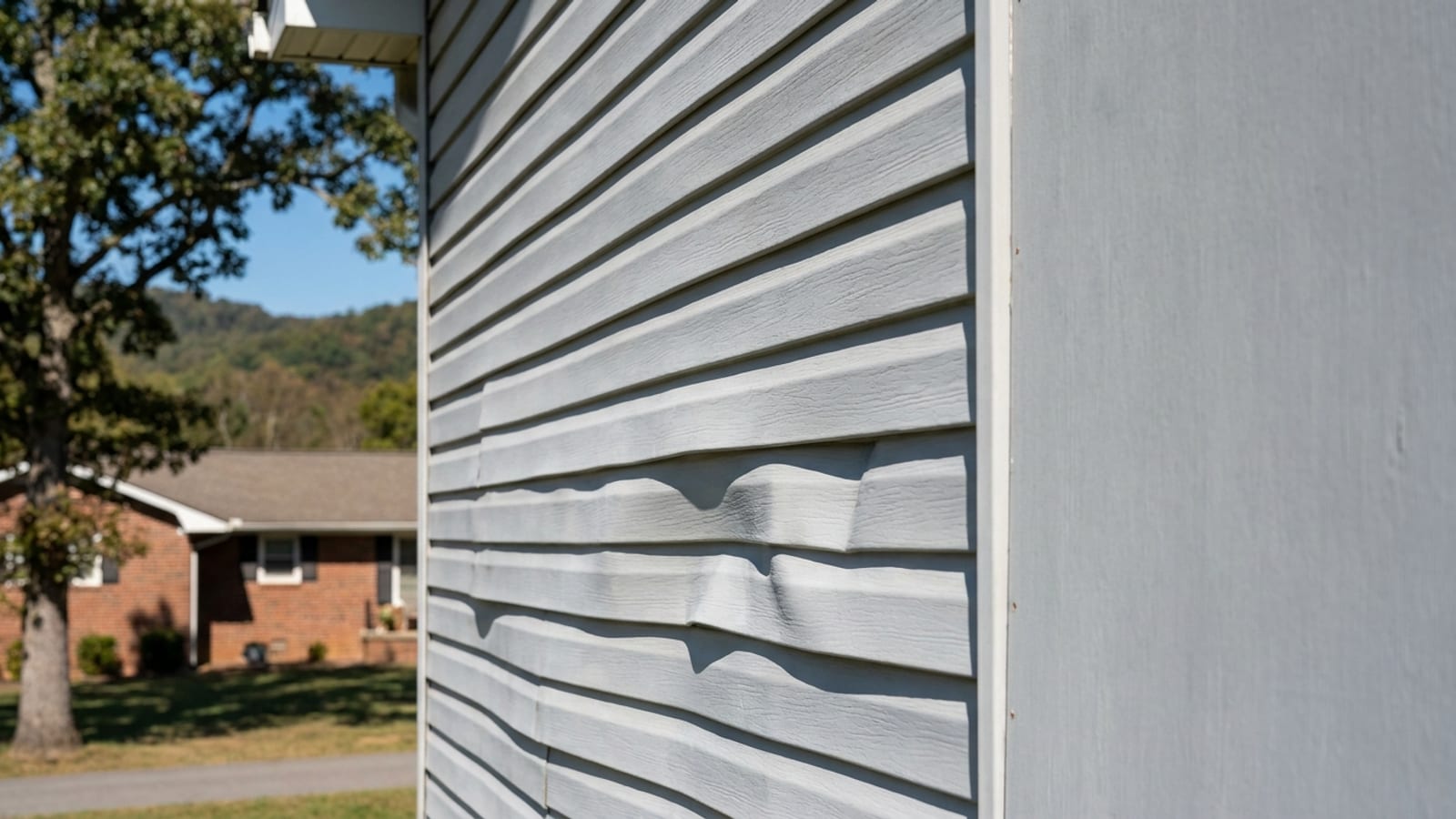
Fiber cement is unforgiving of shortcuts in a way vinyl is not. Fastener type and placement, clearances to roofing and grade and horizontal surfaces, joint treatment, and flashing at every penetration are all specified by the manufacturer, and they are what keeps the material coverage intact over decades. We are a James Hardie Alliance Select contractor, and the crews are the same 4th-generation install crews on every job rather than whoever a call center could book that week.
It is also why we do full replacement only. Going over existing siding hides the sheathing, seals any water damage inside the wall and skips the weather barrier entirely. The savings are real on the day and generally get spent again later.
How do homeowners pay for a siding project?
Siding is harder to phase than windows, because the envelope comes off and goes back on as one system. That makes the decision less about splitting the work and more about spreading one number. Most homeowners use cash, a home equity line, an insurance claim when the damage is storm-related, or contractor-arranged financing through the GreenSky program — no interest if paid in full within 6, 15 or 18 months, or fixed rates starting at 6.99% APR with longer terms available. Most approved homeowners put zero down.
One budgeting note worth stating plainly: there is no federal tax credit to count on for a siding project in 2026. The Energy Efficient Home Improvement Credit was terminated for property placed in service after December 31, 2025. Budget the real number.
What is the next step?
An accurate Hardie price requires someone to walk the elevations, measure the wall area, count the openings and corners, look at the trim detail, and check the condition of what is there now. That happens at a free in-home estimate, which is a sales appointment — we measure, show you the product and the color options, and give you one itemized number with the scope written out. There is no trip charge inside our service area and no price that expires that night.
When you are ready for a real figure on your house, request a free estimate and we will come measure it.