Short answer
A full siding replacement in our market runs $12,000 to $25,000 installed, and a board and batten job typically sits in the upper half of that range because vertical panels need more layout, more trim and a batten over every seam. Fiber cement board and batten costs more than a vinyl version of the same look, and both cost more than plain lap siding on the same house. Most homes use it best as an accent on gables, dormers, porch walls and additions rather than across all four elevations.
Board and batten is the vertical siding look — wide flat panels or boards run up the wall, with narrow strips called battens covering every seam. It reads modern farmhouse on a new build and it reads barn on an older place, and it costs more per wall than lap siding of the same material. A full siding replacement in our market runs $12,000 to $25,000 installed including trim, soffit, fascia and house wrap, and a board and batten job usually lands in the upper half of that range.
This post covers what drives that number, which materials the look comes in, and the elevations where board and batten earns its price instead of just adding one.
What does board and batten siding cost in Tennessee and North Georgia?
There is no flat per-house price for it, and anyone quoting one over the phone is guessing. What we can tell you is the range a full siding replacement lands in here — $12,000 to $25,000 typical for an average home — and where board and batten sits inside it.
Four things move the number:
- Square footage and stories. A two-story elevation costs more to stage and more to install than the same area at grade.
- How much of the house gets it. Board and batten on two gables is a small part of a larger siding budget. Board and batten on all four elevations is the whole budget.
- Material. Vinyl board and batten is the value version. James Hardie fiber cement panel with battens costs more and looks and lasts like it.
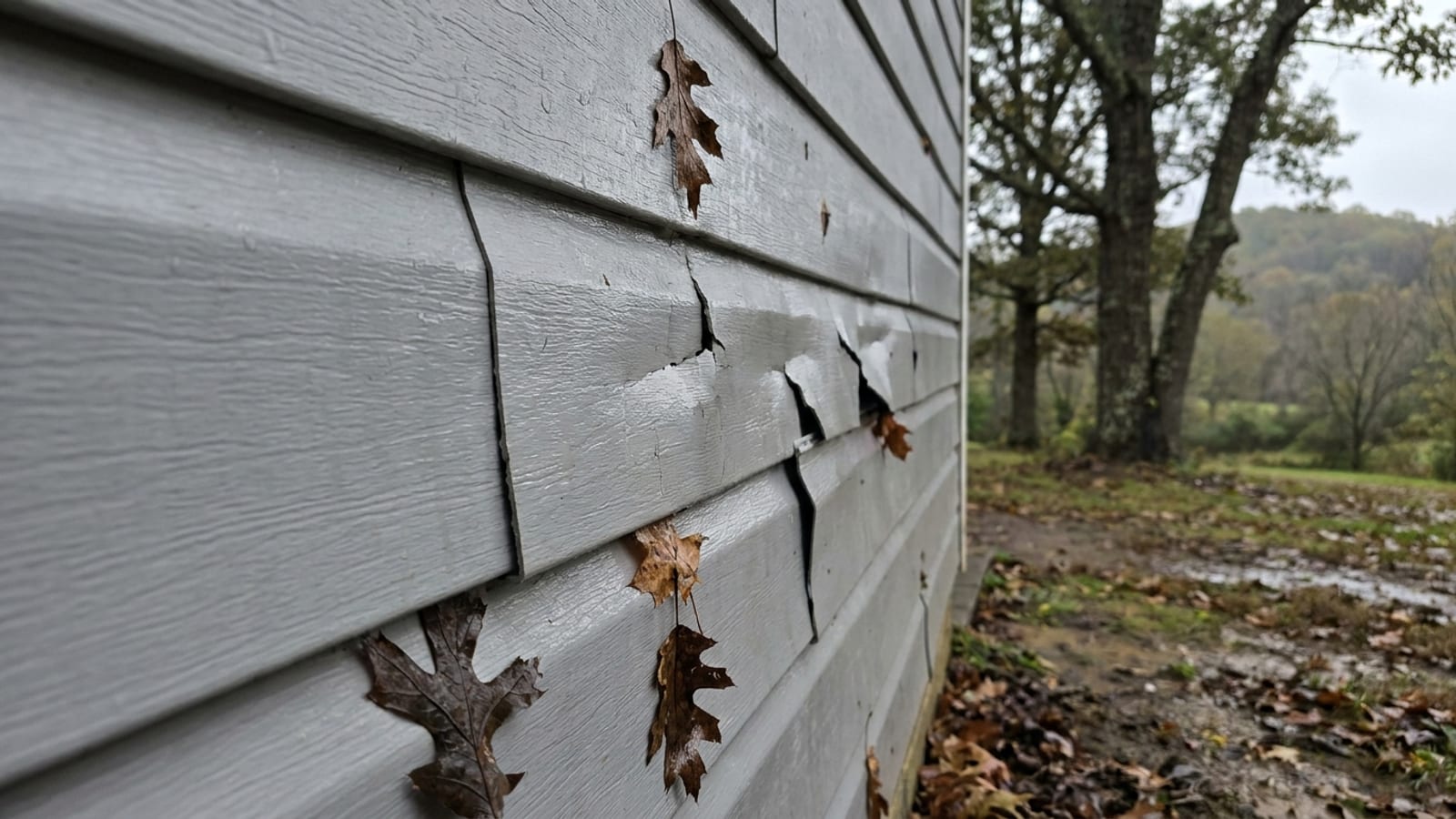
- What the sheathing looks like. No one knows until the old cladding comes off. Rot repair is found work, and it gets itemized when it is found.
Why does board and batten cost more than lap siding?
Same house, same material, more money. Three reasons.
There is far more trim on the wall
A lap siding wall has courses that stack. A board and batten wall has a batten over every vertical seam, typically every 12 to 16 inches. That is a lot of linear feet of additional material, a lot of additional fasteners, and a lot of additional cut ends that have to be sealed and finished. Material cost and labor hours both climb with batten count.
The layout has to be planned before the first panel goes up
Lap siding hides small layout errors in the reveal. Vertical siding does not. Batten spacing has to be set so the pattern runs evenly across an elevation and lands cleanly at corners, at window and door trim, and where a gable meets a roofline. On a house with a lot of openings, that layout is real drafting time before anyone picks up a nail gun, and it is the difference between a wall that looks designed and a wall that looks like it ran out of room at the corner.
The backing has to support it
Panels and battens need solid, flat substrate and fastening at the spacing the manufacturer specifies. On some walls that means furring or additional backing before the cladding goes on. That is not an upsell, it is what keeps the fasteners in structure and the warranty intact.
What materials does board and batten come in?
| Option | Relative installed cost | Expected service life | Finish | Best fit |
|---|---|---|---|---|
| Vinyl board and batten | Lowest | Roughly 20–40 years | Color through the panel | Budget-conscious projects, rental and secondary elevations |
| Composite board and batten | Middle | Manufacturer-rated | Factory finish | Homeowners who want a deeper profile without full fiber cement cost |
| James Hardie fiber cement panel and batten | Highest | Roughly 30–50 years | ColorPlus factory finish or primed for site paint | Forever homes, street-facing elevations, houses with architectural detail |
Fiber cement
James Hardie panel with batten strips is the version most homeowners picture when they say modern farmhouse. It is fire-resistant, it does not melt or crack, and the ColorPlus finish holds color against Southeast sun and humidity. It is also heavy and fastener-sensitive, which is why the installation spec matters — we install it as a James Hardie Alliance Select contractor, to the spec the warranty is written against.
Vinyl
Quality vinyl board and batten is a legitimate product and it is meaningfully cheaper installed. The profile is shallower than fiber cement, so the shadow line between board and batten is less pronounced, and on a close-up front elevation some homeowners notice that. On a rear wall, a garage gable, or a house you are selling in a few years, it is the sensible call. We carry Royal and Mastic vinyl alongside Everlast composite.
Mixing materials
Fiber cement on the elevations the street sees and vinyl elsewhere is a common and legitimate compromise. It is also the easiest way to get board and batten into a project that could not otherwise carry it — put the fiber cement where the detail is, keep the budget where the detail is not.
Where does board and batten actually look right?
Gables and dormers
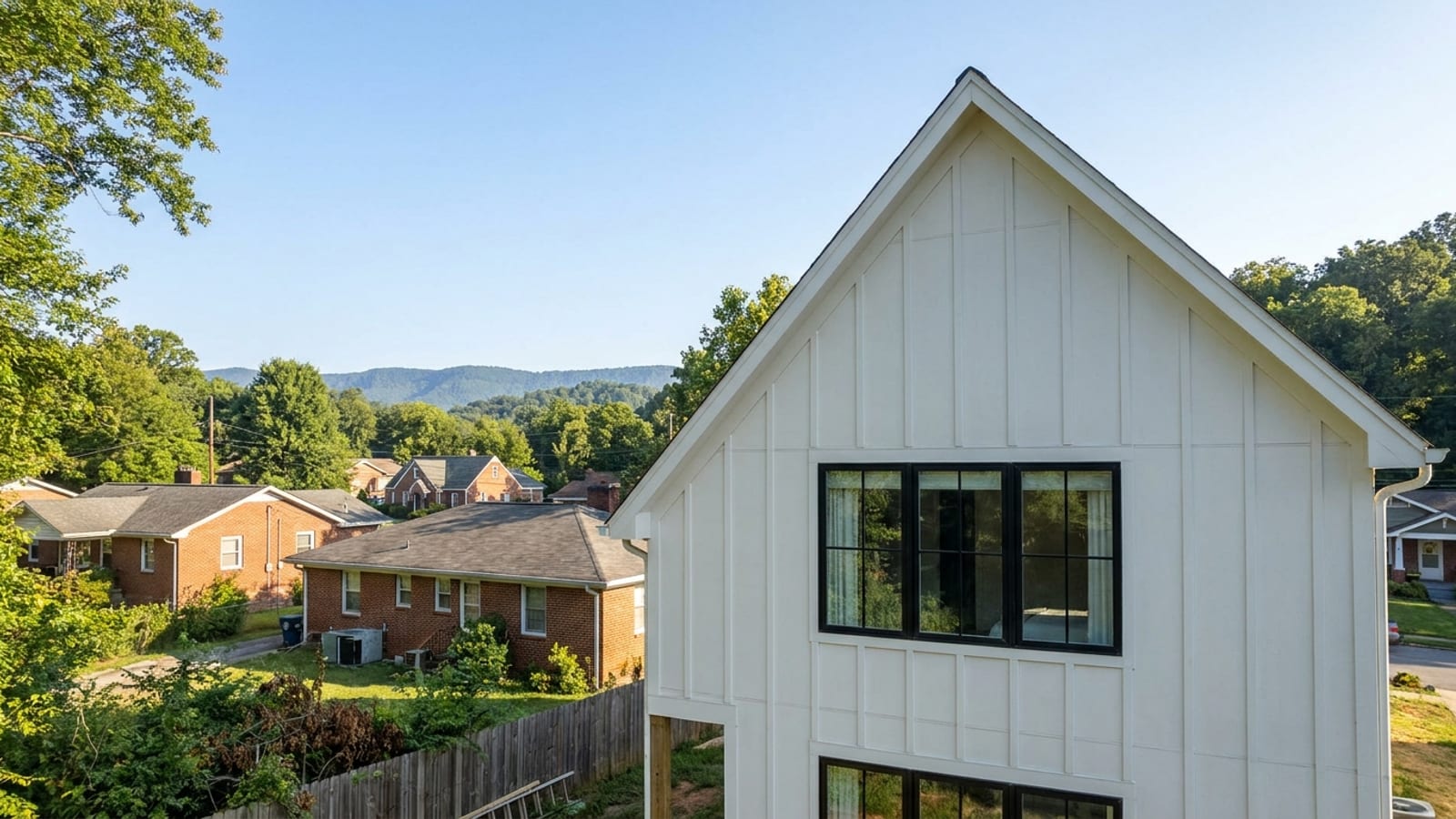
This is the highest-value use of the look and the cheapest way to get it. A gable is a small area, it sits high where the eye goes, and the vertical lines make the peak read taller. Running board and batten in the gables over lap siding on the wall below is a classic detail on farmhouse, craftsman and cottage elevations, and it costs a fraction of cladding the whole house in it.
A front porch wall or entry bay
Board and batten around an entry frames the door. It gives that wall a different texture from the rest of the house without changing the color, which usually looks better than trying to do the same thing with two colors of the same profile.
Additions, sheds and bonus rooms
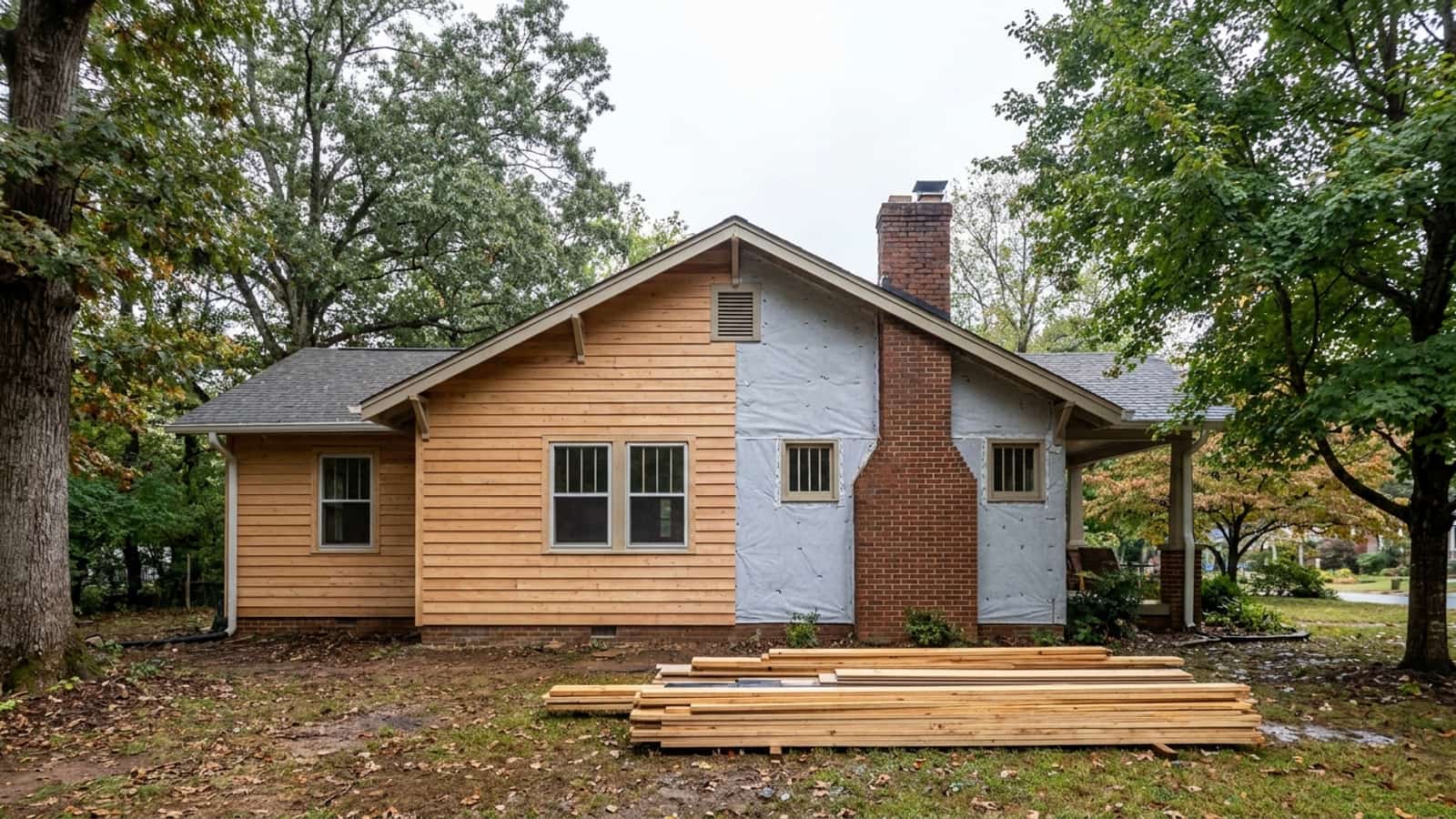
When an addition never quite matched the original house, vertical siding on the addition can turn a mismatch into an intentional break. It is easier to make a shed-roof bump-out look deliberate in board and batten than to make it disappear.
Whole-house modern farmhouse
It does work on all four elevations, and on the right house it is the point of the house. Simple roof lines, generous windows, a limited color palette and dark trim carry it. Plan on the upper end of the siding range and plan the batten layout on every elevation before ordering.
Where it does not work
Heavily detailed Victorian and colonial elevations usually fight vertical siding — the horizontal lines of the trim, the shutters and the courses were designed together. Brick homes with only a small siding area are usually better served by matching the temperature of the brick with a simple lap profile. And a house with very busy roof geometry gets visually noisy fast when you add a hundred vertical lines to it.
How do you keep a mixed elevation from looking busy?
Three rules that hold up on almost every house here.
- Change material at a structural line. A change of siding profile belongs at a roofline, a band board, a gable base or an inside corner — never in the middle of an open wall.
- Keep one color or go clearly two-tone. Board and batten in the same color as the lap below it reads as texture. In a deliberately contrasting color it reads as architecture. A slightly different shade of the same color reads as a mistake.
- Let the trim do the work. Soffit, fascia, corner boards and window trim carry more visual weight than the field color. Get those right and the siding choice gets easier.
What does the quote need to spell out?
Ask for these lines specifically, on any siding quote you are comparing:
- Which elevations get board and batten and which get lap
- The exact product and profile, and whether the finish is factory-applied or site-painted
- Batten spacing and how corners and openings are being detailed
- House wrap, flashing and trim included as part of the system
- Soffit and fascia — included or not
- Allowance and rate for sheathing repair found after tear-off
- The warranty term on labor as well as material
Our siding carries a 30-year material and labor warranty under The Patriot's Promise, and we do full replacement only — we do not side over rot or patch a failing system. If spreading the cost matters, our financing through GreenSky includes no-interest-if-paid-in-full plans and fixed-rate terms, with zero down for most approved homeowners.
What is the next step?
Walk your house and decide where you actually want the vertical look — the gables, the entry, the addition, or the whole envelope. Then schedule a free in-home estimate. An estimator measures every elevation, checks the condition of what is on the wall now, shows you the panel and batten options in person, and gives you one itemized number with the scope written out. It is a sales appointment, and it is also the only way to get a real price on a board and batten job instead of a guess.