Short answer
A wood front door is worth it when the entry is genuinely protected by a porch or overhang, you like the look enough to maintain it, and you accept refinishing every two to four years. Wood is the premium appearance and the highest-maintenance of the three entry door materials, and sun and driving rain decide how often it needs attention. On an exposed west- or south-facing entry with no cover, fiberglass gives you a convincing wood-grain look without the refinishing cycle.
A wood front door is worth the upkeep if the entry is protected and you actually like the look enough to maintain it. Wood is the best-looking entry door material available and the highest-maintenance one, and those two facts are not separable — the finish that makes the grain glow is also the part that has to be renewed every few years. Exposure decides whether that is a pleasant weekend project or an annual chore you grow to resent.
This is a decision we walk through with homeowners constantly, because the catalog photo of a stained wood door is nearly identical to the catalog photo of a fiberglass door molded to look like one. The difference shows up three years in, not on the showroom floor.
What makes wood different from fiberglass and steel?
All three materials make a good entry door. They fail in completely different ways, and that is the useful part.
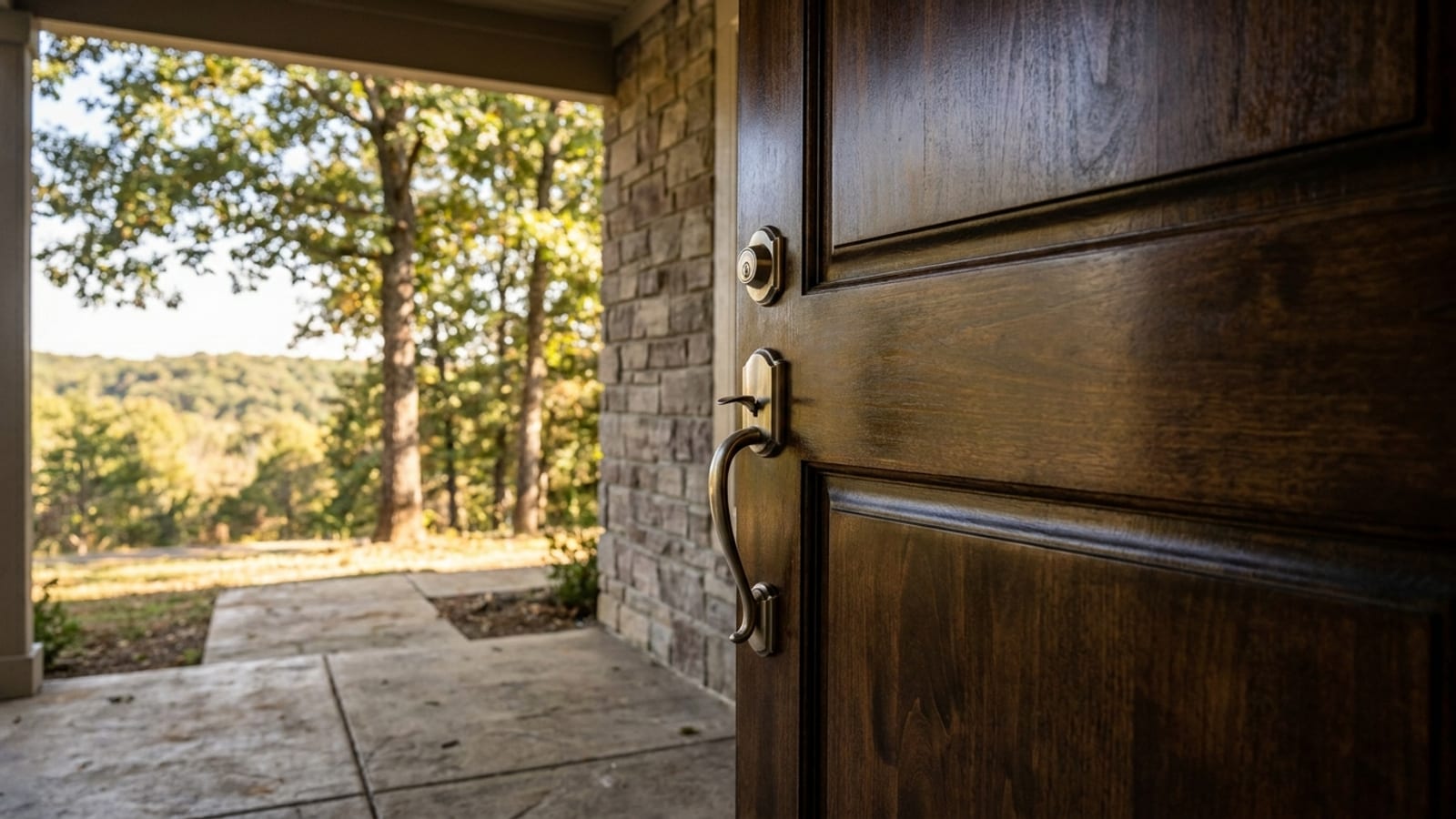
Steel is the value choice. It is strong, well insulated and the most affordable of the three, but it dents and it can rust once the finish is compromised, which makes it a poor fit for a door taking direct weather. Fiberglass is the most-installed material in our market because it does not rot, dent or rust and it handles direct sun and driving rain, and modern molded skins hold a convincing wood grain. Wood is the premium look. Nothing else has real depth in the grain, real weight in the hand, or the ability to be sanded and refinished to a different color a decade later.
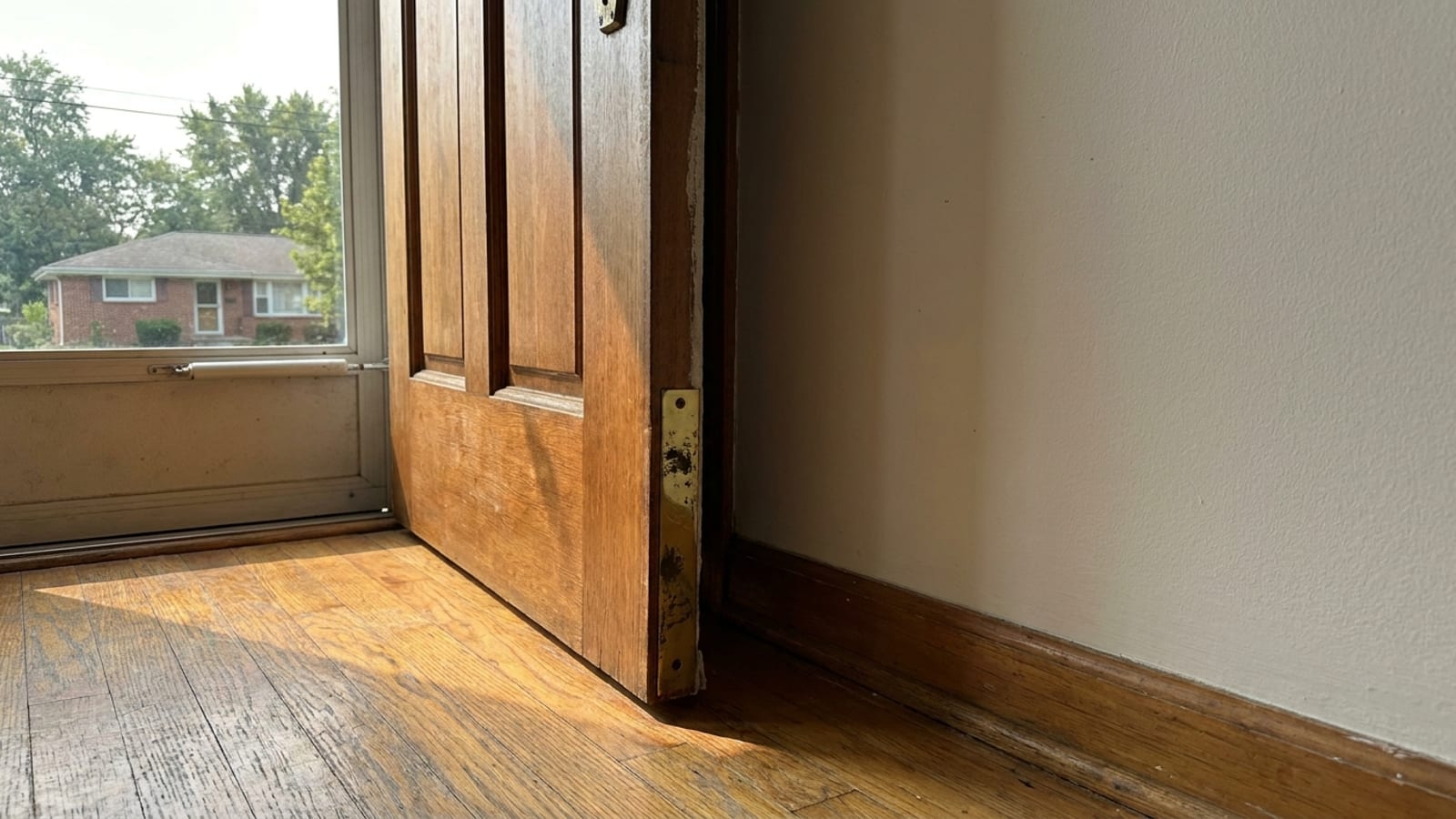
Wood also does something the other two cannot: it moves. It takes on moisture in a humid Tennessee August and gives it back in a dry January, and the finish is what regulates that exchange. Keep the finish intact and the movement is minor. Let the finish go and the door swells, sticks, and eventually checks or warps. Every maintenance recommendation below comes back to that one mechanism. We cover the full range of materials and configurations on our entry door page if you want to see what the catalog actually includes.
What does the upkeep on a wood front door actually involve?
It is less dramatic than people expect and more frequent than they hope.
The routine cycle
- Wash it twice a year. Mild soap, soft cloth, rinse. Pollen and road grit hold moisture against the finish, and the bottom six inches take the worst of it from splashback.
- Inspect the finish each spring and fall. Look for a flat, chalky sheen, hazing, or hairline cracks at the joints between stile and rail. Those are the early signals.
- Recoat before you see bare wood. A maintenance coat over a sound finish is a two-hour job with a light scuff sand. Stripping a failed finish back to bare wood and rebuilding it is a full weekend.
- Keep the weatherstripping and sweep working. Water that gets under a door edge is what kills the bottom rail, and the bottom and top edges are the two surfaces homeowners forget to seal.
How often, realistically
Under a deep covered porch on a north or east elevation, a quality exterior finish will usually run three to four years between maintenance coats. On a west- or south-facing entry with little or no overhang, expect one to two years, because ultraviolet light breaks down a clear finish long before weather does. Paint lasts considerably longer than a clear or semi-transparent stain, since pigment blocks UV — which is why a painted wood door is a legitimate middle path if you want real wood without the shortest maintenance interval.
How do wood doors compare on cost and ownership?
A replacement entry door installed runs about $3,973 to $7,500 in our market, and that is a complete number covering the door, the frame, the hardware, the labor and the finish work. Material is one of several things that moves a quote inside that range; glass, sidelites, a transom, and the condition of the existing opening and threshold all matter as much or more.
| Wood | Fiberglass | Steel | |
|---|---|---|---|
| Appearance | Real grain, unmatched depth | Convincing molded grain | Smooth or light embossed |
| Maintenance | Recoat every 1-4 years | Wash; occasional finish touch-up | Wash; touch up chips promptly |
| Direct sun and rain | Needs cover to do well | Handles it | Finish damage leads to rust |
| Dents and impact | Dents, but sands out | Does not dent | Dents and stays dented |
| Refinish to a new color | Yes, repeatedly | Limited | Repaint only |
| Relative installed cost | Highest | Middle | Lowest |
The row that decides most of these conversations is the third one. Measure how much roof is actually over your door. An overhang that covers the full door swing in a hard rain is real protection. A six-inch trim detail is not.
When is a wood front door the right call?
Four situations make wood an easy yes.
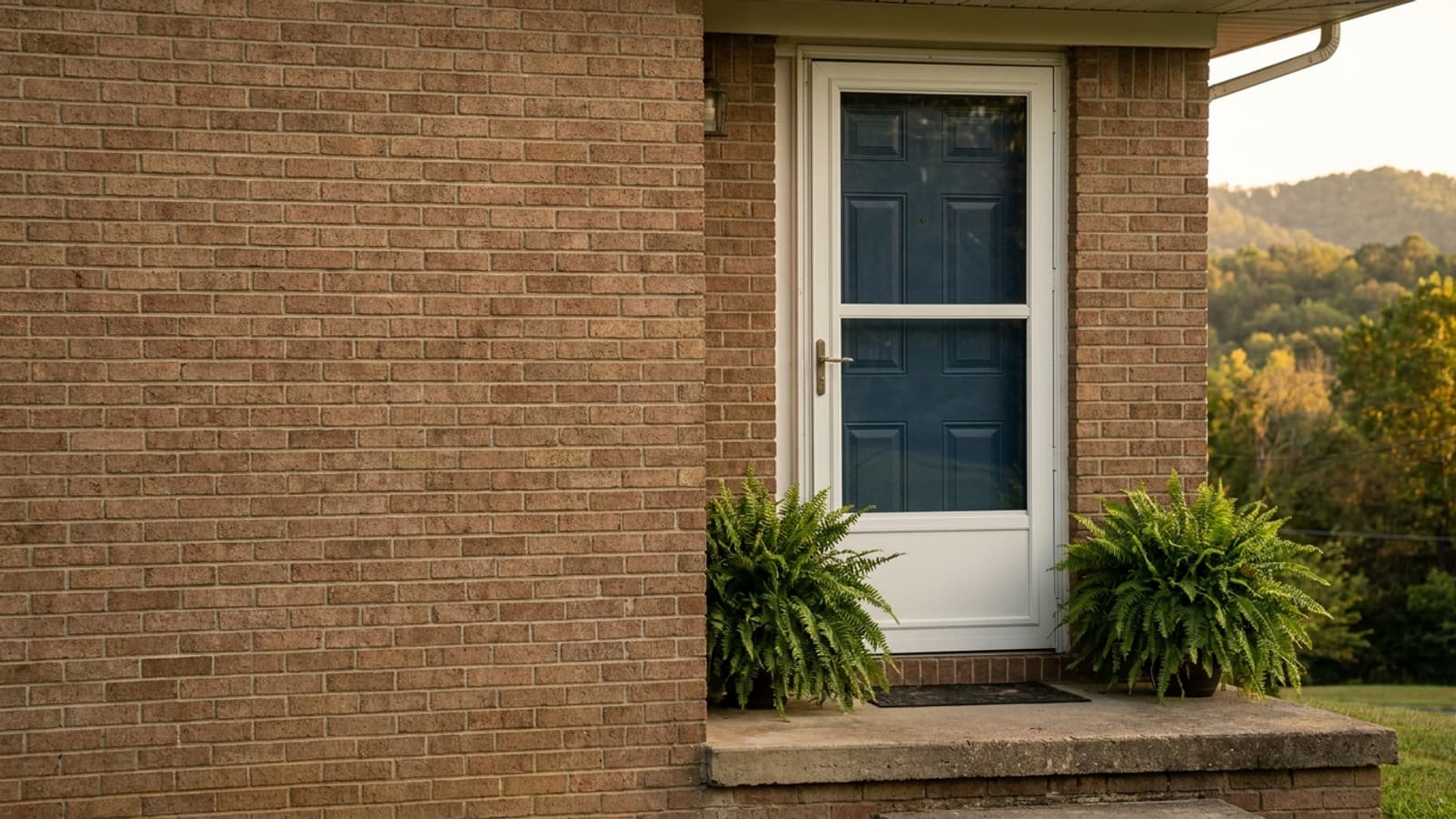
- The entry is genuinely covered. A deep porch, a recessed entry, or a portico that keeps sun and rain off the face of the door.
- The house deserves it. Craftsman, Tudor, older brick colonials and restored homes across Chattanooga and North Georgia carry a wood door the way nothing else does. On a house with original trim detail, a molded door can read slightly off.
- You want to change the color later. Wood is the only one of the three you can sand and restain to a different tone without replacing the slab.
- You are the kind of owner who likes the ritual. Some homeowners genuinely enjoy a Saturday with a sanding block and a can of marine-grade finish. If that is you, the upkeep is a feature.
When should you choose fiberglass instead?
If the entry faces west or south with no cover, choose fiberglass and do not look back. The same applies if you travel often, if the house is a rental, or if you know from experience that exterior maintenance tends to slide a year or two past when it should have happened. A neglected fiberglass door looks a little dull. A neglected wood door on a sun-blasted elevation gets permanent damage.
Fiberglass is also the better answer when the opening is tall. Eight-foot doors see more surface area, more sun exposure and more weight on the hinges, and the movement wood does across that span is harder to control.
Does a wood door cost you on energy or security?
On energy, a solid wood slab insulates reasonably well but not as well as an insulated fiberglass or steel core of the same thickness. In practice the bigger variable at any entry door is the seal — the weatherstripping, the sill, the threshold and how carefully the perimeter was air-sealed during installation. A well-installed wood door in a tight frame outperforms a poorly installed insulated one every time.
On security, the slab is rarely the weak point. Jambs and strike plates are. A reinforced strike with three-inch screws driven into the framing, a quality deadbolt, and a frame that was set plumb and shimmed properly do far more than material choice does.
Whatever material you land on, the install detail is what the warranty has to stand behind. Ours is written out in The Patriot's Promise, covering material and labor in writing rather than material alone — worth checking on any quote you compare, because a strong material term paired with a one-year labor term is a much weaker promise than it sounds.
What about budget and the Hometown Hero discount?
If the wood door you want sits above where you planned to land, there are two things worth knowing. We offer financing through the GreenSky program, including no-interest-if-paid-in-full plans and fixed-rate terms, with zero down for most approved homeowners — the plan details are on our financing page. And active military, veterans, police, fire, EMS and dispatchers get 50% off exterior doors through our Hometown Hero program. It applies to the door itself, it does not stack with other offers, and all we need is proof of service or a department ID at the estimate.
What is the next step?
Stand outside your front door on a sunny afternoon and watch where the light falls. Then stand there during the next hard rain. Those two observations answer the wood-versus-fiberglass question more honestly than any brochure will.
When you are ready for a real number, request a free in-home estimate. An estimator measures the opening, checks the threshold and framing, shows you wood and fiberglass side by side so you can see the difference in person, and leaves you with one itemized price. It is a sales appointment, and it is also the only way anyone can quote your door instead of guessing at it.