Short answer
Match the grid pattern to the house rather than to the window catalog. Colonial and traditional homes read correctly with a full grid such as six-over-six or nine-over-nine, craftsman bungalows want a divided top sash over clear glass below, prairie style uses a perimeter border, and most mid-century ranches and modern elevations look best with no grid at all. Then choose how the grid is built — between the glass is the easy-to-clean default, and simulated divided lite is the one that looks right up close.
Match the grid to the house, not to the brochure. That single rule settles most of this decision, because grid patterns are not decoration invented by window companies — they are what divided glass looked like in the eras when windows had to be made from small panes, and each style of house carries the pattern from its own period.
Get it right and nobody notices, which is the goal. Get it wrong and the house looks slightly off in a way people cannot name.
What pattern belongs on your house?
| House style | Pattern that usually fits | Notes |
|---|---|---|
| Colonial, traditional two-story | Six-over-six, eight-over-eight, nine-over-nine | Full grid on both sashes; the taller the window, the more lites |
| Cape Cod, saltbox | Six-over-six | Same logic, smaller openings |
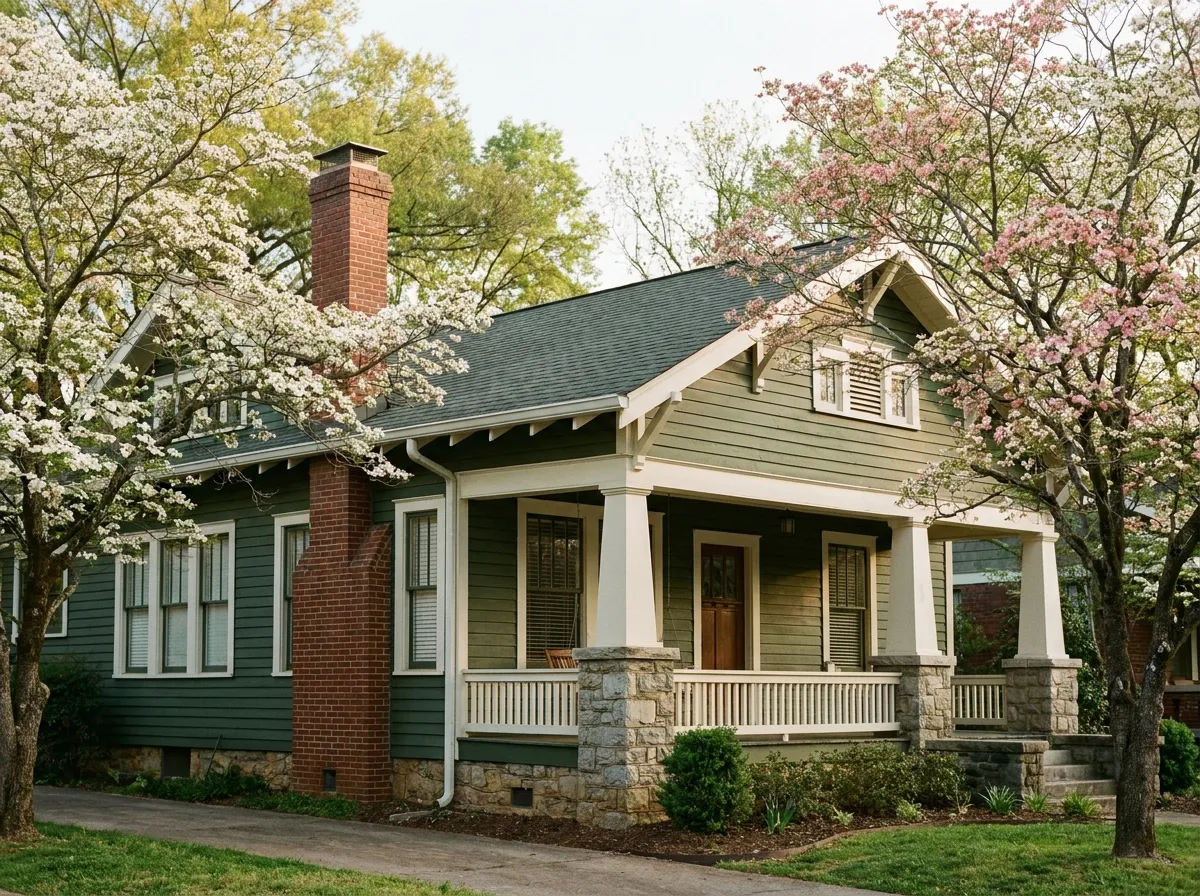
| Craftsman bungalow | Three-over-one, four-over-one | Divided top sash, clear bottom sash |
| Prairie | Perimeter border, sometimes with corner squares | A border rather than a full grid |
| Farmhouse | Two-over-two, or none | Simple and vertical; many look best clear |
| Victorian, Queen Anne | One-over-one with select decorative sashes | Grids used as an accent, not everywhere |
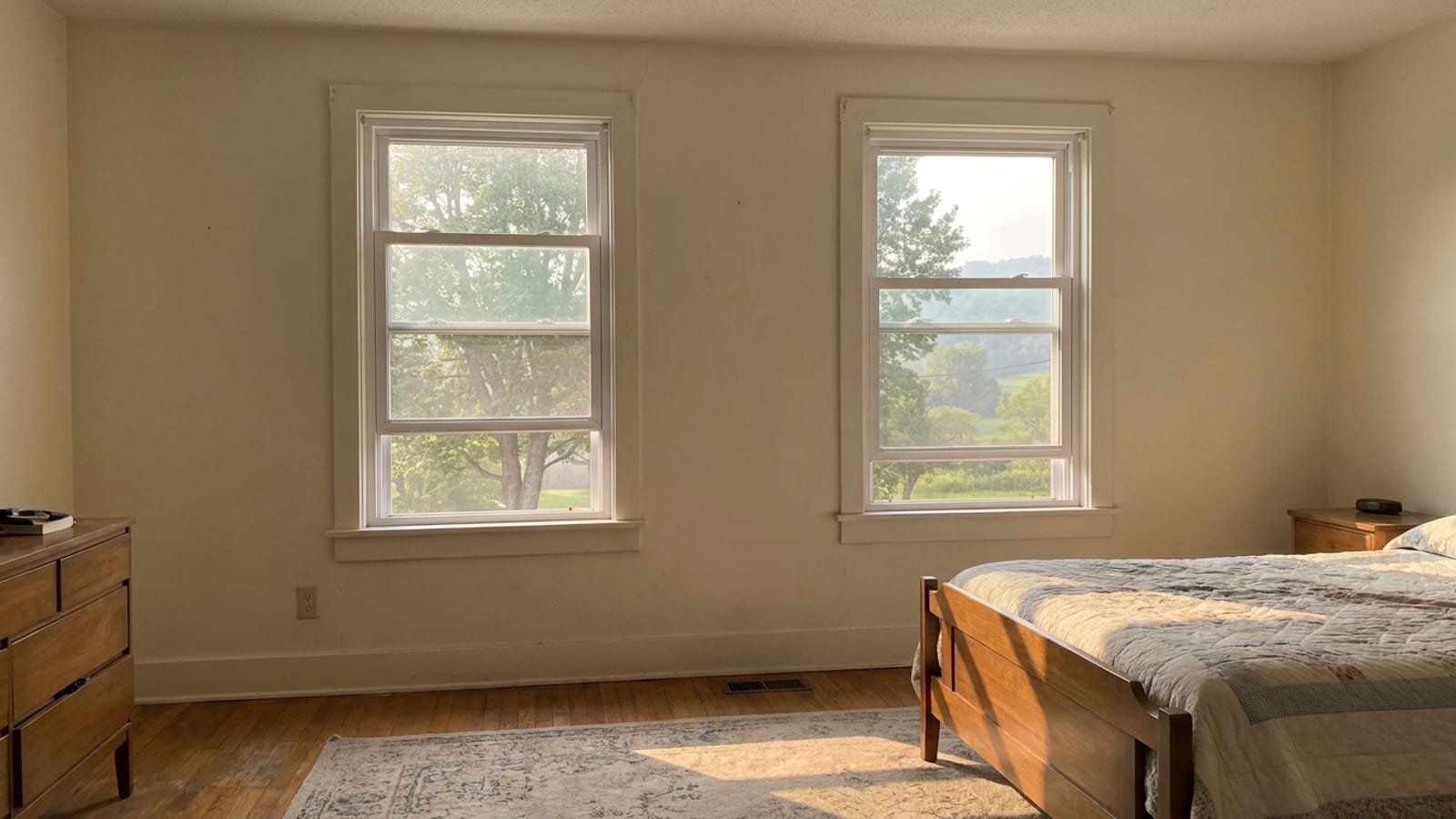
| Mid-century ranch | None | Clear glass is period-correct and looks better |
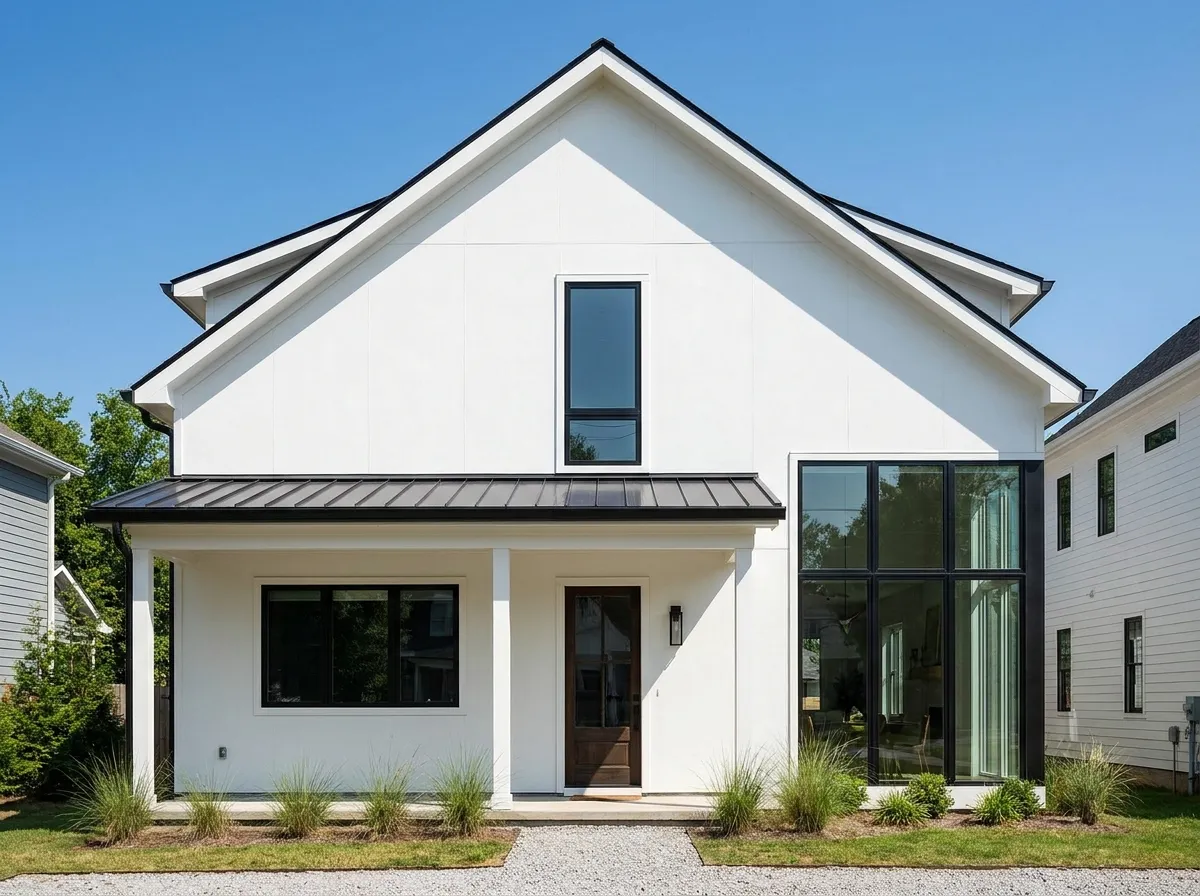
| Contemporary and modern | None | A grid fights the whole idea |
| Tudor | Diamond or rectangular leaded pattern | Distinctive and worth matching carefully |
The one on that list that trips people up most often is the craftsman bungalow, and there are a lot of them across Chattanooga and the older neighborhoods of North Georgia. A craftsman window is divided on the top sash only, over a single clear pane below. Putting a colonial six-over-six on a bungalow is the single most common grid mismatch we see, and it reads as wrong from the street even to people who have never thought about a window pattern in their lives.
How are grids actually built?
Three constructions, and the choice affects both cost and how the window reads up close.
Grids between the glass
Bars sealed inside the insulated unit. Both glass surfaces stay flat, so cleaning is a single wipe, and there is nothing to remove or store. This is the practical default and what most homeowners choose.
Up close it reads as what it is — a bar suspended inside the glass, with no shadow line and no depth. From the street that difference disappears.
Simulated divided lite
Bars applied to the exterior and interior glass surfaces, usually with a matching spacer inside the sealed unit aligned to them. The result has real shadow lines and real depth, and it reads convincingly as divided glass at close range.
It costs more. It is worth it on a house where the windows are part of the architecture — a well-proportioned colonial, a restored bungalow, anything in a historic district — and it is money you will not notice on a ranch where the grid is a nod rather than a feature.
Removable interior grids
A grid that clips into the interior side. It is the least expensive option and the one most likely to end up in a closet after the second cleaning. If the reason you like it is that it can come out, be honest about whether it will go back in.
Does the grid affect anything besides looks?
Barely, and it is worth saying so plainly because homeowners often assume otherwise.
Grids between the glass sit inside the sealed unit and have a negligible effect on rated performance. Simulated divided lite covers a small amount of glass area and adds a little edge, which has a very small effect. Neither difference is large enough to choose on.
What does matter for performance is the glass package underneath the pattern. Our whole service area sits in the ENERGY STAR South-Central climate zone, where a qualifying window needs a U-factor of 0.28 or lower and a solar heat gain coefficient of 0.23 or lower. SHGC is the number you feel here, because our load is cooling rather than heating. Choose the glass by elevation and the grid by architecture — they are separate decisions and neither should compromise the other.
The one real practical consideration is cleaning. Between-the-glass grids are the easiest surface to keep clean, simulated divided lite has bars to wipe around, and removable grids are the most work. On a double-hung whose sashes tilt in, none of it is difficult.
How do you decide for your own house?
Four steps, in order:
- Photograph the front of your house from across the street. You will see proportions in a photograph that you stop seeing in person.
- Look at the original windows if any remain, or at the houses on your street built in the same period. The neighborhood is a better reference than a catalog.
- Decide front-only or whole-house. Grids on the street-facing elevations and clear glass at the back is a traditional and defensible choice, especially where the back of the house has a view worth not dividing.
- Check whether anyone else has a say. Some HOAs specify grid pattern and frame color, and historic districts often do. Confirm before you order, not after.
If a project needs a permit we pull it through your local building department as part of full service, including any added review some historic-district neighborhoods require.
What does the grid choice cost?
Replacement windows with us run $700 to $2,200 per window installed, and the grid is a line item inside that rather than a separate project. Grids between the glass are a modest addition. Simulated divided lite costs more, and more lites cost more than fewer, because the price follows the number of bars.
Because it is per opening, you can spend it where it shows. Simulated divided lite across the front of the house with between-the-glass grids on the sides is a common and sensible allocation, and it is the kind of thing an itemized quote lets you see and decide on.
Larger projects are commonly spread out with GreenSky financing, which includes no-interest options if paid in full within 6, 15 or 18 months and fixed-rate terms starting at 6.99% APR for 60 months, with zero down for most approved homeowners, subject to credit approval.
Whatever pattern you choose, the replacement windows themselves are covered in writing under The Patriot's Promise — material and labor both, transferable once and prorated after that.
What is the next step?
See the patterns on real units before you commit, ideally holding them up in your own opening in your own light. At a free in-home estimate the estimator measures every opening, brings the grid options, and prices the patterns so you can compare front-only against whole-house with real numbers. There is no trip charge inside our service area.
Request a free estimate or call (423) 830-7138.