
Short answer
Size and install method move a window quote more than anything else. A large or shaped opening and a full-frame replacement both cost meaningfully more per window than a standard double-hung dropped into a sound existing frame. After those two, the biggest movers are glass upgrades, grid patterns, frame material and any rot or framing repair found when the old unit comes out.
Size and install method are the two things that move a window quote the most. Everything else on the page, including the brand name, usually matters less than whether the opening is big or shaped and whether the new unit drops into the existing frame or the crew takes the opening down to the rough framing and rebuilds it.
That is why a quote for twelve windows is almost never twelve identical numbers. Replacement windows in our market run about $700 to $2,200 per window installed, and the reason the range is that wide is sitting right there in your walls: a standard double-hung bedroom opening and a six foot picture window over a stair landing are not the same job, even when they come from the same product series on the same truck.
What are the biggest cost drivers on a window quote?
Here is the honest ranking, from the factors that move the number most to the ones that move it least.
| Factor | Typical effect on the per window price | Why |
|---|---|---|
| Opening size | Large | Glass and frame material scale with square footage, and big units need more hands to set safely |
| Insert vs full-frame | Large | Full-frame removes everything to the rough opening and rebuilds the sill, jambs and trim |
| Shaped or custom units | Large | Arched, Palladian, bay and bow units carry more fabrication and more carpentry |
| Frame material | Moderate | Fiberglass runs roughly 40 to 60 percent more per window than vinyl |
| Glass package | Moderate | Low-E coating selection, argon fill, laminated glass and tempered safety glazing |
| Grid pattern and style | Low to moderate | Grids between the glass cost less than simulated divided lite |
| Rot or framing repair | Varies | Unknown until the old unit is out, which is why it is a separate line |
| Access and height | Low to moderate | Second story and steep grade openings need staging |
| Exterior capping and trim | Low to moderate | Aluminum coil capping or new exterior trim on each opening |
Notice what is not at the top of that list. Brand is not the headline. Neither is color. The structure of the job is what writes the number.
Why does opening size matter so much?
A window is priced by the unit, not by the linear foot, but the unit price tracks glass area closely. Double the glass and you roughly double the glass cost, add reinforcement to the frame, and move from a one person set to a two or three person set. A large picture window may also need tempered glass depending on where it sits relative to the floor and the door, and tempered glass costs more than annealed.
The practical version: on most houses, four or five openings account for a disproportionate share of the total. Stair landings, living room picture units, kitchen bays and anything over a tub are the lines that jump. If your whole-house number came in higher than you expected, look at those lines first rather than assuming the quote is padded across the board.
How much does full-frame replacement add?
An insert, sometimes called a pocket replacement, sets the new window into the existing frame after the old sashes and stops come out. It is faster and cheaper, and it is the correct choice when the frame is sound, square and dry.
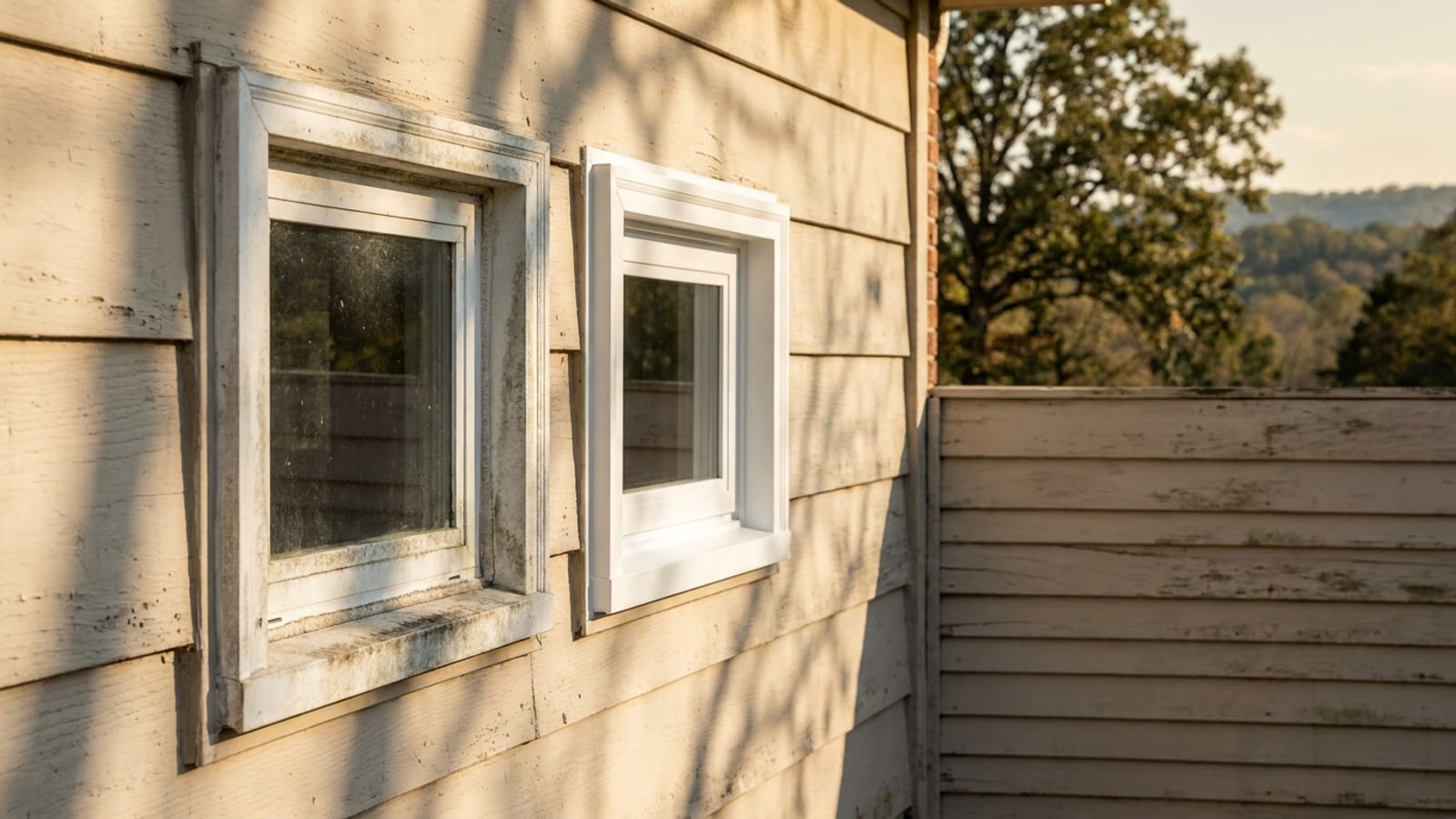
Full-frame replacement takes out the entire old window including the frame, exposes the rough opening, lets the crew inspect and repair the sill and framing, and rebuilds the flashing and trim from scratch. It typically adds several hundred dollars per opening. It is the right call when the sill or frame is rotted, when the opening is out of square, when there is a history of water intrusion, or when you want to recover the glass area that old aluminum frames stole.
Many houses correctly get a mix of both, and a quote that specifies which method applies to which opening is a quote you can actually compare. One that just says "replace 14 windows" is hiding the single largest variable in the job.
What happens if the crew finds rot?
It gets handled, and it should be addressed on the quote before anybody starts. Ask how rot is priced, because that is one of the few items nobody can measure from the outside. A sound answer names the repair process and how it is billed. A vague answer turns into a change order conversation on a Tuesday morning with your wall open.
Does the glass package change the price much?
Yes, and this is the upgrade worth spending on in our climate. Every city we serve across Tennessee, Georgia and Alabama sits in the ENERGY STAR South-Central zone, where a qualifying window needs a U-factor of 0.28 or lower and a solar heat gain coefficient of 0.23 or lower. Cooling load dominates here, so SHGC does more for summer comfort than chasing a lower U-factor.
That means the glass spend should not be spread evenly. We spec glass by elevation, because the same window does not belong on every side of a house. West and south walls take the brunt of August sun and earn the better coating. North walls rarely do.
Two glass items that add real cost for real reasons:
- Laminated glass. The best single upgrade for outside noise, and worth considering on a road-facing elevation.
- Tempered glass. Required by code near doors, in bathrooms and below certain sill heights. This one is not optional, so if a competing quote is cheaper and does not mention it, that is a scope difference rather than a price difference.
Triple pane is available on request, but we do not recommend it as a default here. In this climate the same money spent on a better low-E coating, argon fill and a warm-edge spacer returns more.
Do grids and colors really add to the total?
They do, modestly, and most homeowners underestimate how much grid choice compounds across a whole house. Grids between the glass are the standard and the easy-to-clean option. Simulated divided lite looks correct up close and costs more per unit, and on a sixteen window job that difference adds up.
Exterior color works the same way. A standard white vinyl frame is the baseline. Dark exterior finishes absorb more heat, which is why fiberglass and composite frames are the safer pick on south and west walls, and why that look usually carries a premium over white vinyl.
What does not belong on a window quote?
A few things should never be the reason a number is high.
- A price that drops three times during one visit. If the number can fall by thousands on the spot, the first number was not real.
- A "today only" discount. There is no countdown on a window project.
- A labor warranty that quietly runs one year while the material warranty says lifetime. Ours covers material and labor, transferable one time and prorated after that, and you can read the terms in The Patriot's Promise.
- Vague line items. One itemized number per opening with the install method named is the standard to hold every quote to.
How do you bring the number down without gutting the job?
There are honest levers, and there are bad ones.
Worth doing: keep vinyl frames and put the savings into the glass package. Use grids only on the elevations where the house actually needs them. Phase the project by elevation and start with the worst wall. Keep standard shapes where a shape is not doing architectural work.
Not worth doing: skipping full-frame on an opening with a soft sill, dropping tempered glass where code requires it, or accepting a thinner labor warranty to save a few hundred dollars. Those savings come back with interest.
If cash flow is the constraint rather than the total, spreading the project is often the better answer than shrinking it. We offer financing through the GreenSky program, including no interest if paid in full within 6, 15 or 18 months and fixed rates starting at 6.99% APR, with zero down for most approved homeowners, subject to credit approval.
One more thing worth budgeting correctly: there is no federal tax credit for windows placed in service in 2026. The 25C credit was terminated for property placed in service after December 31, 2025. Plan without it.
What should you do next?
Get the openings measured and get one itemized price per opening, with the install method, the glass package and the warranty terms written down. That is the only document that lets you see which line is driving your total and whether it should be.
Schedule a free in-home estimate at /get-estimate/ or call (423) 830-7138. An estimator measures every opening you want quoted, checks the frames and sills, shows you the actual product and glass options, and leaves you with one number you can hold up against anyone else's. Plan on 45 to 90 minutes for a whole house. It is a sales appointment, and it is also the only way to get a real figure instead of a guess.