Short answer
Choose steel when the door sits under real cover, the budget is the deciding factor, and security is the priority — it is strong, well insulated and the most affordable of the two. Choose fiberglass when the entry takes direct sun or driving rain, when you want a convincing wood-grain look, or when the door faces west or south, because fiberglass does not dent, rot or rust and holds up to weather and humidity. Exposure decides this more often than budget does.
Pick steel when the entry sits under real cover, the budget is the deciding factor and security is the headline concern. Pick fiberglass when the door takes direct sun or driving rain, when you want a wood-grain look, or when the entry faces west or south. Both are good doors. What separates them in this market is exposure, not quality.
That framing matters because most homeowners start this decision with price and end it with regret. Steel is the cheaper door and it is a genuinely good product in the right opening. Put the same door on an uncovered west-facing entry in Chattanooga and you have bought a maintenance project.
What is actually different about them?
Both are skins over an insulated core, and both are far better insulators than the solid wood door either one is probably replacing. The differences are in the skin.
Steel is a formed sheet over a foam core. It is rigid, it is strong, it is the most affordable of the two, and it is very secure. Its weaknesses are physical: it dents, and once the finish is broken — a scratch, a chipped edge, a dent that cracks the paint — bare steel and water find each other. Steel also conducts heat, so a steel door in full afternoon sun gets hot to the touch in a way fiberglass does not.
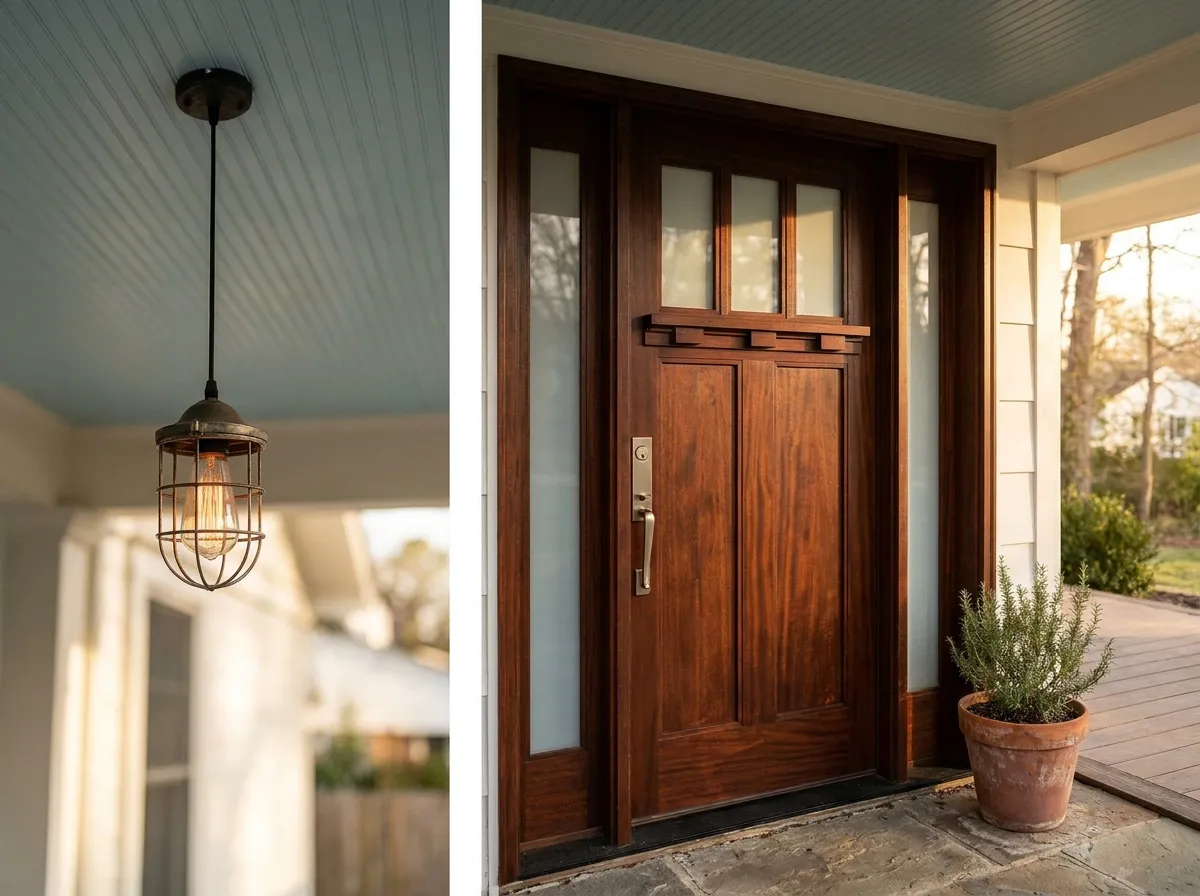
Fiberglass is a molded composite skin over the same kind of core. It does not rot, dent or rust, it handles direct sun and driving rain, and it takes a deep wood grain from the mold that reads convincingly as wood. It insulates better in humidity. It costs more.
Wood is the third option and the premium look, and it is also the highest-maintenance exterior door you can buy. It is the right choice for a homeowner who wants it and knows what refinishing on a schedule involves.
How do they compare on the things that matter?
| Steel | Fiberglass | |
|---|---|---|
| Cost | Lower | Higher |
| Dents | Yes, and dents show | No |
| Rust | Possible once the finish is broken | No |
| Rot | No | No |
| Direct sun and driving rain | Needs cover to do well | Handles it |
| Surface heat in full sun | Gets noticeably hot | Stays cooler |
| Wood-grain look | Limited | Convincing |
| Paint or stain | Paint | Paint or factory stain |
| Security | Excellent | Excellent with good hardware |
| Best fit | Covered entries, side and garage-to-house doors, tight budgets | Front entries, exposed elevations, west and south exposure |
Which one belongs on your entry?
Walk outside and look up. That single observation decides more than anything else on the quote for your entry door.
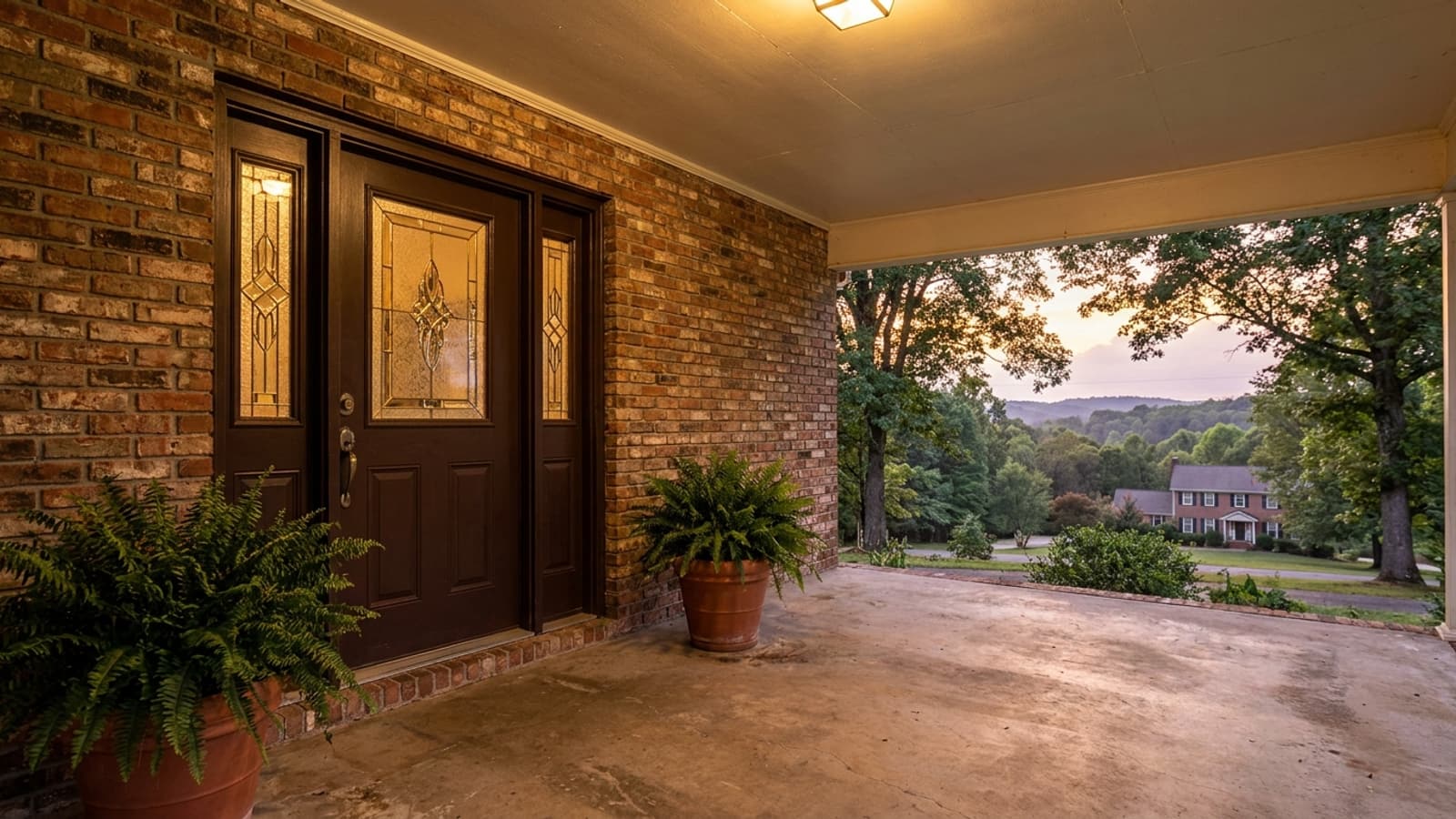
There is a deep porch or a real overhang
Steel is a strong value here. The cover blocks the rain that would eventually find a scratch and the sun that would bake the face. You are getting a rigid, secure, well-insulated door for less money, and the conditions that expose steel's weaknesses are not present.
There is no cover, or a token one
Fiberglass. An uncovered entry gets rain running down the face, water standing at the threshold and hours of direct sun. That is exactly the environment where a steel skin eventually shows its edges and where fiberglass simply does not care.
The entry faces west or south
Fiberglass, and think about the color. Our whole service area sits in a cooling-dominated climate, and a west-facing door with no shade takes the worst of a Tennessee Valley afternoon. Fiberglass handles the heat cycling better, and a lighter color handles it better than a dark one.
It is a side door, a garage-to-house door or a rental
Steel is often the sensible answer. These openings are usually covered, take less abuse from weather than from carts and dogs, and do not need to sell the house from the curb.
Does the glass change the decision?
It changes the price and the privacy more than the material choice. A half-lite, three-quarter-lite or full-lite door costs more than a solid slab, and decorative or textured glass costs more than clear. Both materials are available in the same glass configurations.
One thing worth knowing before you fall in love with a full-glass door: the more glass, the less insulated core, and the more the door's overall energy performance depends on the glass package rather than the door. That is fine — it is a trade most homeowners happily make for daylight in an entry hall — but make it knowingly.
What does an entry door cost?
Exterior door projects with us run $3,973 to $7,500 installed, and that range covers entry, patio, French and storm doors. Where a specific door lands inside it depends on the material, the glass, the sidelights or transom, the hardware and whether the opening needs work once the old unit comes out. Most door installs run one to two days.
Fiberglass costs more than steel in the same configuration. It is not a large premium relative to the whole project, and on an exposed entry it is the cheaper decision over ten years.
Larger door and window projects are often spread out with GreenSky financing, which includes no-interest options if paid in full within 6, 15 or 18 months plus fixed-rate terms, with zero down for most approved homeowners, subject to credit approval.
There is no federal tax credit for exterior doors placed in service in 2026. The Energy Efficient Home Improvement Credit was terminated for property placed in service after December 31, 2025, so do not build a federal credit into your door budget.
What should you ask before you sign?
Four questions separate a real door quote from a number on a page:
- Which material and which product line? "Fiberglass door" spans a wide range. Get the series in writing.
- What is the jamb and threshold situation? A new door in a rotted jamb is a new door with an old problem behind it.
- What hardware is included? Lockset, deadbolt, strike plate and hinges are part of how the door performs and how secure it is.
- What is the labor term on the warranty? A long material warranty paired with a one-year labor warranty is a much weaker promise than it sounds. What we install is covered in writing, material and labor both, under The Patriot's Promise.
What is the next step?
Look at both doors in person before you decide. At a free in-home estimate the estimator measures the opening, checks the exposure and the existing jamb, shows you steel and fiberglass side by side in the configurations that fit, and gives you one itemized price. There is no trip charge inside our service area.
When you are ready to compare them for your own entry, request a free estimate or call (423) 830-7138.