Short answer
Yes. On most homes a window can be replaced with no damage to the surrounding siding, because the work happens inside the existing opening and the siding is never disturbed. The exception is a full-frame replacement, where the exterior trim and a narrow band of siding at the perimeter may have to come off and go back on. A crew that plans for that before the first window comes out is the difference between a clean perimeter and a patched one.
Yes, you can replace a window without damaging siding, and on most homes that is exactly what happens. The work takes place inside the existing opening, the siding on the wall is never touched, and when the crew leaves the only visible change is a new window sitting in the same frame line as the old one. The question matters most when the job is a full-frame replacement, where the exterior trim and a narrow band of siding right at the perimeter have to be opened up and put back.
Homeowners ask this for a practical reason. Siding is expensive, color-matched to a batch that may no longer exist, and the one part of the exterior that shows every repair. Knowing in advance which kind of window replacement your house needs tells you whether the siding is part of the conversation at all.
What does insert versus full-frame have to do with the siding?
These are the two ways a replacement window goes into a house, and they treat the exterior very differently.
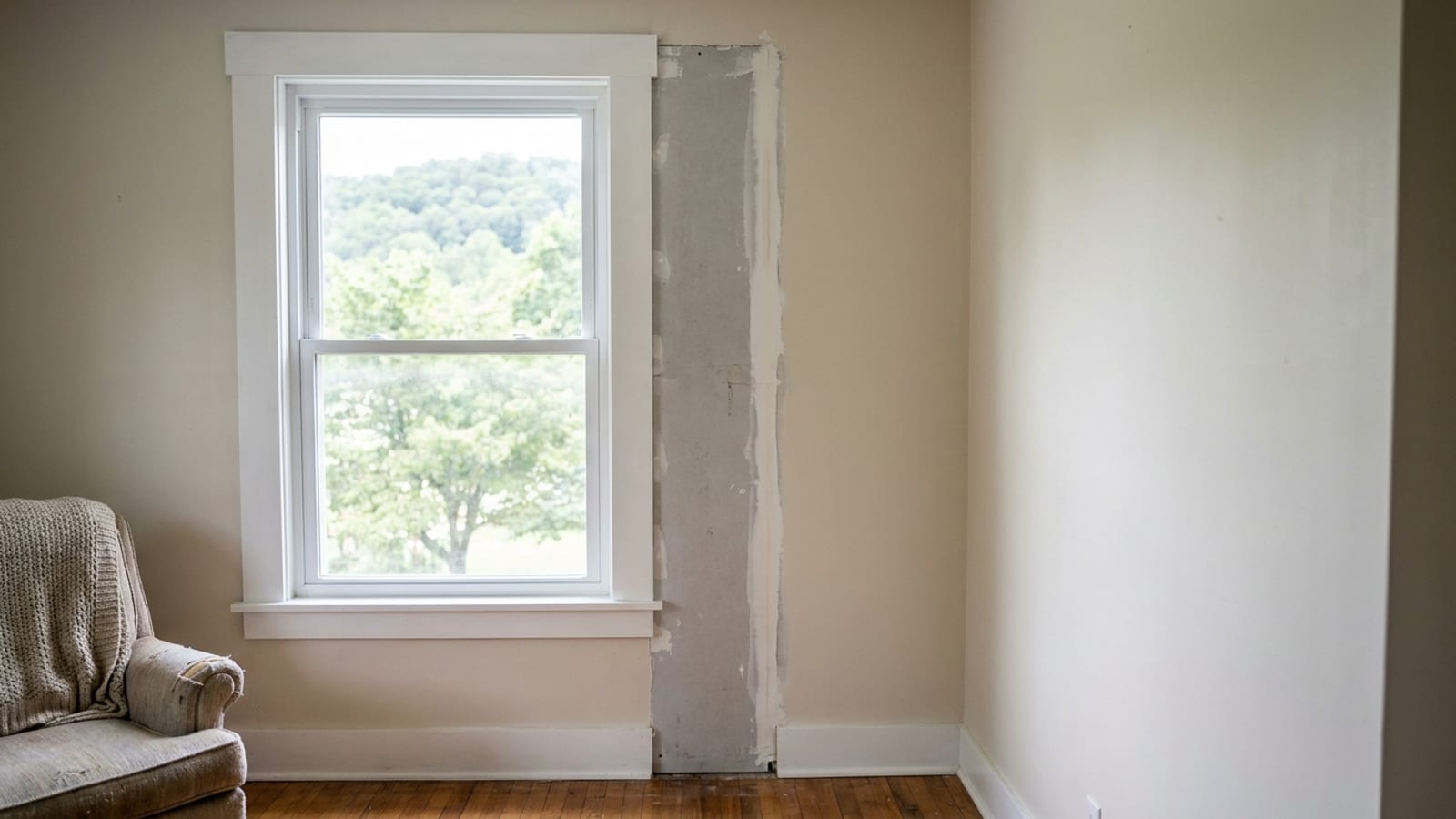
An insert replacement, sometimes called a pocket replacement, removes the old sashes and the interior stops and sets a new window inside the existing frame. The old frame stays. The exterior trim stays. The siding stays. Nothing outside the window opening is disturbed, so there is essentially no siding risk. This is the correct method when the existing frame is sound, square and dry.
A full-frame replacement takes everything out down to the rough framing: sashes, jambs, sill and exterior trim. That is the only honest way to handle a rotted sill, a frame that has racked out of square, a window with a history of water getting into the wall, or an old aluminum unit where you want to recover the glass area that the thick frame stole. Because the exterior trim comes off, the siding that butts into that trim gets exposed, and on some installations a strip of siding at the perimeter has to be released, slid out or cut back and then reinstalled.
So the answer is not one answer. It depends on which method your openings need, and most houses correctly get a mix.
How does each siding material behave during a window replacement?
Siding materials do not all respond the same way to being opened up at a window perimeter. Some come apart and go back together cleanly. Some do not come apart at all and have to be cut.
| Siding type | Comes apart cleanly? | What is usually needed | Color match risk |
|---|---|---|---|
| Vinyl | Yes, with an unzip tool | Release courses, replace or reset J-channel | Low to moderate, fading is the issue |
| Fiber cement | No, it is cut and fastened | Cut back, new trim, caulk and paint touch-up | Low on ColorPlus, moderate on site-painted |
| Aluminum | Sometimes | Often recapped with trim coil | High on old finishes |
| Wood lap | Yes, with care | Pry, reset, prime and paint cut ends | Low, it gets painted anyway |
| Brick or stone veneer | Not applicable | Window works inside the masonry opening | None |
| Stucco | No | Cut, patch and texture match | High |
Vinyl is the friendliest of the group. It hangs on nails and locks course to course, so a crew with an unzip tool can release what it needs to and lock it back down. The real variable is age. Vinyl that has been on a south wall for twenty years has lightened, and a brand new piece next to it reads as new. That is why we try to reset the original pieces rather than introduce fresh ones.
Fiber cement is the opposite. It is cut, nailed and finished as a system, and once a board is cut at the window it is not going back the way it came. The perimeter instead gets new trim, properly fastened and sealed, which is routine work for a crew that installs fiber cement siding regularly. If your boards are ColorPlus factory finish, the trim gets matched from the same color line. If they were painted on site, plan on touch-up paint.
Stucco and old aluminum are the two that deserve the most planning, because both are hard to make invisible after a cut. On those walls, an insert replacement is worth a serious look whenever the frame condition allows it.
What actually happens at the siding during a full-frame job?
Here is the sequence on a typical vinyl-sided wall when the whole unit is coming out.
- The interior casing comes off first so the frame can be cut free from inside.
- Outside, the J-channel around the window is released and the siding courses that terminate into it are unlocked.
- The exterior trim or brickmould is removed, exposing the nailing flange or the frame edge and the sheathing behind it.
- The old frame is cut out. This is the moment the condition of the rough opening becomes visible, including the subsill and the bottom corners where water collects.
- Any damaged framing or sheathing is repaired.
- The opening gets flashed: sill pan or flexible flashing first, then the window set plumb, square and level on shims, then jamb and head flashing lapped so water runs out and down.
- The perimeter is insulated and air sealed.
- New trim goes on, J-channel is reinstalled, the siding courses lock back in and the joints are sealed.
Notice how much of that list is water management. Flashing, not caulk, is what keeps the wall dry. Caulk is the secondary seal at joints. A window perimeter that relies on a bead of sealant to hold water out is a perimeter that will need attention again, and that is true no matter how good the window is.
When is aluminum trim coil the better answer than reworking the siding?
On a lot of houses, the cleanest finish at a window is not resetting old siding but capping the exposed wood trim in bent aluminum trim coil. The coil is formed on site to the exact profile of your casing and sill, fastened and sealed, and it comes in colors that can be matched to the siding or to the window frame.
Capping makes sense when the existing wood trim is sound but tired, when you do not want to repaint exterior casings every few years, or when the siding around the opening is fragile enough that the less it moves the better. It also gives a consistent look when some openings on the house are being done insert and others full frame.
What capping is not is a cover-up. Rotted wood gets replaced before anything is wrapped over it. Capping trim that is already soft just hides the problem from view.
What if the crew finds rot behind the trim?
This is the single most common scope change on a window job, and it is worth understanding before you sign anything. Nobody can see behind exterior trim until the trim is off. Water that has been tracking in at a head flashing or a failed sill joint shows up as soft sheathing or a punky subsill, and it has to be cut out and rebuilt before the new window goes in.
The right way to handle it is to ask how rot is priced before work starts, so the number is known rather than discovered. Ask it as a direct question at the estimate: what happens if you find rot, and how is that billed? A clear answer up front is a good sign about everything else on the job. Our workmanship and material coverage is spelled out in The Patriot's Promise, and the part worth reading is the labor term, because perimeter and installation details are what most service calls turn out to involve.
Does keeping siding intact change the cost of the project?
It can. Replacement windows in this market run about $700 to $2,200 per window installed, and that figure covers the unit, the labor, the sealing, the trim and the cleanup. Full-frame work sits higher in that range than insert work because there is more labor, more material and more exterior finish work at each opening.
That is not a reason to force an insert onto an opening that needs full-frame treatment. An insert dropped into a rotted or out-of-square frame locks the problem inside the wall and gives up the chance to flash the opening correctly. The savings on the day get spent later. Where the choice is genuinely open, though, the insert is both cheaper and gentler on the siding, which is why sound frames usually get one.
If the number is the obstacle rather than the method, spreading it out is straightforward. Financing through the GreenSky program includes no-interest-if-paid-in-full plans at 6, 15 or 18 months and fixed rates starting at 6.99% APR, with zero down for most approved homeowners.
What should the quote say about siding and trim?
Read for these lines specifically. They are where two quotes that look similar stop being similar.
- Whether each opening is insert or full frame, listed per opening rather than as one blanket method.
- How the exterior perimeter will be finished: existing trim reset, new wood trim, aluminum capping or new fiber cement trim.
- Who provides and installs new J-channel where vinyl is involved.
- What flashing is used at the sill, jambs and head.
- How siding that must be removed will be reinstalled, and what happens if a piece breaks.
- How rot or sheathing repair is priced if it is found.
- Who hauls away the old windows and debris.
Once those lines match between two bids, the price difference finally means something. Before that, the lower number usually just describes a smaller scope.
What is the next step?
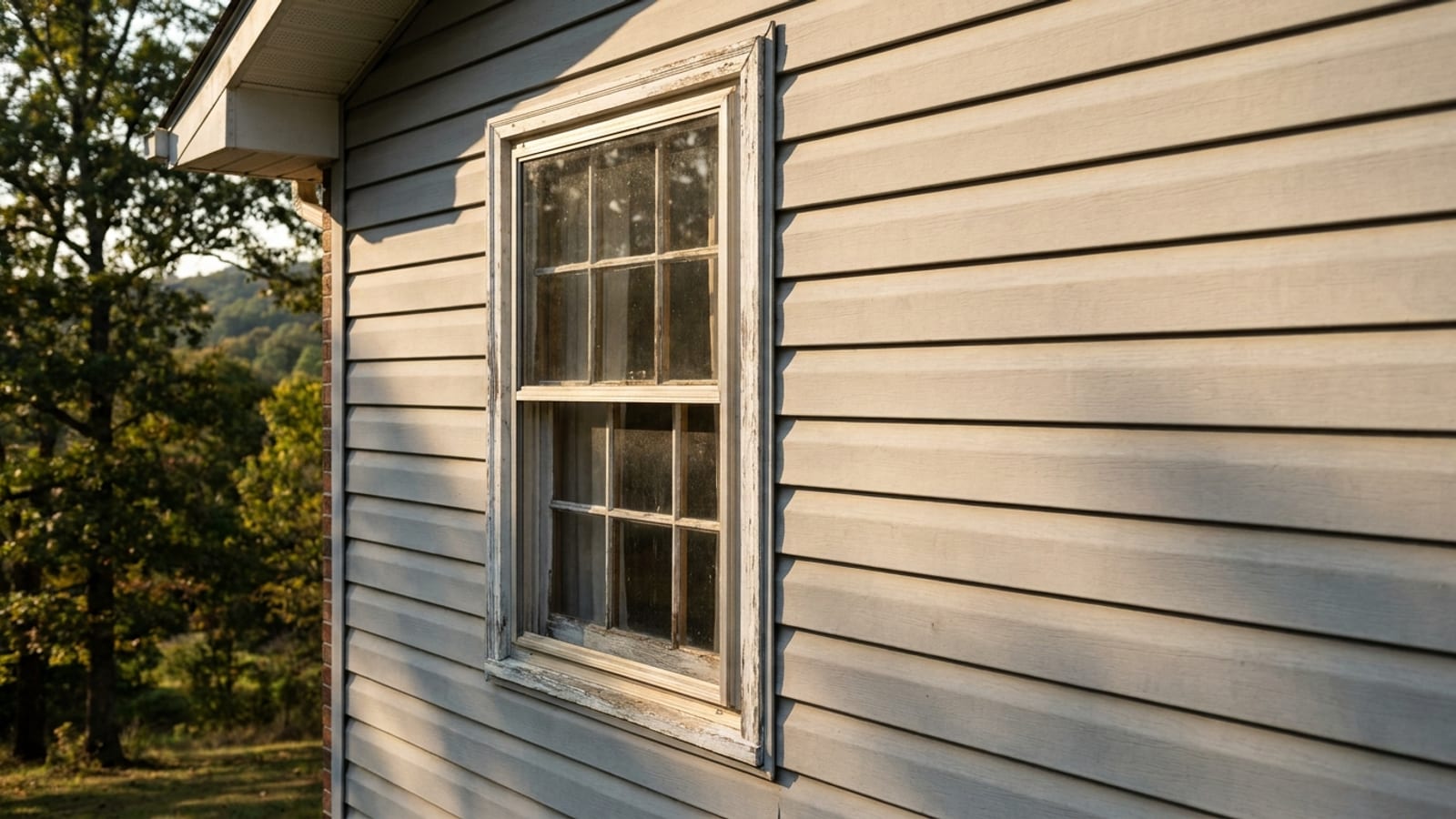
Walk your exterior and look at the bottom corners of each window where the trim meets the siding. Soft wood, dark staining, open joints and lifted trim are the signals that an opening is more likely to need full-frame work. Then have the openings measured and assessed in person, because the frame condition is what decides the method and the method is what decides whether the siding is involved.
Schedule a free in-home estimate at get an estimate or call (423) 830-7138. An estimator measures every opening, checks the frames and sills, and gives you one itemized price per opening with the install method spelled out. It is a sales appointment, and it is also the only way anyone can tell you whether your siding has to be touched at all.