Short answer
For most homes in Tennessee, North Georgia and Northeast Alabama, a full hurricane impact rating is more window than the risk calls for, because none of our service area sits in a coastal wind-borne debris zone where that rating is required by code. What does pay off inland is a strong design pressure rating, a properly anchored install, and laminated glass on the openings that take wind, noise or security risk. Buy the assembly for the exposure of each elevation rather than labeling the whole house hurricane-rated.
For most homes in Tennessee, North Georgia and Northeast Alabama, a true hurricane impact rating is more window than the risk calls for. None of the 106 cities we serve sits in a coastal wind-borne debris region, so no building department here requires impact glazing on a window replacement. What does earn its keep inland is a solid design pressure rating, laminated glass on the openings that need it, and an install anchored to the structure the way the manufacturer specifies.
That is the honest version. The longer answer is worth reading, because "impact resistant" covers several different things that get sold as one thing, and one of them is genuinely useful on a house in Hamilton County or Cobb County.
What does impact-rated actually mean?
An impact rating is earned by a complete window assembly, not by a pane of glass. The unit goes through a missile impact test (a large missile test fires a nine pound two-by-four at the glass, and a small missile test fires steel balls at it), and then the same assembly goes through thousands of cycles of positive and negative pressure to simulate a storm pushing and pulling on it for hours. If the glazing stays in the frame and the frame stays in the opening, it passes.
The glass that survives that is laminated: two panes bonded to a clear plastic interlayer. When it breaks, the shards stay stuck to the interlayer instead of falling into the room, and the opening stays closed. The frame has to be reinforced to hold the glazing, and the installation has to use the specific fastener type, spacing and embedment the test was performed with. Change the anchoring and the rating no longer describes what is on the wall.
When homeowners shop replacement windows and see "impact resistant" on a brochure, it is worth asking which of those three parts is actually being offered: the laminated glass only, the laminated glass in a reinforced frame, or a tested and labeled assembly with an engineered anchoring schedule.
Impact rating versus design pressure rating
These get confused constantly, and for inland homes the second one matters more.
Design pressure (DP) describes how much wind pressure a window can take without structural failure or water getting past it. It is tested in both directions, because wind pushes on the windward wall and pulls hard on the leeward side and the corners. A DP 50 window has been loaded to the equivalent of a very stiff sustained wind and held.
Impact rating describes what happens when something hits the glass. A window can have a high DP rating and no impact rating at all. For a house in Dunlap or Dalton that sees severe thunderstorm gusts a few times a year but will never see a coastal debris field, the DP number and the water resistance rating are the specs that track with real performance.
What storms actually threaten windows in this region?
Our weather risk is different from the Gulf Coast, and the window spec should follow the actual risk.
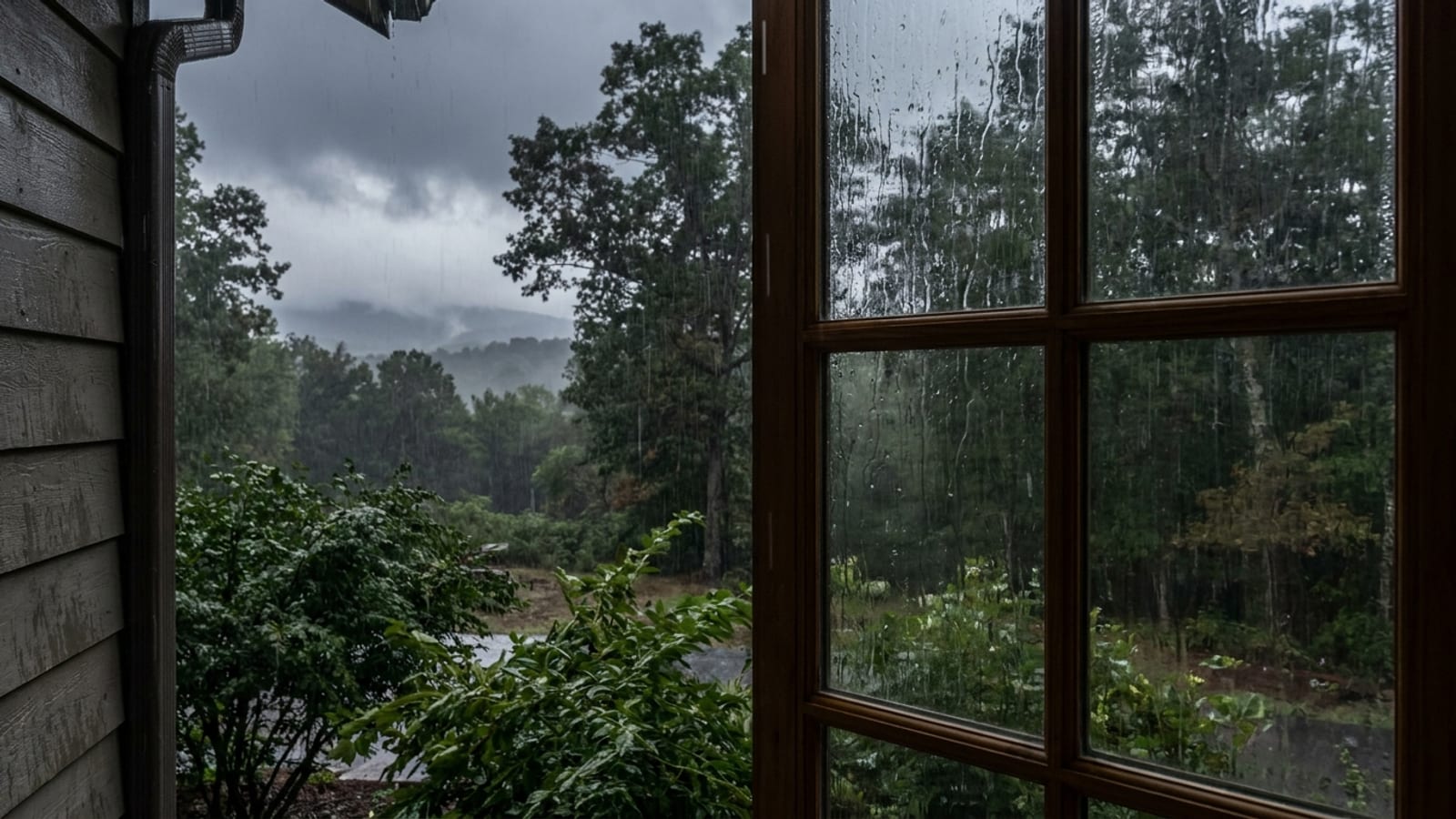
- Straight-line winds from severe thunderstorms. This is the common one. Gusts arrive fast, push rain horizontally at the wall, and test the seal and the anchoring more than the glass.
- Hail. Hail hits glass at a steep angle and usually does its worst damage to siding, screens and roofing. Laminated glass helps when a stone does find a window, because the pane stays in place.
- Tropical remnants. Systems that come up from the Gulf reach Chattanooga and metro Atlanta as rain events with wind, not as hurricanes. Flooding and falling limbs do more damage here than wind pressure does.
- Tornadoes. No residential window is rated to survive a direct tornado path, and nobody should sell one that way. A safe interior room is the answer to that risk, not glass.
- Falling limbs. The most common cause of a broken window in our market is a tree, not a storm front.
How do the glazing options compare?
| Glazing | How it behaves when struck | Debris resistance | Side benefits | Relative cost |
|---|---|---|---|---|
| Standard annealed insulated glass | Breaks into large sharp pieces, opening is left open | Low | None beyond the base unit | Included in the standard window |
| Tempered glass | Shatters into small blunt pieces, opening is left open | Low | Required safety glazing near doors, floors and tubs | Small upgrade |
| Laminated glass | Cracks but the interlayer holds the pane in the frame | Moderate to high | Sound reduction, security, UV fade reduction | Moderate upgrade |
| Tested impact assembly (laminated plus reinforced frame and engineered anchors) | Designed to keep the opening closed through missile and cyclic pressure testing | Highest | Same as laminated, plus a labeled rating | Largest increase, upper end of the range |
Windows in our market run roughly $700 to $2,200 per window installed, and that figure covers the unit, the labor, the sealing and the trim. Laminated and impact assemblies sit at the upper end of that range because the glass is heavier, the frame is reinforced and the opening often needs more attachment work. If spreading that out is the question, our financing options through the GreenSky program include no-interest-if-paid-in-full plans and fixed rate terms.
Where is laminated glass genuinely worth paying for?
Skip the blanket upgrade and spend on specific openings. These are the ones that usually justify it.
- Large fixed or picture windows. A big pane has more area to load and is the most expensive thing to replace after a storm.
- Elevations that face the prevailing weather. In this region that is generally the west and southwest wall, and it is the same wall that takes the worst afternoon sun.
- Ground-floor openings on a quiet side of the house. Laminated glass does not stop a determined break-in, but it resists a quick single-blow entry in a way a tempered pane does not.
- Rooms facing a busy road or a flight path. Laminated glass is one of the few upgrades that measurably reduces traffic noise, because the interlayer damps vibration across the pane.
- Openings under large mature trees. Limb strikes are the realistic debris threat here.
A house that gets laminated glass on four or five openings and a well-rated standard insulated unit everywhere else usually ends up better protected per dollar than a house that buys the badge for every window.
Does a storm rating change the energy specs?
It should not. Our whole service area sits in the ENERGY STAR South-Central climate zone, where a qualifying window needs a U-factor of 0.28 or lower and an SHGC of 0.23 or lower. Cooling load dominates here, so SHGC is the number that decides summer comfort, and the low-E coating is what carries it.
Laminated units are available with the same low-E coatings, argon fill and warm-edge spacers as any other insulated glass unit. The interlayer does block a large share of ultraviolet light, which slows fading on floors and furniture, but it is not a substitute for a good coating. When you compare quotes, confirm that the laminated option still shows the SHGC you were promised, because heavier glass packages sometimes come with a different coating than the base unit.
Why does the installation matter more than the sticker?
Every rating in this article was earned by an assembly anchored a specific way. The fastener type, the spacing, the embedment into solid framing and the flashing detail at the sill are all part of what was tested. That is also what decides whether wind-driven rain stays outside.
That is why we do a full measure before anything is ordered, confirm whether each opening takes an insert or a full-frame replacement, and repair the framing and subsill when we find problems after the old unit comes out. Our work is backed by The Patriot's Promise, which covers windows for a lifetime on material and labor and is transferable once. You can read the terms on the warranty page, and the labor term is the line worth comparing against any other quote you are holding.
We are Andersen Certified and AAMA Gold Label installers, and we are manufacturer-direct on every brand we carry, which means the glass package on your order is spec'd for the elevation it is going on rather than pulled from one catalog page for the whole house.
What is the next step?
Walk your house and note which openings face the weather, which sit under trees, which face a road, and which ones are large enough that replacing the glass after a storm would hurt. Bring that list to a free in-home estimate. An estimator measures every opening, checks the frames and sills, shows you the laminated and standard glass side by side, and gives you one itemized price per opening with the install method spelled out. It is a sales appointment, and it is also the only way to get a real number instead of a guess.
Request your free estimate and we will price the storm-exposed openings and the ordinary ones separately, so you can see exactly what the upgrade costs before you decide.