Short answer
Repair the window when the frame is sound and square and the problem is a moving part — worn hardware, a broken sash cord or balance, failed weatherstripping, or one cracked pane in a single-glazed sash. Replace the window when the insulated glass seal has failed, the sash or sill is rotted, the frame is out of square, or the unit is single-pane and the room is uncomfortable. The dividing line is whether the failure is in the parts or in the window itself.
Repair the window when the frame is sound and the thing that failed is a part — hardware, a sash cord or balance, weatherstripping, or a single cracked pane in a single-glazed sash. Replace it when the failure is the window itself: fog between the panes, a rotted sash or sill, a frame that has gone out of square, or single-pane glass in a room nobody wants to sit in during August.
That is the whole decision in one sentence, but it is worth walking through, because the honest answer for most houses is "some of both." A 1968 ranch can have three windows that need nothing but new balances and five that are past saving, and treating the house as one decision costs you money in one direction or the other.
What can actually be repaired on an old window?
More than most homeowners assume. These are all repairs, not replacements:
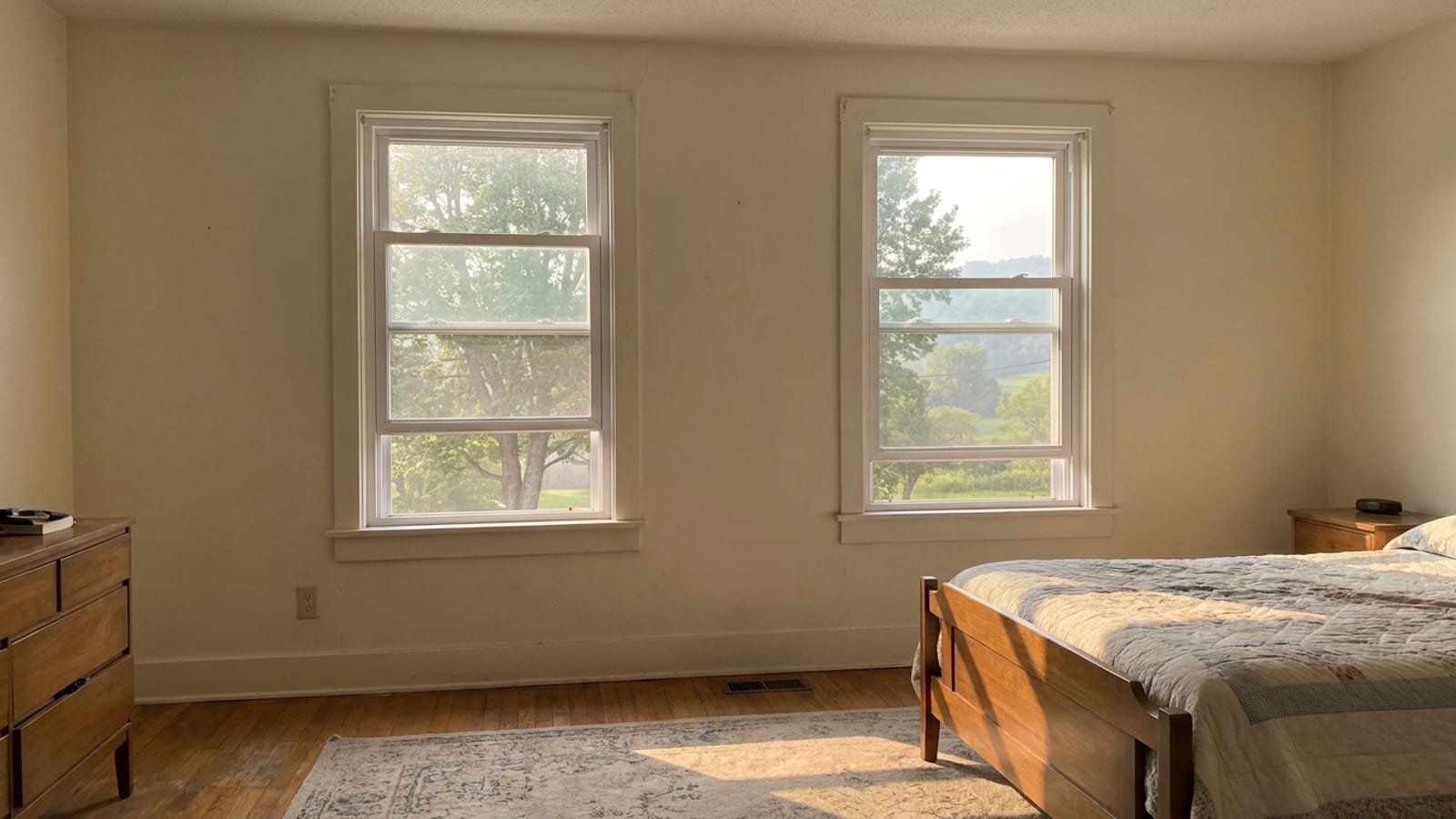
- Sash cords, chains and balances. A double-hung that will not stay up has a broken balance or a parted cord. The sash is fine.
- Locks, latches, cranks and hinges. Casement operators and double-hung locks wear out and are replaceable parts.
- Weatherstripping. The compressible seal around a sash is a consumable. It flattens, hardens and stops sealing, and it can be replaced.
- Glazing putty and stops. On a single-glazed wood sash, failed putty is a maintenance item.
- One broken pane in a single-glazed sash. A glazier can cut and set a new pane.
- Screens. Rescreening is inexpensive and has nothing to do with the window's condition.
- Paint and finish. Peeling paint on a sound sash is a finish problem.
If your complaint is on that list and the frame around it is solid, you do not need replacement windows for that opening. You need a part and an afternoon.
What cannot be repaired?
These are the failures where repair either is not possible or does not solve the actual problem:
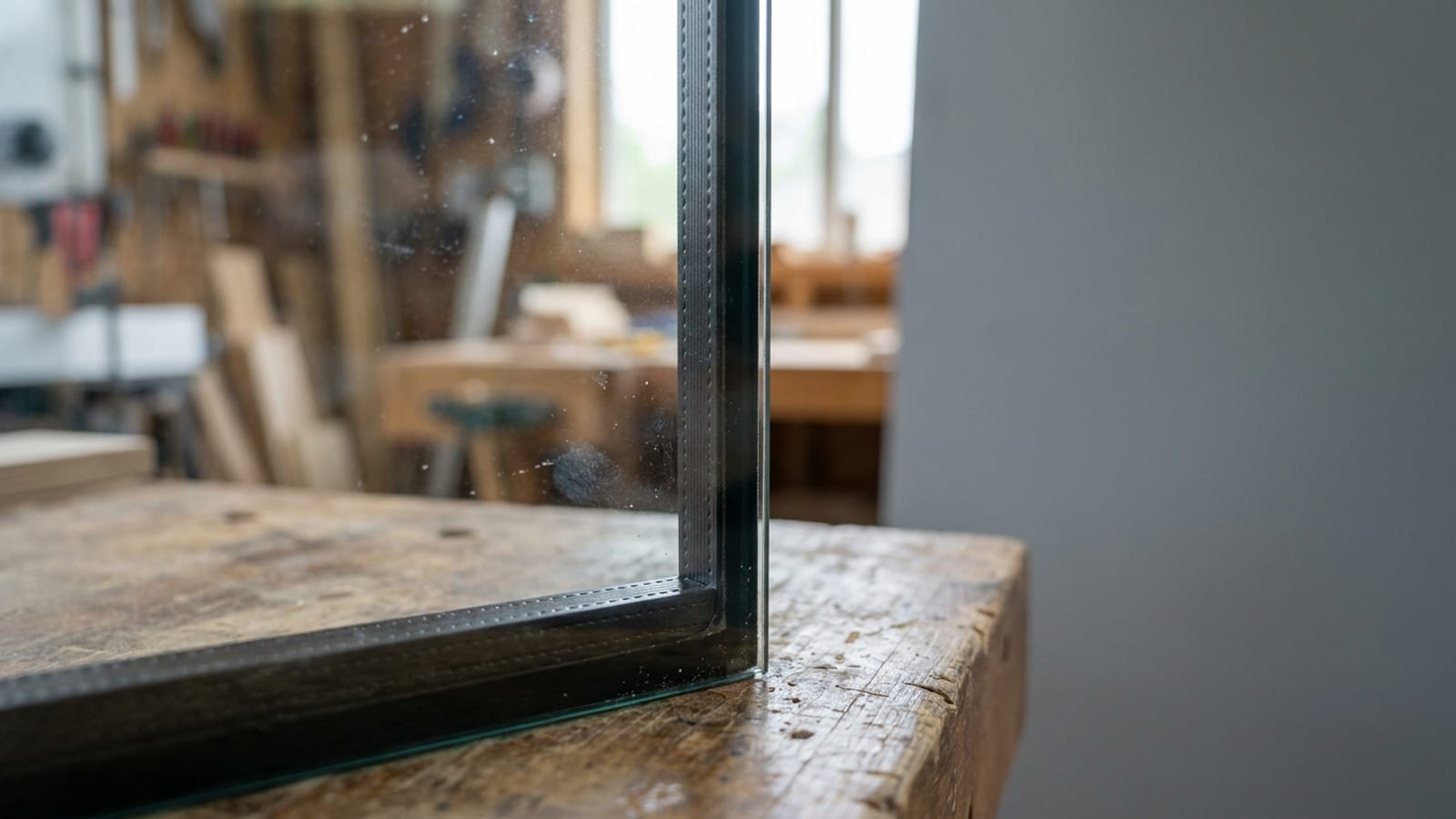
- A failed insulated glass seal. The fog between the panes is moisture inside a sealed unit. Nothing you can clean, drill or vent restores it. Some sashes accept a new glass pack, which is a real middle option, but the seal itself is not repairable.
- Rot in the sash, jamb or sill. Wood that has gone soft is not a surface to fasten to. Filler buys a season.
- A frame out of square. When the house has settled and the opening is no longer rectangular, the sash will never seal along its whole perimeter no matter what you do to the sash.
- Single-pane glass performance. You cannot repair your way to a low-E coating. The glass is the glass.
- Cracked or brittle vinyl and old aluminum frames. Vinyl that has gone chalky and brittle from decades of UV has no repair path, and old aluminum frames conduct heat by design.
Repair or replace: how do the two compare?
| Symptom | Repair | Replace | Why |
|---|---|---|---|
| Sash will not stay up | Yes | No | Broken balance or cord — a part |
| Lock or crank broken | Yes | No | Hardware is replaceable |
| Drafty at the sash, frame sound | Yes | Maybe | Weatherstripping first; replace if single-pane and uncomfortable |
| One cracked pane, single glazed | Yes | No | Reglaze the sash |
| Fog between the panes | No | Yes | Failed seal; ask about a glass pack on a sound sash |
| Soft or spongy sill | No | Yes | Full-frame replacement, not a repair |
| Sash rubs and will not close square | No | Yes | The opening has moved |
| Painted shut for 30 years | Sometimes | Often | Depends on what is under the paint |
| Old aluminum frame, sweating in winter | No | Yes | The frame itself is the thermal bridge |
How old is too old?
Age alone is a weak signal. Condition and glass type are the strong ones. Windows in this market generally last 20 to 30 years, so a 1990s vinyl unit is at the end of a normal life while a 1930s wood sash may have decades left in the wood and none left in the glazing.
Two questions sort most houses faster than a birth year:
- Is it single-pane? If yes, no repair changes the comfort problem. A single pane of glass is a hole in your wall as far as summer heat gain is concerned.
- Is the frame sound and square? If yes, an insert replacement is available to you, which is the less invasive and less expensive method. If no, the job is full-frame and the price goes up.
Our whole service area — Southeast Tennessee, North Georgia and Northeast Alabama — sits in the ENERGY STAR South-Central climate zone, where a qualifying window needs a U-factor of 0.28 or lower and a solar heat gain coefficient of 0.23 or lower. That second number is the one you feel here, because our load is cooling rather than heating. It is also the number no repair can touch.
What does the money look like?
Repairs are small and specific: a balance, a lock, a run of weatherstripping, a reglazed pane. They are usually a trade-service call or a capable homeowner's Saturday, and they are the right spend on a house where two windows are annoying and the rest are fine.
Replacement windows with us run $700 to $2,200 per window installed, and that per-window figure covers the unit, the labor, the sealing, the trim and the cleanup. Full-frame typically adds several hundred dollars per opening over an insert.
Larger projects are commonly spread out with GreenSky financing, which includes no-interest options if paid in full within 6, 15 or 18 months and fixed-rate terms starting at 6.99% APR for 60 months. Zero down is available for most approved homeowners, subject to credit approval.
One budgeting note: there is no federal tax credit for windows placed in service in 2026. The Energy Efficient Home Improvement Credit was terminated for property placed in service after December 31, 2025. Anyone still telling you to plan around a 30% federal credit is working from outdated information.
Does the answer change if you are selling soon?
It changes the calculation, not the diagnosis. If you are listing in a few months, fixing the windows that stick and do not lock is worth doing, because a buyer's inspector will note them and a walkthrough notices a sash that falls. Replacing an entire house of windows to sell it is a harder case to make.
If you are staying ten years, the arithmetic reverses. You are the one living with the cooling bills, the west-facing room and the sashes, and repair on a single-pane house is money spent to keep a window you will eventually replace anyway.
Can you do it in phases?
Yes, and it is a common plan here. Do the worst elevation first — usually west or south, or wherever the fogged and stuck units are — and come back for the rest later. Measure the whole house at once so the product line and glass package match when you finish the job, and so the second phase does not become a search for a discontinued series.
Whatever we install is covered in writing, material and labor both, under The Patriot's Promise — transferable once and prorated after that.
What is the next step?
Have someone look at the actual windows. At a free in-home estimate the estimator checks each opening, tells you which ones are repairs and which ones are replacements, and gives you one itemized price for the ones that are worth doing. There is no trip charge anywhere in our service area across Tennessee, Georgia and Alabama.
When you want that read on your own house, request a free estimate or call (423) 830-7138.