
Short answer
A picture window is right when the opening is about view and daylight rather than airflow, and when another window in the same room handles ventilation. Because a fixed unit has no moving parts, it seals tighter, shows more glass in the same rough opening, and costs less per square foot of view than an operating window the same size. It is the wrong choice when that opening is a bedroom's required escape route or the only window in the room.
A picture window is a window that does not open. That sounds like a limitation, and it is one, but it also removes every part of a window that leaks, sticks, wears out or blocks your view. When an opening exists to bring in light and a view rather than air, a fixed unit is the better window and usually the cheaper one per square foot of glass.
The decision is rarely whole-house. It is opening by opening, and the most common right answer is a combination: one large fixed unit in the middle with an operating window on each side.
What is a picture window, exactly?
A picture window is a single fixed sash set in a frame with no operator, no balance system, no lock and no screen. The glass is held in place permanently. Some manufacturers build a fixed unit to visually match a neighboring operating unit — same frame profile, same sash line — so a bank of windows reads as one design even though only part of it opens.
That matching detail matters more than homeowners expect. A fixed unit built on a different frame platform than the double-hungs beside it will show a different sight line, and once you notice it you cannot stop noticing it. When we spec replacement windows for a wall that mixes fixed and operating units, matching the frame family is part of the order, not an afterthought.
Why does a fixed unit give you more glass for the money?
Three reasons, and they compound.
No hardware means no cost. An operating window carries an operator or a balance system, a locking mechanism, weatherstripping designed to survive thousands of cycles, and a screen. A fixed unit carries none of that. Strip those parts out and the unit costs less to build.
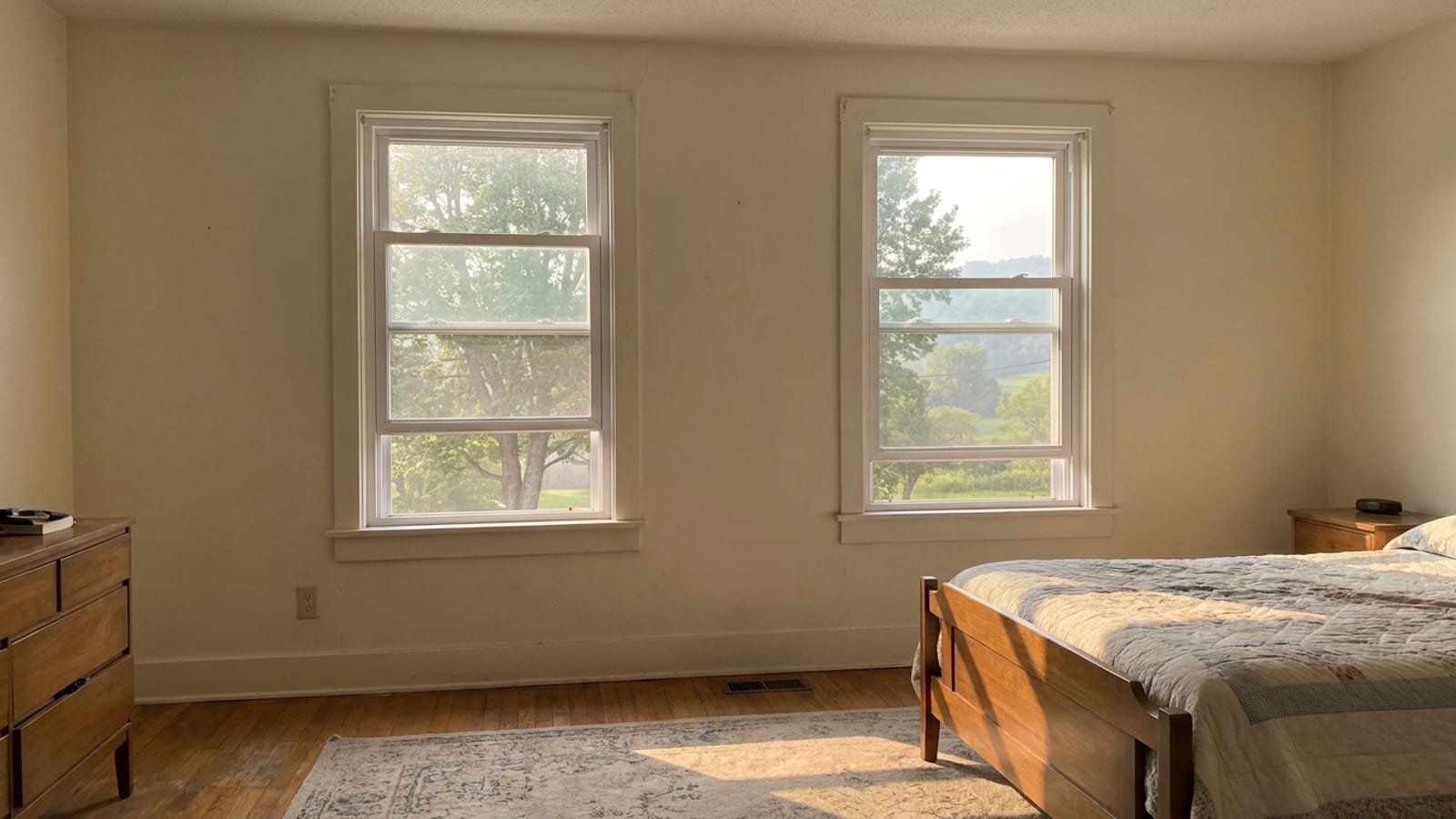
No moving sash means more visible glass. In a double-hung, the two sashes overlap at the check rail and each sash frame eats into the daylight opening. In a fixed unit, the frame runs around the perimeter and everything inside it is glass. Put a fixed unit and a double-hung in identical rough openings and the fixed unit shows noticeably more view.
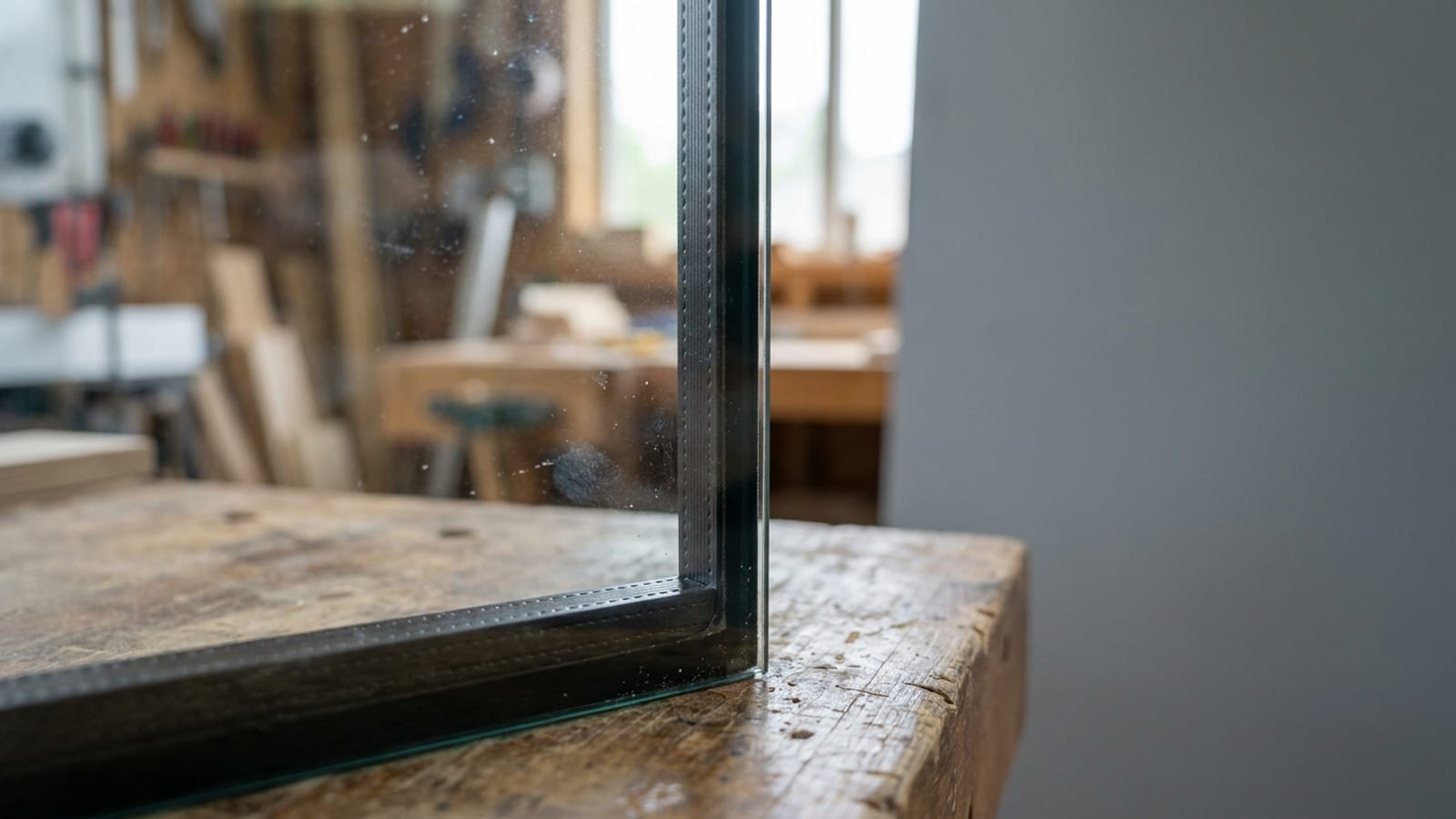
No moving parts means a tighter seal. Air leakage happens where a sash has to move past its weatherstripping. A fixed sash is sealed into the frame permanently, so a picture window typically posts the lowest air-leakage number of any style in a product line. That matters here, where the difference between a comfortable room and a drafty one is often air movement rather than glass performance.
All three add up to the same conclusion. If an opening does not need to open, making it open costs you money, glass area and a little performance.
Where does a picture window clearly belong?
The main view wall of a living room or great room
This is the classic case. A wide wall facing a yard, a ridgeline or a treed lot, where the point is the view and the room already has other windows or a patio door that ventilates it. A large fixed unit here delivers the widest uninterrupted glass available and it will never rattle, stick or need a screen replaced.
Above eye level, and above other windows
Transom units over a door, fixed lites above a bank of double-hungs, tall narrow units flanking a fireplace — these openings are about daylight reaching into the middle of the house. Nobody was going to open them anyway. Making them fixed is free performance.
Stairwells and two-story entries
High openings on a stair wall are hard to reach and rarely operated. A fixed unit is the honest answer, and it avoids the situation where a crank-out window sits eleven feet up and gets opened twice in a decade.
Openings where a screen would ruin the view
Every operating window has a screen, and a screen dulls the view slightly no matter how fine the mesh. If the whole reason for the window is what you see through it, going fixed removes the screen from the equation permanently.
Where is a picture window the wrong call?
Any bedroom opening that carries egress duty
Sleeping rooms need an emergency escape opening that meets minimum clear width, clear height and total clear area with the sash open. A fixed unit opens to nothing, so it cannot be the escape opening. If the room has one window and that window is fixed, the room does not comply. This is not a judgment call — permitted work puts an inspector directly on egress sizing, and we pull the permit through your local building department as part of full service when your project requires one.
A room with only one window
Even where egress is not required — a dining room, a den, a finished basement rec room — one fixed window means that room has no way to move air. Open a window somewhere else in the house on a mild spring day and that room stays sealed. It is a small thing until you live with it.
Kitchens, bathrooms and laundry rooms
These rooms generate moisture and odors and benefit from being able to exhaust them. A fixed unit over a kitchen sink looks great in a catalog and is the wrong window for the room.
Anywhere you would want a breeze
Bedrooms in general, screened-porch-adjacent walls, and any shaded elevation where a cross breeze is worth catching. In our climate, the shaded north and east sides of a house are where opening a window still does something useful in May and October.
How does the picture-and-flankers combination work?
The most-installed configuration on a view wall is one large fixed unit with an operating window on each side, mulled together into a single assembly. It solves both problems at once.
- The center unit gives you the wide, uninterrupted glass.
- The two flankers give you ventilation, and if they are sized correctly, egress.
- Ventilation on both ends of the assembly creates cross flow across the room rather than a single point of air.
- The flankers are the units you touch and clean, and they are reachable at the edges of the wall rather than in the middle of it.
The flankers are usually casements or double-hungs. Casements crank fully open and seal on compression, which makes them the stronger ventilator; double-hungs keep the screen outside and suit traditional elevations better. Either works. What matters is that the flanker is sized to meet egress if the room requires it, because a narrow decorative flanker beside a beautiful picture unit is a code problem waiting for an inspection.
One detail worth deciding at the estimate: whether the assembly is factory-mulled as one unit or field-mulled from separate windows. Factory mulling gives a cleaner, better-sealed joint. It also produces one very large, very heavy assembly that has to be carried to the opening, which is occasionally the deciding factor on a second-floor wall.
How do fixed and operating units compare?
| Picture (fixed) | Casement | Double-hung | |
|---|---|---|---|
| How it opens | It does not | Cranks outward on side hinges | Two sashes slide vertically |
| Visible glass in the same opening | Most | Middle | Least |
| Air leakage | Lowest of any style | Very low, compression seal | Good |
| Ventilation | None | Full opening | Half the opening |
| Screen | None | Interior | Exterior |
| Can meet egress | No | Often, when sized for it | Often, when sized for it |
| Cleaning the exterior | From outside only | Reachable when cranked open | Tilts in on most units |
| Relative cost per square foot of view | Lowest | Highest of the three | Middle |
| Best use | View walls, transoms, stairwells | Ventilation and hard-to-reach openings | General-purpose default |
What glass belongs in a large fixed unit here?
A picture window is usually the biggest piece of glass in the house, which makes the glass package matter more on that opening than anywhere else. Our entire service area sits in the ENERGY STAR South-Central climate zone, where a qualifying window needs a U-factor of 0.28 or lower and a solar heat gain coefficient of 0.23 or lower.
SHGC is the number to watch on a big fixed unit. It measures how much solar heat comes through the glass, and cooling load — not heating — is what drives energy cost in Tennessee, Georgia and Alabama. A large picture window on a west- or south-facing wall is a solar collector if the glass is wrong. We spec glass by elevation for this reason; the same window does not belong on every side of a house, and the big one on the sunny side is where that choice shows up first in a summer power bill.
Triple-pane glass is available on request but is not our default here. The payback is strongest in heating-dominated northern climates, and in this zone the same money spent on a better low-E coating, argon fill and a warm-edge spacer returns more.
What does a fixed unit cost, and what backs it?
Replacement windows in our market run $700 to $2,200 per window installed, and that figure covers the unit, the labor, the sealing, the trim and the cleanup. A fixed unit generally sits lower in that range than an operating unit of the same size — until the fixed unit gets very large, at which point sheer size can push it up again. A three-unit picture-and-flankers assembly is priced as what it is: three windows plus the mulling and the header work behind them.
Whichever way the mix falls on your house, the windows carry our lifetime material and labor coverage under the Patriot's Promise, transferable once and prorated after that. For homeowners spreading the cost, financing through the GreenSky program includes no-interest-if-paid-in-full plans and fixed-rate terms, with zero down for most approved homeowners.
What is the next step?
Walk your house room by room and ask one question at each opening: does anyone ever open this window, and does this room have another way to get air? Where the answer is no and yes, a fixed unit is probably the better window. Where the room is a bedroom, the flankers have to do real work and be sized for it.
Then have someone measure. Schedule a free in-home estimate at get an estimate or call (423) 830-7138. The estimator measures every opening, checks the frames and sills, asks how each room performs in summer and winter, and gives you one itemized price per opening with the install method spelled out. It is a sales appointment, and it is also the only way to get a real number on a picture-window wall instead of a guess.