Short answer
An insert replacement drops a new window into your existing frame — faster, cheaper, and the right choice when your frames are sound. A full-frame replacement removes everything down to the rough opening and rebuilds it, which costs several hundred dollars more per window but is the only correct option when frames are rotted, out of square, or when you want to recover glass area lost to old aluminum frames.
This is the single most common place where two window quotes stop being comparable. One company bids an insert, the other bids full-frame, the prices differ by thousands, and it looks like one of them is gouging you. Usually neither is — they're quoting different work.
What each one actually involves
Insert (also called pocket) replacement
The old sashes, the balance system and the interior stops come out. The existing frame stays. A new, fully assembled window is set into that frame, shimmed, fastened, insulated and sealed. Interior and exterior trim are typically untouched.
- Time: roughly 30-60 minutes per opening
- Disruption: minimal — no exterior siding or interior trim work
- Cost: the baseline price
Full-frame replacement
Everything comes out: sashes, frame, and often the interior and exterior trim, down to the rough framing. The opening gets inspected, any rot repaired, new flashing installed, then a complete new window unit goes in and gets trimmed out inside and out.
- Time: roughly 2-4 hours per opening
- Disruption: real — interior trim and often exterior siding are affected
- Cost: typically several hundred dollars more per opening
How to tell which one you need
You need full-frame if any of these are true:
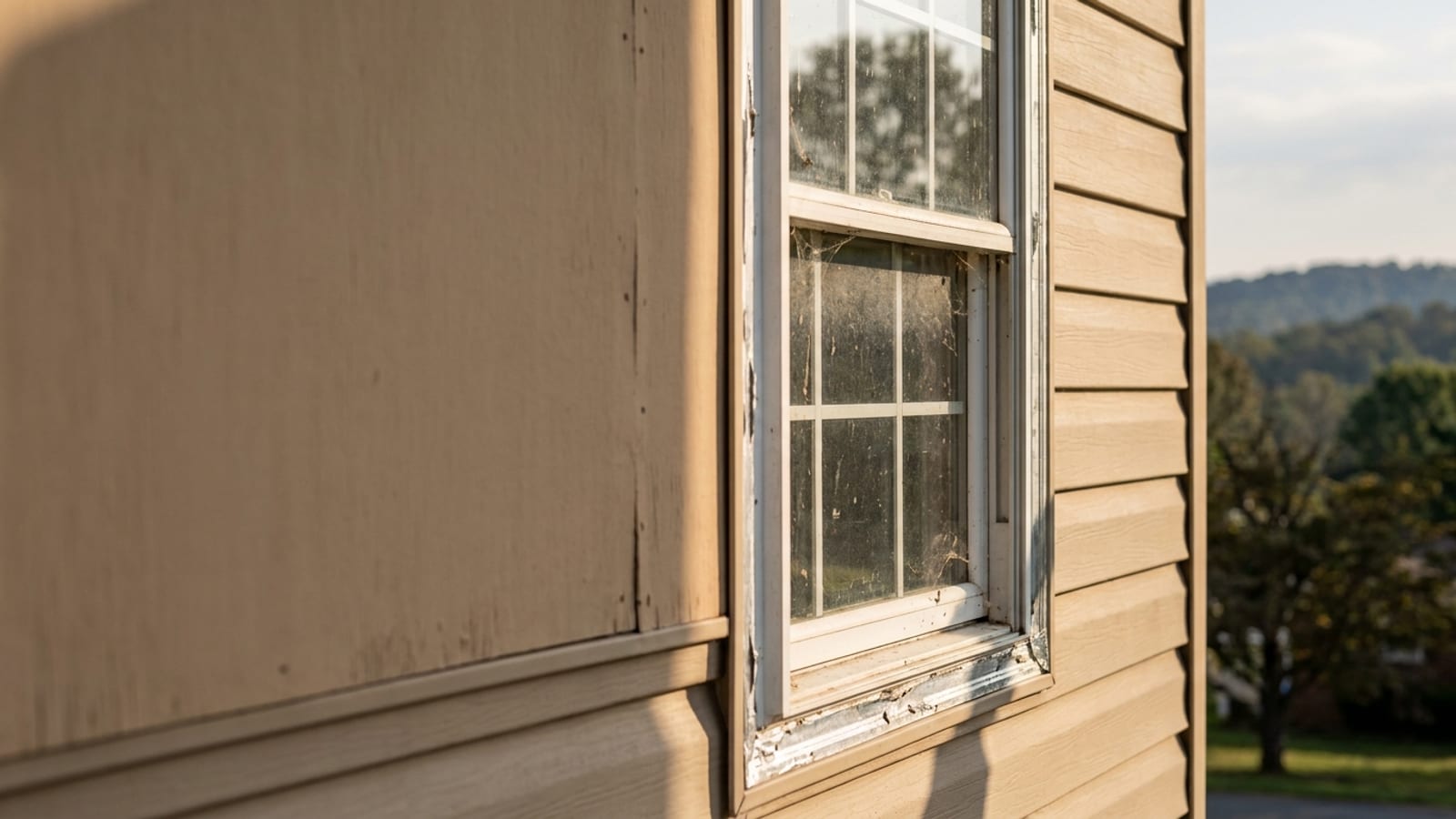
- The sill or frame is soft, spongy, or visibly rotted
- The frame is out of square enough that the sash binds or won't seal
- There's a history of water intrusion at that opening
- You have old aluminum frames and want the glass area back
- You're changing the window's style or size
- Flashing was never installed correctly (common on certain 1970s-80s builds)
You're fine with an insert if:
- Frames are solid wood or well-preserved and square
- No water history
- You're happy with the existing glass area
- The exterior trim is in good shape
The soft-sill test
Press a thumbnail firmly into the sill at the corners, where water sits longest. If it dents or gives, the wood is compromised. That's a full-frame opening no matter how good it looks from six feet away.
Why the price gap is legitimate
Full-frame isn't a markup, it's more work and more material:
- Removal and disposal of the entire old unit
- Inspection and repair of the rough opening
- New flashing and a proper water-management detail
- New interior casing and stool
- New exterior trim or capping
- Paint or finish work on the new trim
That's a different job, and it's why we itemize it per opening rather than burying it in a project total. On a lot of houses the honest answer is mixed — full-frame on the four openings that need it, inserts everywhere else.
The one that gets skipped: flashing
On a full-frame replacement, the flashing detail is the part that decides whether the opening leaks in ten years. It's also invisible the moment the trim goes on, which makes it the easiest thing to shortcut.
Ask any company you're considering to describe how they flash a full-frame opening. A real installer will tell you about the sill pan, the sequence of the weather-resistive barrier, and how the head flashing laps over. Somebody who says "we seal it up good" is a different kind of company.
What we do
We tell you which method each opening needs before you sign, in writing, per opening. If your frames are sound we'll say so and quote the insert — we'd rather sell you the correct job than the expensive one.
If rot turns up after the old unit is out, you'll get a photo and a price before anyone proceeds. No surprise line items after the fact.
We're EPA Lead-Safe certified, which matters on any pre-1978 home where full-frame work disturbs painted surfaces.
Get both methods priced
The only way to know is to have someone look at your actual openings. Our estimate is free, takes about an hour, and you'll leave it knowing exactly which openings need what and what each costs.
Schedule your free estimate and we'll walk the house with you.