Short answer
For nearly every home in Tennessee, North Georgia and Northeast Alabama, a well-built double-pane window with the right low-E coating is the better buy. Triple-pane glass is available on request, but its strongest returns come in heating-dominated northern climates, and in our cooling-dominated South-Central zone the payback is slow. The same upgrade dollars spent on a better low-E coating, argon fill and a warm-edge spacer do more for comfort here.
For almost every house in our service area, a well-built double-pane window is the right answer, and the extra money a triple-pane upgrade costs is better spent on the glass coating, the fill gas, the spacer and the installation. Triple-pane is a legitimate product and we will order it on request. It is just not the default we recommend in this climate, and the reason has nothing to do with quality.
The short version: the third pane mostly buys you a lower U-factor, U-factor is a heating-season number, and our heating season is not what drives energy use here. Cooling is. That single fact reorders the entire priority list for replacement windows in Tennessee, North Georgia and Northeast Alabama.
What is the actual difference between double-pane and triple-pane?
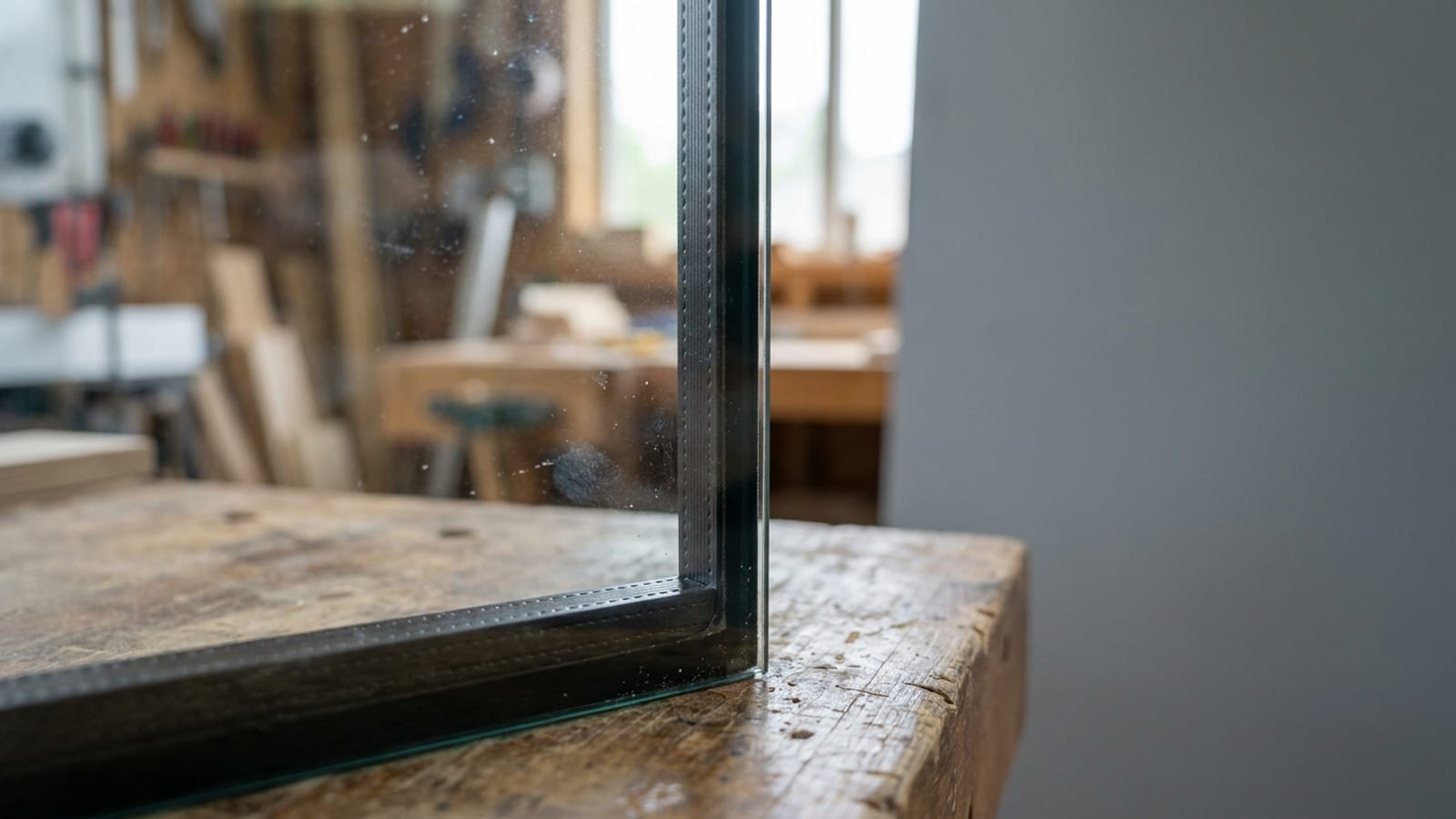
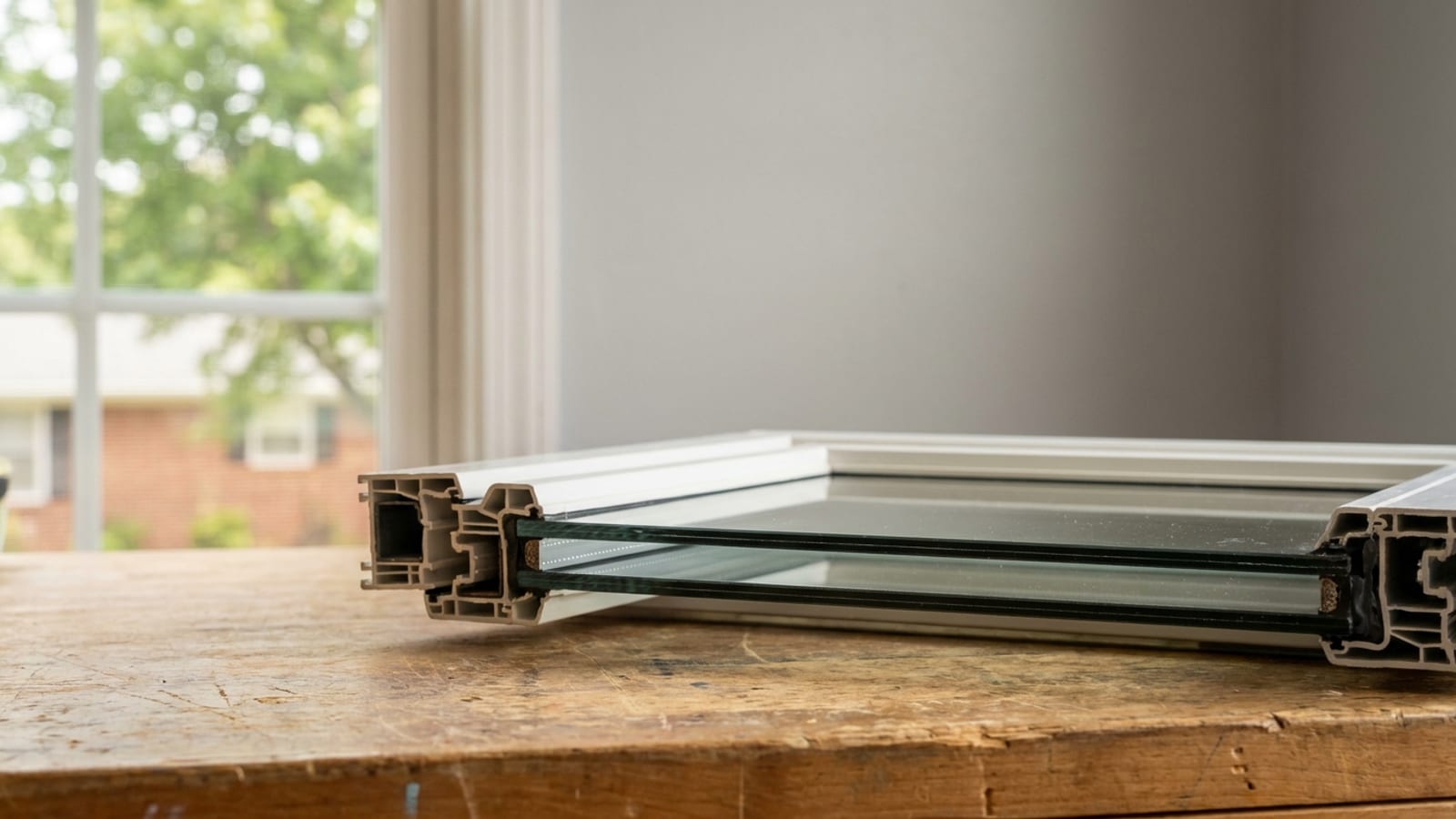
A double-pane insulated glass unit is two panes of glass separated by a sealed air space, almost always filled with argon and edged with a spacer that holds the two panes apart and keeps the seal. A low-E coating is applied to one of the interior glass surfaces.
A triple-pane unit adds a third pane and a second sealed air space. That gives it two cavities instead of one, room for a second low-E coating, and more total material between your living room and the outdoors. It is thicker, it is heavier, and it costs more to build and to ship.
What the third pane does well is slow conductive heat flow — the U-factor number. What it does not change much is solar heat gain, which is governed almost entirely by the low-E coating, not by pane count.
Why does triple-pane pay off less in the Southeast?
Our whole service area sits in the ENERGY STAR South-Central climate zone. Under ENERGY STAR Version 7.0, a qualifying window here has to hit a U-factor of 0.28 or lower and an SHGC of 0.23 or lower. Both numbers matter, but they do not matter equally.
In a Minnesota winter, U-factor is the whole game — you are trying to hold furnace heat inside for months at a time, and every improvement in conductive resistance shows up on the bill. That is the climate where triple-pane earns its price.
In Chattanooga, Dalton, Cleveland, Rome or metro Atlanta, the dominant load is summer. The comfort complaint we hear on estimates is a west-facing room that is unusable from three in the afternoon until dark, not a drafty January. Fixing that room is an SHGC problem. Blocking solar heat is done by the low-E coating on the glass, and a double-pane unit with the right coating blocks it just as effectively as a triple-pane unit with the same coating.
So the third pane improves the number that matters least here, at the highest cost per unit of improvement. That is the honest engineering summary, and it is why we do not lead with it.
How much more does triple-pane cost?
Replacement windows in our market run $700 to $2,200 per window installed, and that figure covers the unit, the labor, the sealing, the trim and the cleanup. Triple-pane pushes a given opening up within that range rather than off the top of it, but across a whole house of twelve to eighteen openings the difference adds up to real money.
Here is how the upgrade options compare on what they actually buy you in this climate.
| Upgrade | What it improves | Value in the South-Central zone |
|---|---|---|
| Third pane of glass | U-factor, mainly | Real but modest; slow payback here |
| Better low-E coating | SHGC and summer comfort | The highest-value glass upgrade in this market |
| Argon fill | U-factor | Standard on our units; inexpensive and worthwhile |
| Warm-edge spacer | Edge-of-glass performance, condensation resistance | Strong value, low cost |
| Laminated glass | Noise reduction | The right pick if sound is the goal |
| Full-frame install where needed | Air sealing, water management | Often the biggest real-world gain of all |
If the budget for a whole-house project is fixed — and for most homeowners it is — the question is not whether triple-pane is better in a lab. It is what else you give up to pay for it. Giving up a superior low-E package on your west elevation to fund a third pane is a bad trade in this climate. If you are spreading the project over time, our financing options are worth a look before you decide to cut the glass package to make a number work.
Does a third pane make the house quieter?
Less than the marketing suggests. Sound moves through gaps far more readily than through glass, so the first and largest noise improvement comes from a window sealed properly into a sealed opening. After that, the glass changes that measurably reduce noise are laminated glass, panes of two different thicknesses, and a wider air space.
Three panes of the same thickness, evenly spaced, do surprisingly little. The panes tend to resonate together. If quiet is your goal — a house near a highway, a busy arterial, a rail line — laminated glass in a double-pane unit will beat standard triple-pane, usually for less money.
When does triple-pane actually make sense here?
There are cases. They are narrow, and they are worth naming honestly:
- A specific room you are trying to perfect. A home office over an unconditioned garage, a nursery on a hard exposure, a sunroom you use year-round. Buying triple-pane for three openings instead of thirty is a rational use of the money.
- A house at elevation with sustained wind exposure. Signal Mountain, Lookout Mountain, Monteagle and the Sequatchie Valley rim see colder, windier winters than the valley floor, which narrows the payback gap somewhat.
- You simply want it and the budget is not constrained. That is a legitimate reason and we will not talk you out of it. We will quote it beside a double-pane build so you can see both numbers on your own openings.
What we will not do is present triple-pane as a requirement, or price a house around it and let you assume it is the only path to a comfortable room.
What should the upgrade money buy instead?
Low-E coating specced by elevation
The same window does not belong on every side of a house. West- and south-facing openings take the punishing afternoon sun and want the lowest solar heat gain you can get. North-facing openings do not need the same package, and over-specing them costs daylight for no benefit. Spec'ing glass wall by wall is free to do and it is the single most useful decision on a Southeast window job.
Argon fill and a warm-edge spacer
Argon in the cavity slows heat transfer, and a warm-edge spacer keeps the perimeter of the glass closer to room temperature, which improves both the whole-window number and condensation resistance at the edges. Both are inexpensive relative to a third pane.
The installation itself
A superb window set into a poorly sealed opening underperforms a modest window installed correctly. Foam and sealant at the perimeter, proper flashing at the sill, shims that keep the frame square so the sash closes against its weatherstripping evenly — that work is what determines whether the drafts actually go away. It is also why the labor term on the warranty matters as much as the material term. Our Patriot's Promise covers windows for a lifetime on both material and labor, transferable once and prorated after.
How do you decide on your own house?
Walk the house and rank the openings. Which rooms are uncomfortable, and at what time of day? An afternoon problem is a solar heat gain problem and points at the coating. A cold-to-the-touch, drafty-in-January problem points at U-factor and, more often, at the seal around the existing frame. A noise problem points at laminated glass.
Then match the spend to the ranking. Most homeowners who go through that exercise end up with a strong double-pane build across the house, an upgraded coating on the hard elevations, and the savings kept in their pocket or applied to more openings.
One more note: we install owner-supplied windows to manufacturer specification, so if you have already bought units — triple-pane or otherwise — that is not a dead end. Tell us the product before it ships so we can confirm the sizes and the install method against your openings.
What is the next step?
Pane count is one line on a quote, and it should never be the line that decides the job. Book a free in-home estimate and we will measure every opening, look at the condition of the frames and sills, and give you one itemized price per opening with the glass package spelled out by elevation. If you want triple-pane priced alongside it, say so and it goes on the sheet next to the double-pane number, so you are comparing your own house rather than a brochure.