Short answer
Double-hung is the right default for most homes in this market. Two sashes slide vertically, they suit almost every house style here, the screen stays outside the whole year, and cleaning is easy from inside. Casement earns specific openings rather than whole houses — it cranks outward, seals tighter than any sliding sash, and moves the most air, which makes it the better unit over a kitchen sink, on a hard-to-reach opening, or where you want to catch a breeze off a shaded side of the house.
Double-hung is the right default for most houses in this market. Casement is the right answer for specific openings. If you are replacing a whole house and you want one decision, double-hung is almost always it — and then you should look at three or four openings where casement is genuinely better and spend the extra there.
That is a less exciting answer than "casement is more efficient," which is the version you will read elsewhere. It is also the one that matches how houses here are actually built and lived in.
What is the actual difference?
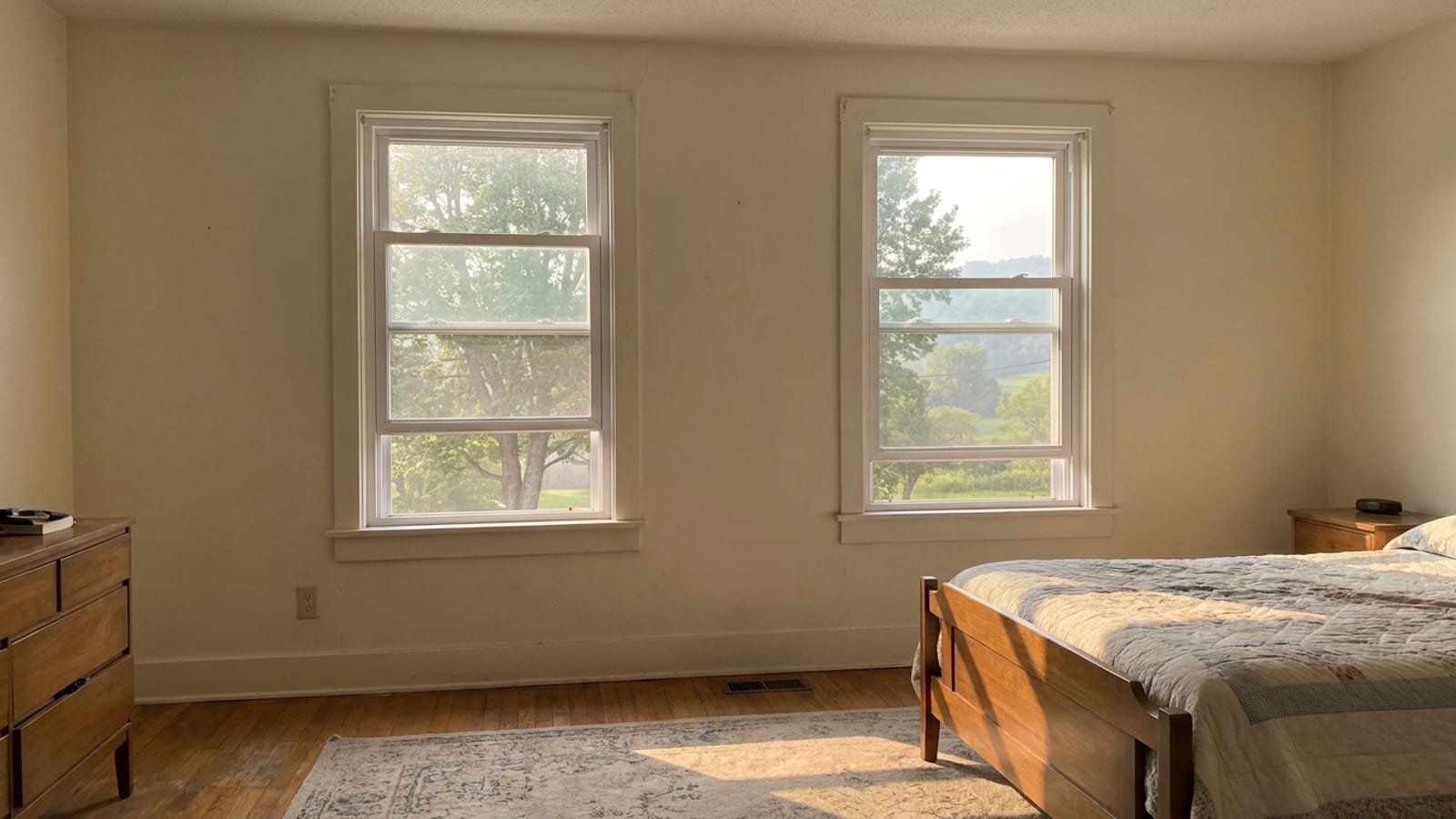
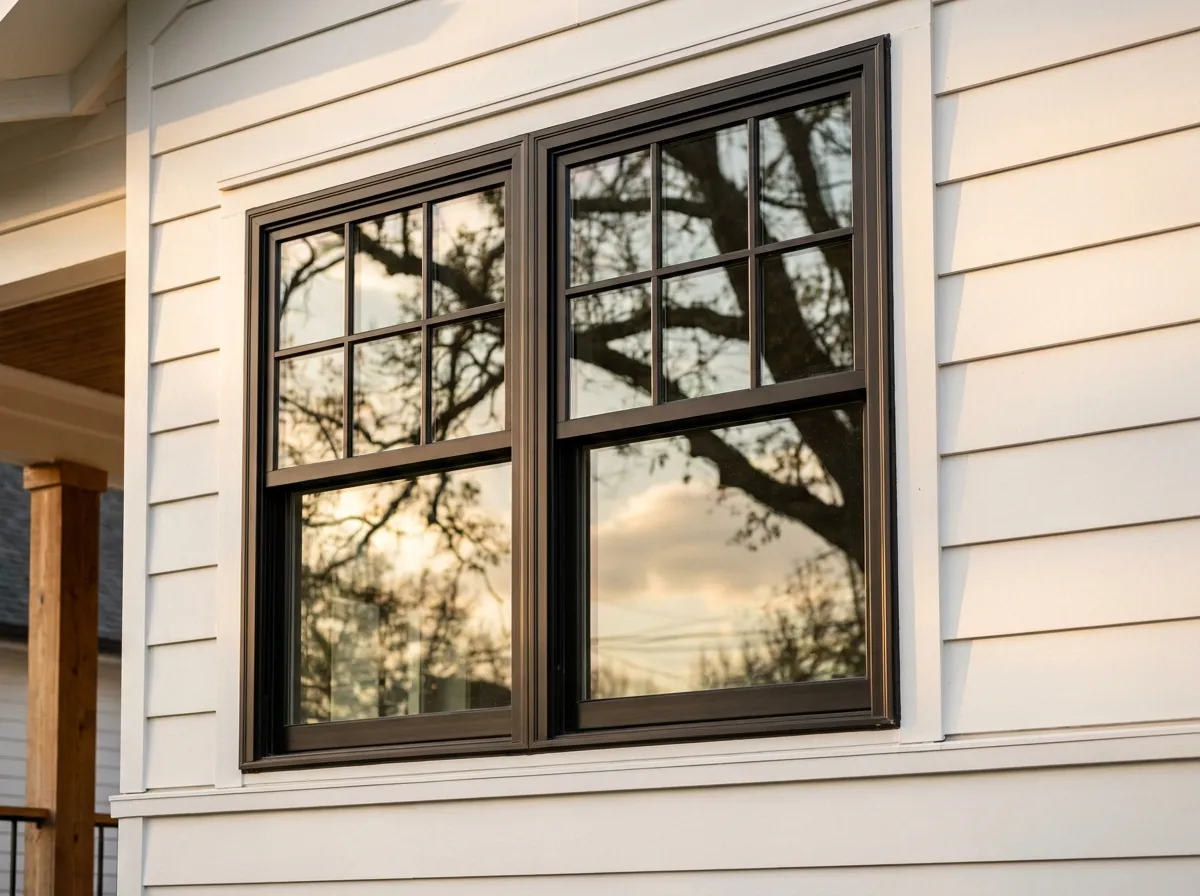
A double-hung has two sashes in one frame that slide vertically past each other. Either sash can move, so you can vent from the top, the bottom or both. The screen sits on the outside and stays there year-round.
A casement is a single sash hinged on one side that cranks outward like a door. It has no rail across the middle, so the glass area is uninterrupted, and when you close it the sash pulls into a compression seal on all four sides. The screen sits on the inside.
Both are in our standard style lineup along with single-hung, picture, bay, bow, awning, arched and Palladian units, so this is a per-opening choice rather than a question of what is available.
How do they compare?
| Double-hung | Casement | |
|---|---|---|
| How it opens | Two sashes slide vertically | One sash cranks outward |
| Air sealing | Good | Best — compression seal all around |
| Ventilation | About half the opening area | Nearly the whole opening area |
| Directing a breeze | No | Yes — the open sash works like a scoop |
| Cleaning from inside | Easy, both sashes tilt in | Reach through the opening |
| Screen location | Outside, stays on all year | Inside |
| Window air conditioner | Works | Does not work |
| Cost in the same size | Lower | Higher |
| Suits most house styles here | Yes | On specific openings |
| Obstruction when open | None outside | Sash projects into walks, decks, patios |
When is double-hung the right call?
You want the house to look like itself
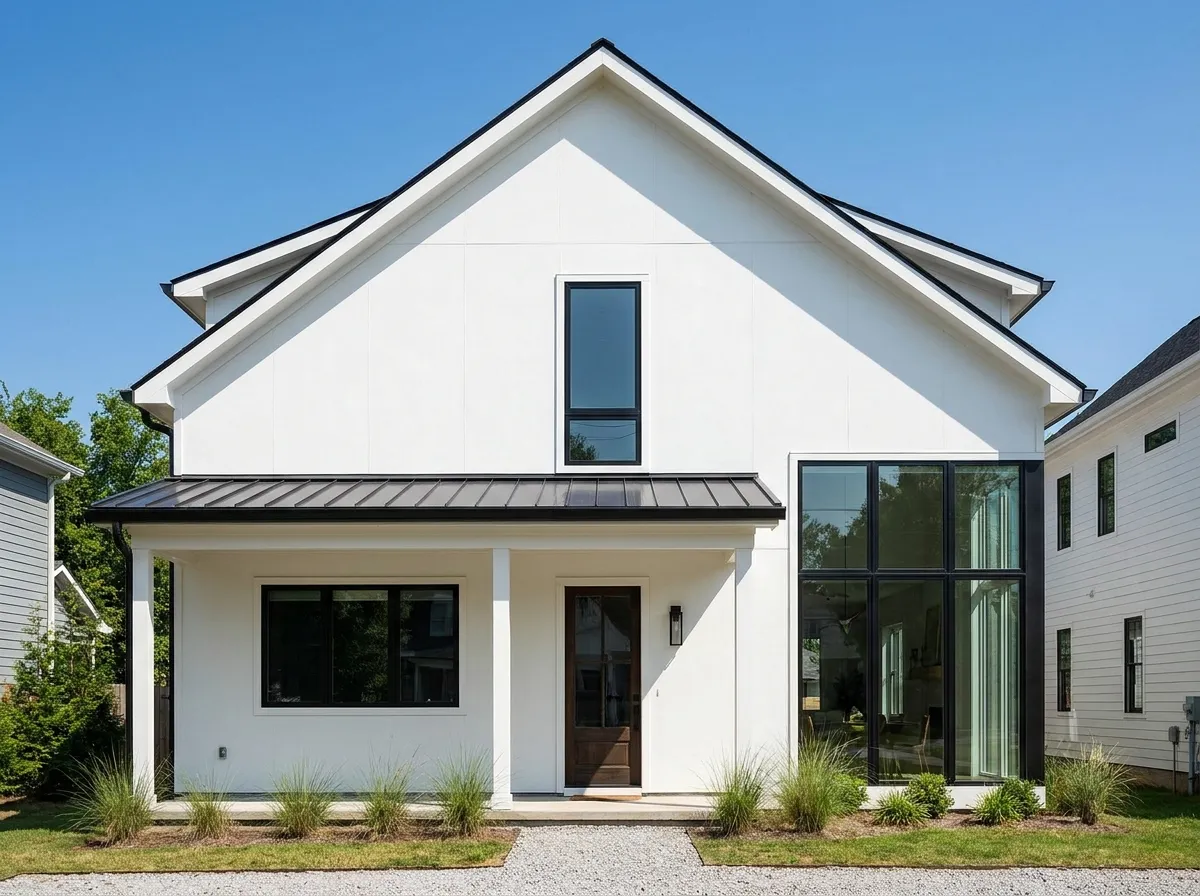
Most of the housing stock across Southeast Tennessee, North Georgia and Northeast Alabama — ranches, bungalows, brick traditionals, two-story colonials, farmhouses — was built with vertically proportioned openings and reads correctly with a double-hung. Replacing them all with casement changes the character of the elevation, and not usually for the better.
The opening is over a walk, a deck or a patio
A casement sash swings outward into that space. Over a front walk, a deck rail, a patio table or a driveway, that is a real nuisance and sometimes a hazard.
A window unit air conditioner lives in it
Non-negotiable. A casement cannot take one.
Cost matters and the openings are standard
Double-hung and slider are the value styles. On a whole-house project, the difference between all-double-hung and all-casement is real money that is usually better spent on the glass package than on the operating style.
When is casement worth the upgrade?
Over a kitchen sink or a counter
You reach over a sink to open a window. Cranking a handle beats shoving a sash every time, and this is the single most common place we install casement in an otherwise double-hung house.
Where you want to catch a breeze
An open casement sash acts as a scoop. On a shaded east or north wall, angling one into the prevailing breeze pulls noticeably more air through the house than a double-hung in the same opening. If cross-ventilation on spring and fall evenings is something you actually use, this is a real benefit.
On an opening you cannot easily reach
Behind a deep counter, above a stair landing, over a tub. A crank operator is reachable when a sash is not.
Where an unbroken view matters
No check rail across the middle. On a window framing a ridge line or a back yard, that matters more than any specification on the label.
Where air sealing is the priority
The compression seal is the casement's real technical advantage. It is worth putting on the windward wall of an exposed house, or in a room you are trying to make comfortable.
Does either one save more on cooling?
Less than the glass does, and that is the point most homeowners miss. Whichever style you choose, the coating on the glass is doing the heavy lifting on comfort and cooling cost in this climate.
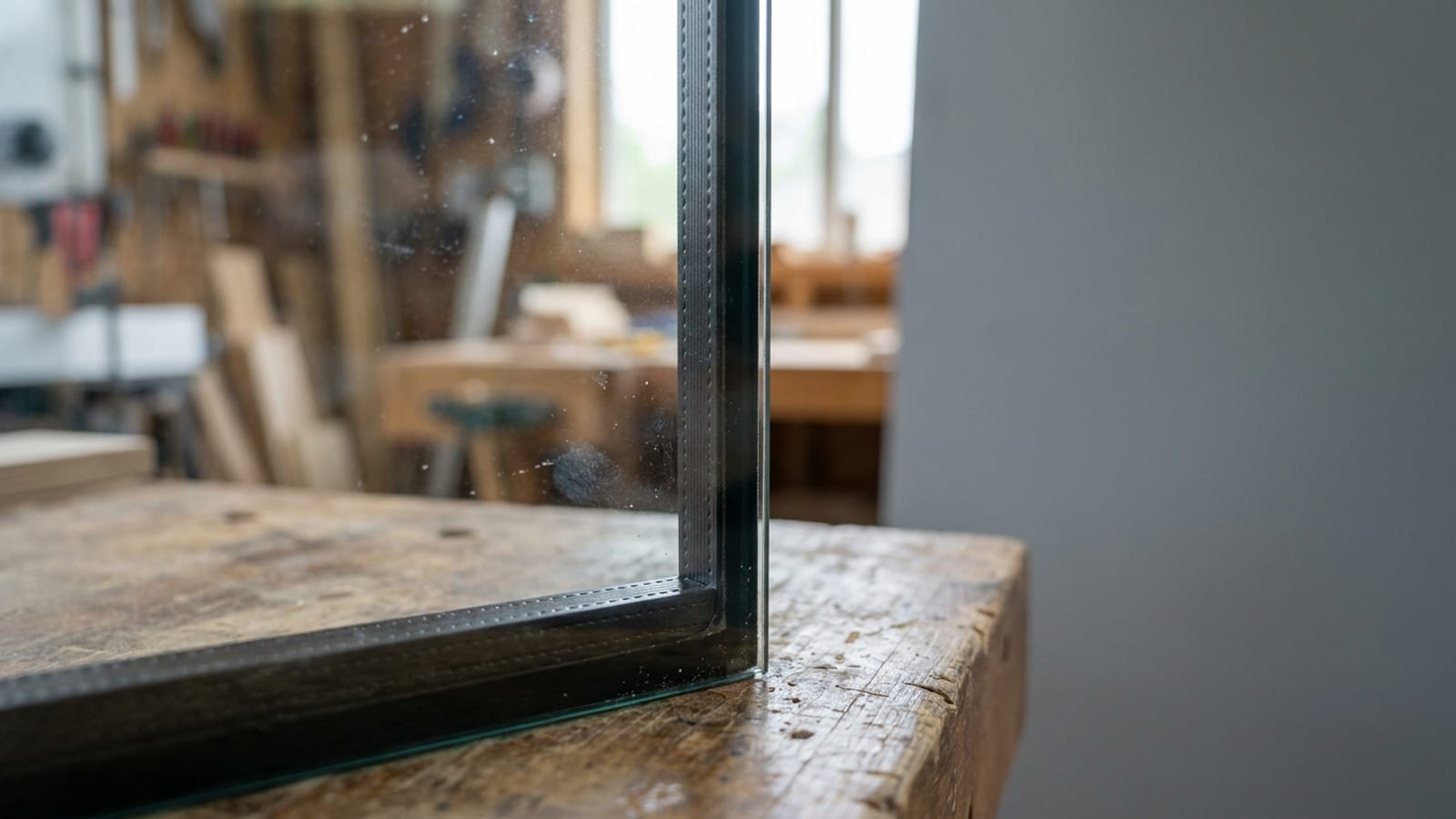
Our whole service area sits in the ENERGY STAR South-Central climate zone, where a qualifying window needs a U-factor of 0.28 or lower and a solar heat gain coefficient of 0.23 or lower. SHGC — how much solar heat passes through the glass — is the number you feel here, because our load is cooling rather than heating. A west-facing room that is unusable in July is a solar heat gain problem, and no operating style fixes it. The glass does.
That is why we spec replacement windows by elevation rather than putting the same unit on all four sides of a house. Get the glass right first, then pick the style per opening.
What does the style choice do to the price?
Replacement windows with us run $700 to $2,200 per window installed, and the style is one of the bigger levers inside that range. Double-hung and slider price near the bottom. Casement prices above them. Bay, bow, arched and Palladian units price at the top.
It is normal and correct for one itemized quote to carry three different per-window prices across the same house, and switching four openings to casement is a line item you can see and decide on rather than a change to the whole project.
Larger projects are commonly spread out with GreenSky financing, which includes no-interest options if paid in full within 6, 15 or 18 months and fixed-rate terms starting at 6.99% APR for 60 months, with zero down for most approved homeowners, subject to credit approval.
Does the style change maintenance?
Somewhat. A double-hung has balances in the jambs and sashes that tilt in for cleaning, and the screen lives outside all year. A casement has an operator, a hinge track and an interior screen, and the operator is the part that eventually needs attention on a window that gets used daily.
Neither is high maintenance in a modern vinyl or composite frame, and both are covered in writing under The Patriot's Promise — material and labor, transferable once and prorated after that.
What is the next step?
Operate both before you decide. At a free in-home estimate the estimator measures every opening, brings the actual units so you can crank one and slide one, and prices your house both ways where it makes a difference. There is no trip charge inside our service area.
When you want to try them in your own rooms, request a free estimate or call (423) 830-7138.