Short answer
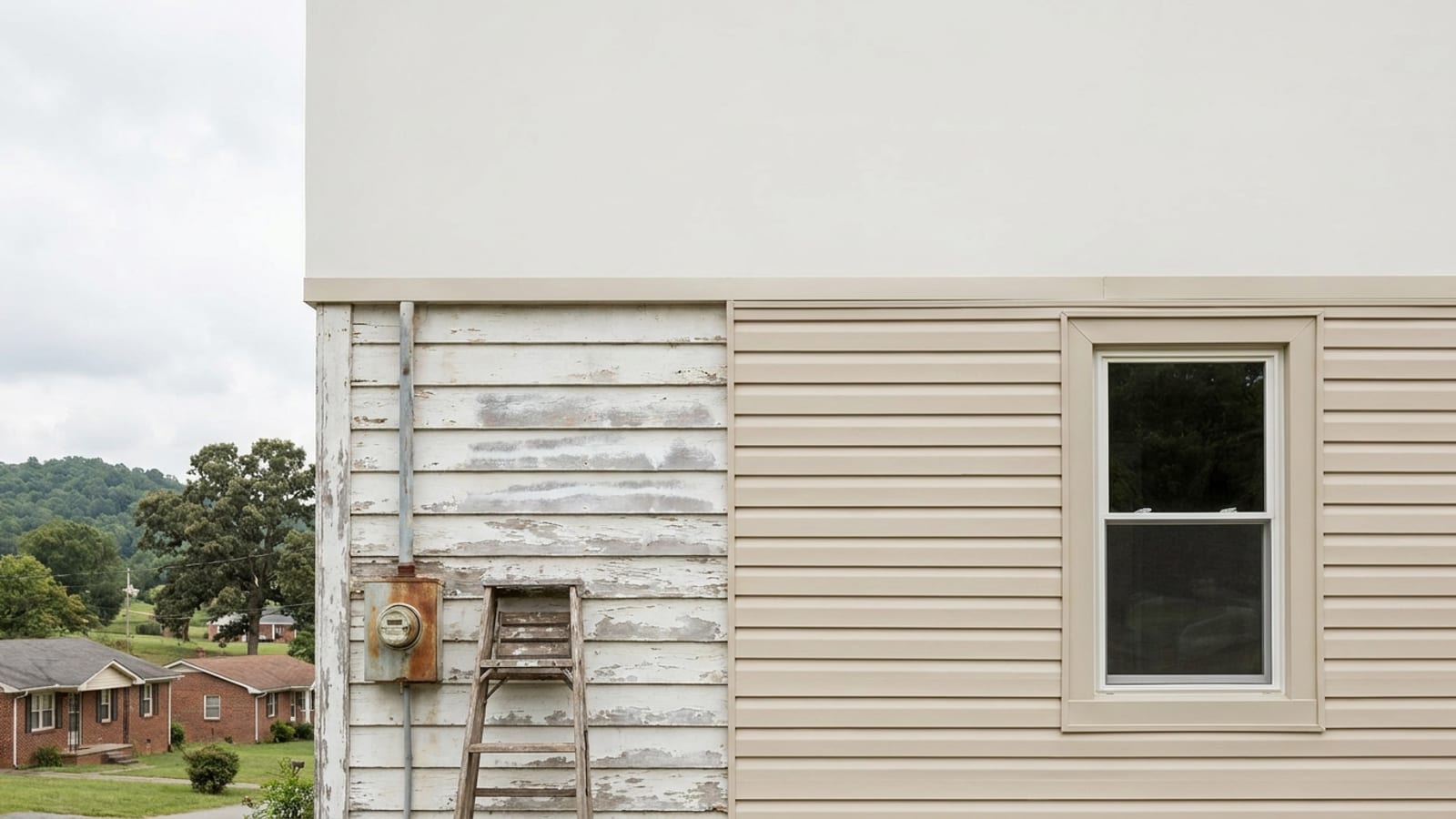
The signs that matter are buckled or cracked panels, soft or spongy spots when you press on the wall, fading and chalking that no longer cleans up, moisture or mold showing on the inside of an exterior wall, needing to repaint every few years, and patching the same areas over and over. One of those on one wall is a repair conversation. Three of them across the house means the cladding system is done and patching is throwing money at it.
Buckled or cracked panels, soft spots when you press on the wall, fading that will not clean up, moisture or mold on the inside of an exterior wall, repainting every few years, and patching the same spots repeatedly. Those are the signs. One of them on one wall is a repair conversation. Three of them across the house means the cladding is at the end of its service life and every dollar of patching is buying time rather than fixing anything.
Siding does not fail dramatically. It fails slowly, in ways that are easy to normalize because you see the house every day. Here is what to look for and what each sign actually tells you.
1. Panels are warped, buckled or cracked
Go out on a sunny afternoon and look down the length of each wall from the corner, not straight on. Straight on, a wall looks fine. From the corner you see the waves.
Warping and buckling in vinyl usually mean the panels were nailed too tight and could not move with temperature, or the wall behind them has moved. Cracking means the material has gone brittle with age and UV. Either way the panel is no longer a continuous shed surface, which is the one job cladding has.
2. There are soft or spongy spots
Press firmly on the wall with the flat of your hand in several places, especially low on the wall, under windows, and at the corners. It should feel solid. If it gives, if it feels spongy, or if you can feel the wall flex behind the panel, water has been getting behind the cladding long enough to affect the sheathing.
This is the most serious sign on the list and the one that changes the scope of the job, because the sheathing has to be made sound before new siding goes on. A crew that offers to side over a soft wall is offering to hide it.
3. Fading and chalking that will not clean up
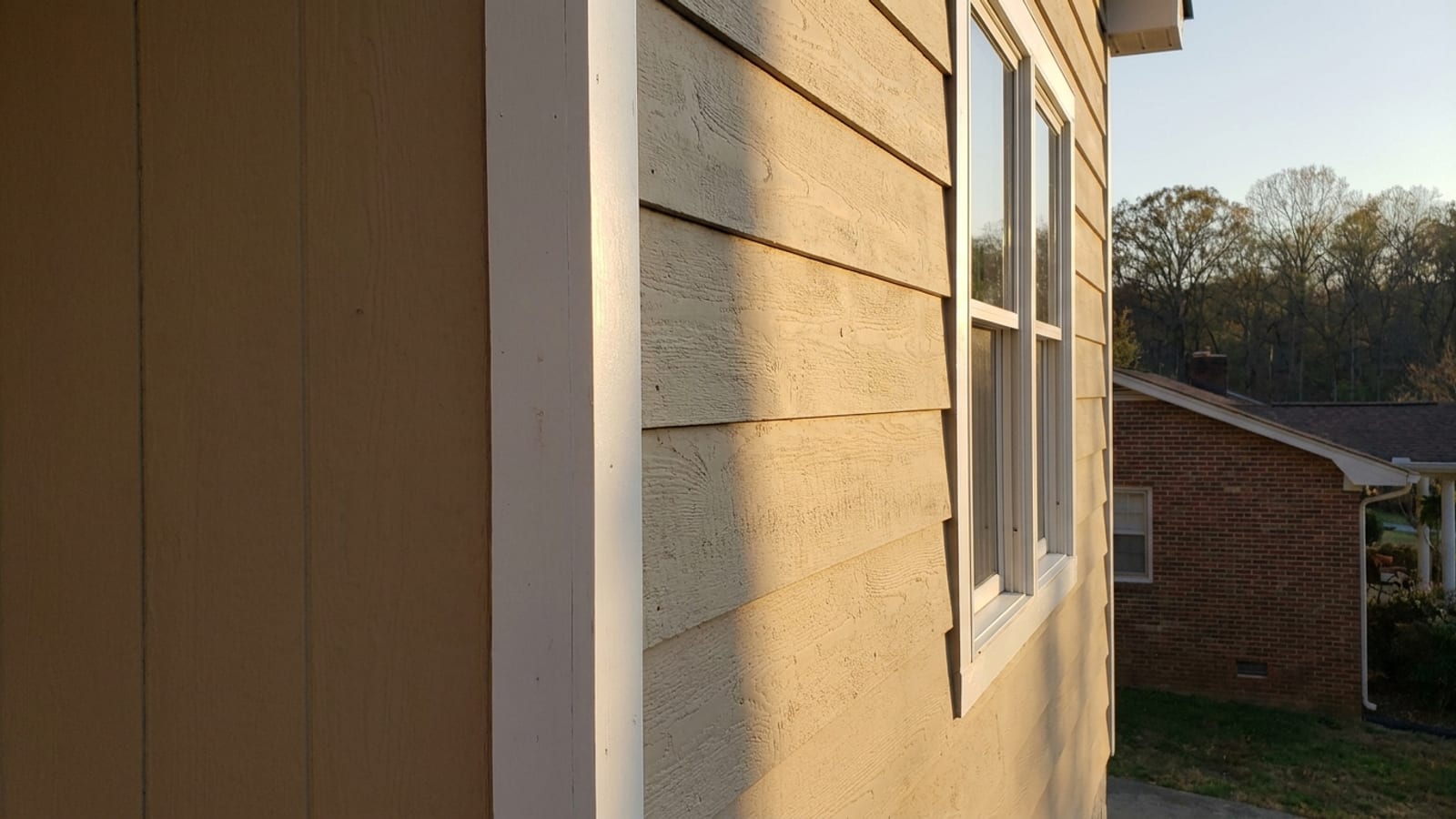
All exterior cladding fades. The question is whether it cleans up. Wash a test patch. If the color comes back, you have dirt and mildew. If it stays dull, or if a wipe leaves a chalky residue on your hand, the finish is gone rather than dirty, and on vinyl the color is the material — there is no finish underneath to restore.
Chalking is a UV story, so it shows up first on south- and west-facing walls. A house that looks fine from the street and terrible from the driveway is usually a fading problem, not a dirt problem.
4. You are repainting every few years
If your siding needs paint on a schedule that keeps shortening, the substrate is telling you something. Paint that will not hold is paint being pushed off from behind by moisture, or paint on wood that has weathered past the point of holding a film.
Repainting a full house is not a small expense, and doing it every four or five years indefinitely is usually more money than replacing the cladding once with a system that carries a factory finish.
5. Moisture or mold shows up inside
This is the sign homeowners find last and should find first. Look at the inside of your exterior walls: staining on drywall, bubbling paint, a musty smell in a room with no plumbing, or visible mold at the base of an exterior wall. Any of those means water is getting past the cladding and into the assembly.
Surface mildew on the outside of a shaded wall is a washing job and not a warning. Moisture on the inside is a warning.
6. You are patching the same areas over and over
Keep track of where the repairs happen. Repeated repairs clustered in the same place — under a particular window, at one corner, along one course — are not bad luck. They are the water finding the same path every time.
Once you are on the third repair in the same spot, the honest arithmetic is that you are paying installment payments on a replacement while still living with the problem.
7. Gaps, loose courses and daylight
Walk the house and look at the joints, the corners, and where the siding meets windows, doors and trim. Panels that have come loose from their locks, butt joints that have opened up, missing pieces of J-channel, and any gap you can see light or daylight through are all open doors for wind-driven rain.
The trim, soffit and fascia are part of this. Rotted fascia and sagging soffit usually mean water has been running where it should not for a long time, and they are part of a proper replacement rather than a separate project.
How do the signs add up?
| Sign | What it usually means | Repair or replace |
|---|---|---|
| One cracked panel from impact | A ball, a ladder, a storm | Repair |
| Waves and buckling across a wall | Age, fastening or movement behind | Replace |
| Soft or spongy wall | Water in the sheathing | Replace, with repair to the substrate first |
| Chalky, faded finish that will not wash | UV has consumed the surface | Replace |
| Repainting every few years | Moisture behind the film, or weathered substrate | Replace |
| Mold or stains inside an exterior wall | Water is past the cladding | Replace, and find the path |
| Same spot patched three times | The water path was never corrected | Replace |
| Surface mildew on a shaded wall | Dirt | Wash it |
What does replacement involve?
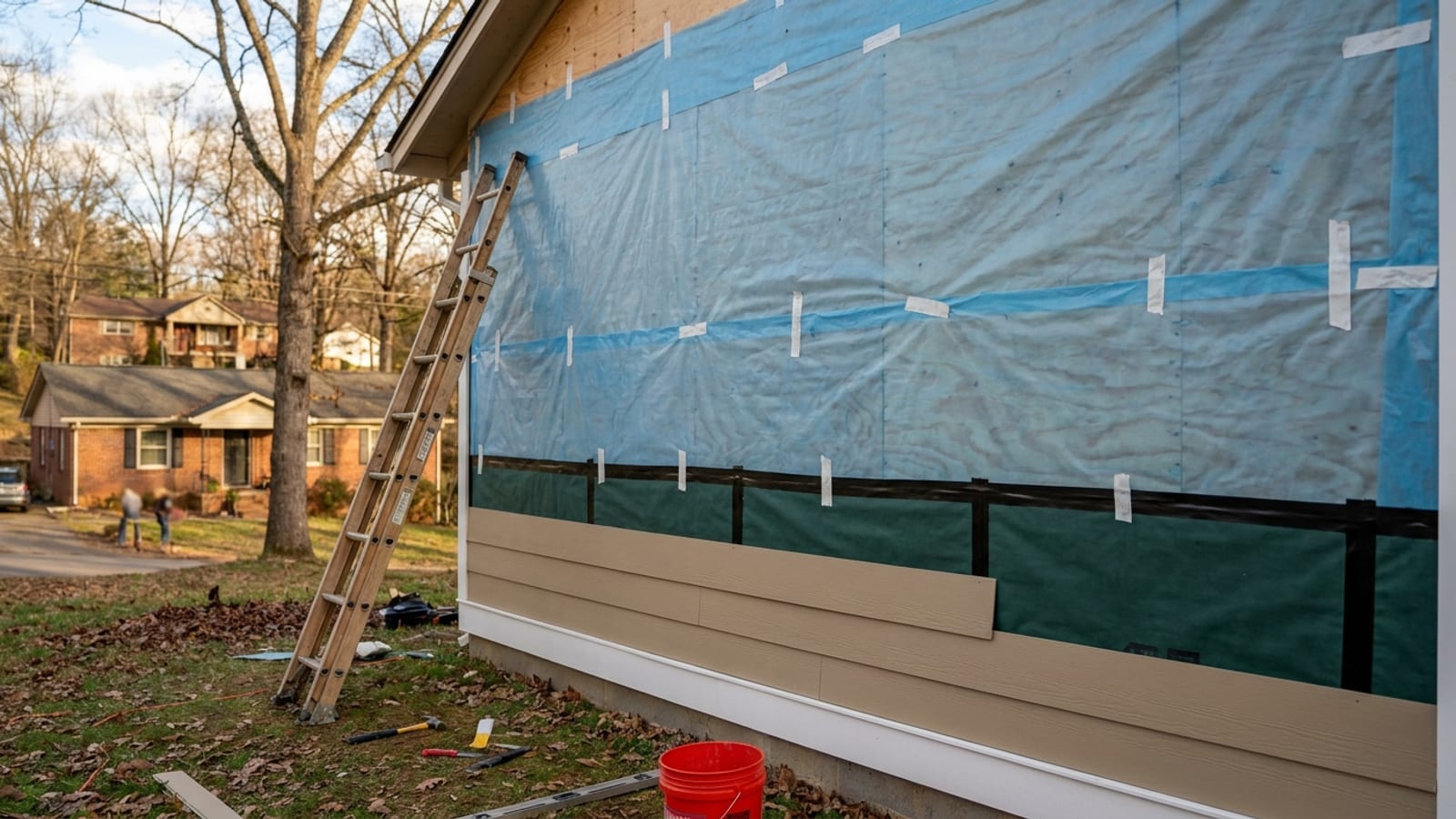
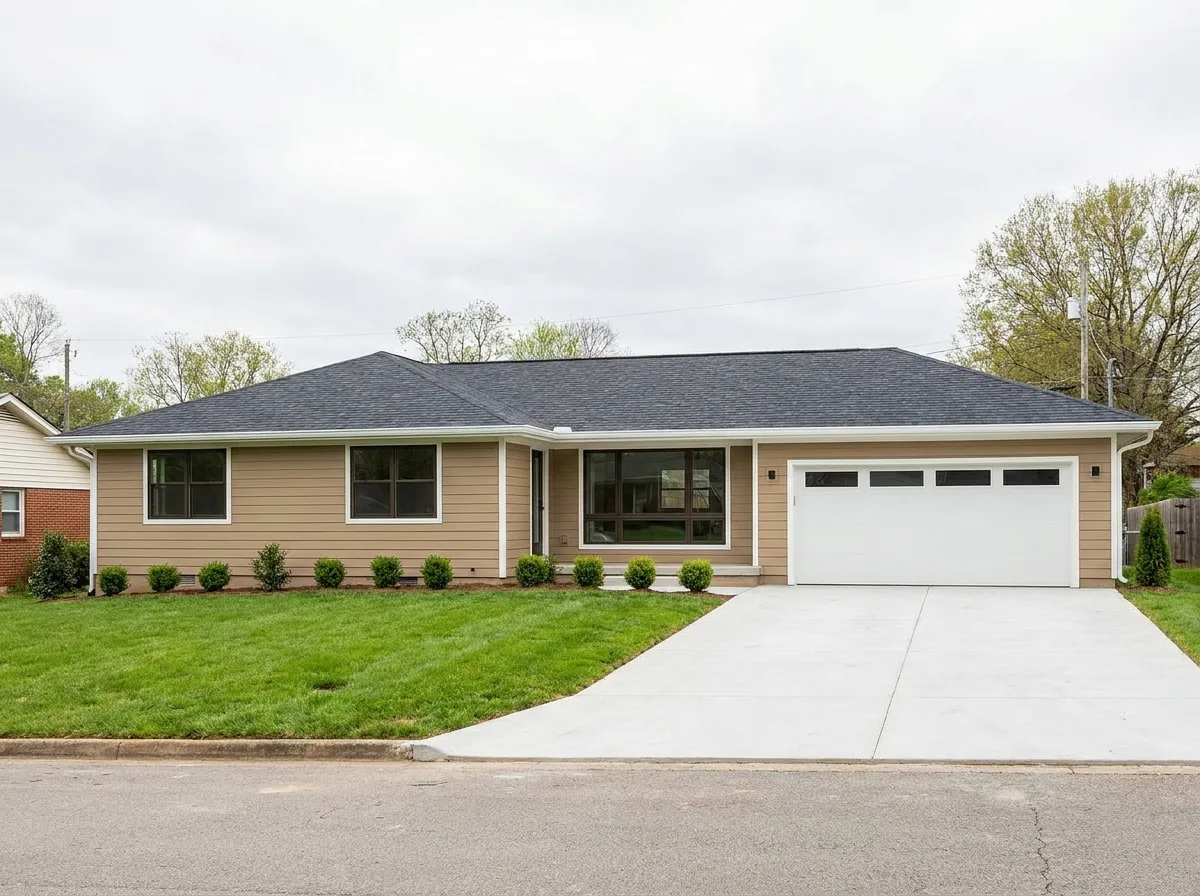
A proper job replaces the full envelope, not just the visible panels. That means the old cladding comes off, the sheathing gets inspected and repaired where it is soft, house wrap goes on, and trim, soffit and fascia are part of the same scope so the whole assembly is sealed and warrantied together. Most siding projects run four to seven days.
Full siding replacement with us runs $12,000 to $25,000 for a typical home, including trim, soffit, fascia and house wrap. Where a specific house lands depends on square footage, the number of stories and corners, the material, and what is found once the old siding comes off — which is the line item nobody can quote from the curb.
We are a James Hardie Alliance Select contractor, so fiber cement gets installed to the fastening and clearance specification the warranty actually requires. We also install Everlast composite and Royal and Mastic vinyl, because vinyl is still the right answer for plenty of houses here.
Projects this size are commonly spread out with GreenSky financing, which includes no-interest options if paid in full within 6, 15 or 18 months and fixed-rate terms, with zero down for most approved homeowners, subject to credit approval.
Siding work is covered in writing under The Patriot's Promise — 30-year material and labor coverage, with $2M insurance on every job.
What is the next step?
Have someone walk the whole house, not one wall. At a free in-home estimate the estimator checks each elevation, presses the walls, looks at the trim, soffit and fascia, and gives you one itemized price with the material and the scope spelled out. If what you have is a repair, you will hear that instead. There is no trip charge inside our service area.
When you want a straight read on your own walls, request a free estimate or call (423) 830-7138.