Short answer
Physically it can be done, and some jurisdictions allow one added layer of vinyl over sound wood siding. We do not do it, and here is the honest reason: siding over means nobody looks at the sheathing, any rot or water damage gets sealed inside the wall, no house wrap goes on, and most manufacturer warranties will not cover a layup installed that way. The savings are real on the day and usually get spent later with interest.
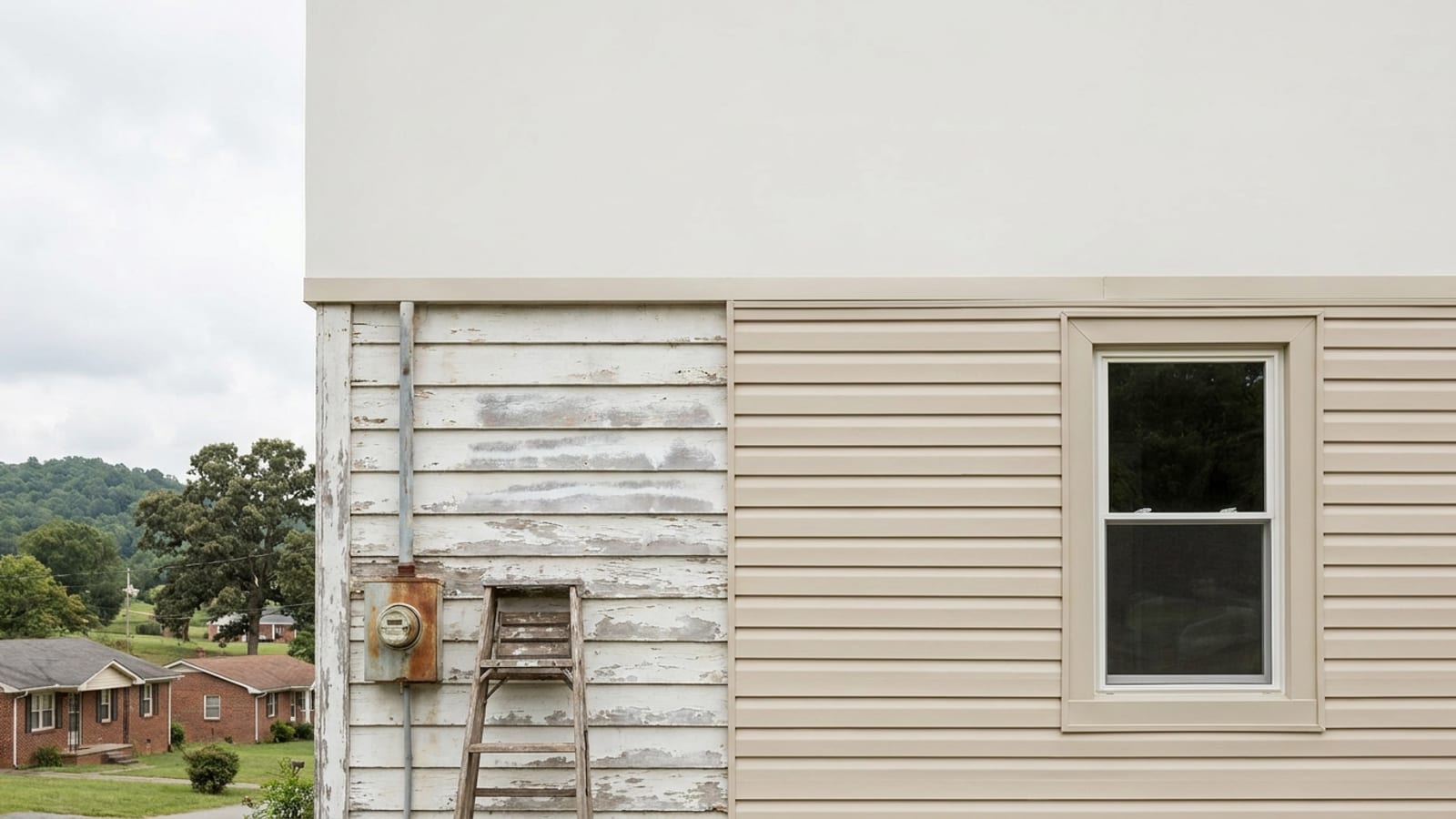
Physically, yes. New siding can go over old siding, some jurisdictions allow one added layer over sound wood siding, and there are crews who will quote it that way. We do not do it, and it is worth explaining why rather than just declining the job.
When you side over, nobody looks at the sheathing. Any rot, any failed flashing, any water path that has been running behind the cladding for years gets sealed inside the wall where it keeps working and nobody can see it. No house wrap goes on. The fasteners land in old material instead of solid substrate. And most manufacturer warranties will not cover it.
What is actually behind your siding?
The part most homeowners never think about, and the part that decides whether a wall lasts.
Siding is a shed surface. It sheds the bulk of the water. The system behind it — house wrap, flashing at every window, door and penetration, and sound sheathing — is what manages the water that gets past the cladding, and some always does. Wind-driven rain in a Tennessee Valley thunderstorm does not respect a lap joint.
So when someone tells you the old siding is in good shape, understand what that statement covers. It covers the shed surface. It says nothing about whether the housewrap is intact, whether the window flashing was ever done correctly, or whether the sheathing under a gutter that has overflowed for six years has gone soft.
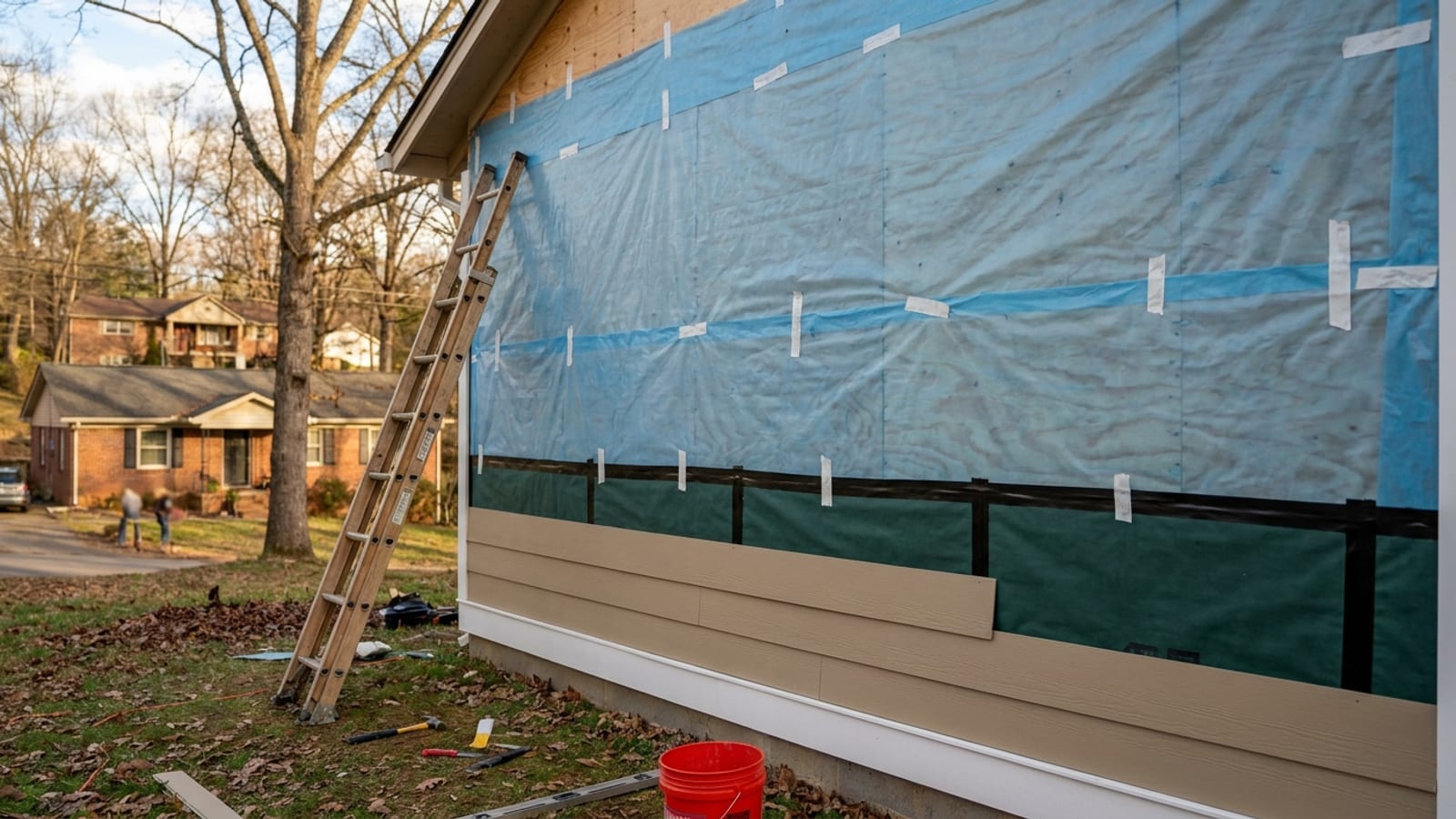
The only way to know is to take the old cladding off and look. That is what a tear-off buys you, and it is the single most valuable thing about a full siding replacement that has nothing to do with how the house looks afterward.
What goes wrong when you side over?
Rot gets buried, not fixed
This is the big one. Soft sheathing does not stop being soft because there is a new layer of vinyl in front of it. It keeps going, out of sight, and the next person to open that wall finds a much larger repair than the one that existed on the day you re-sided.
No house wrap, no drainage plane
A modern install puts a continuous water-resistive barrier behind the cladding with the flashing lapped into it in the right order. Siding over an existing layer skips that entirely. Whatever water management the house had in 1985 is the water management it still has.
The fasteners land in the wrong thing
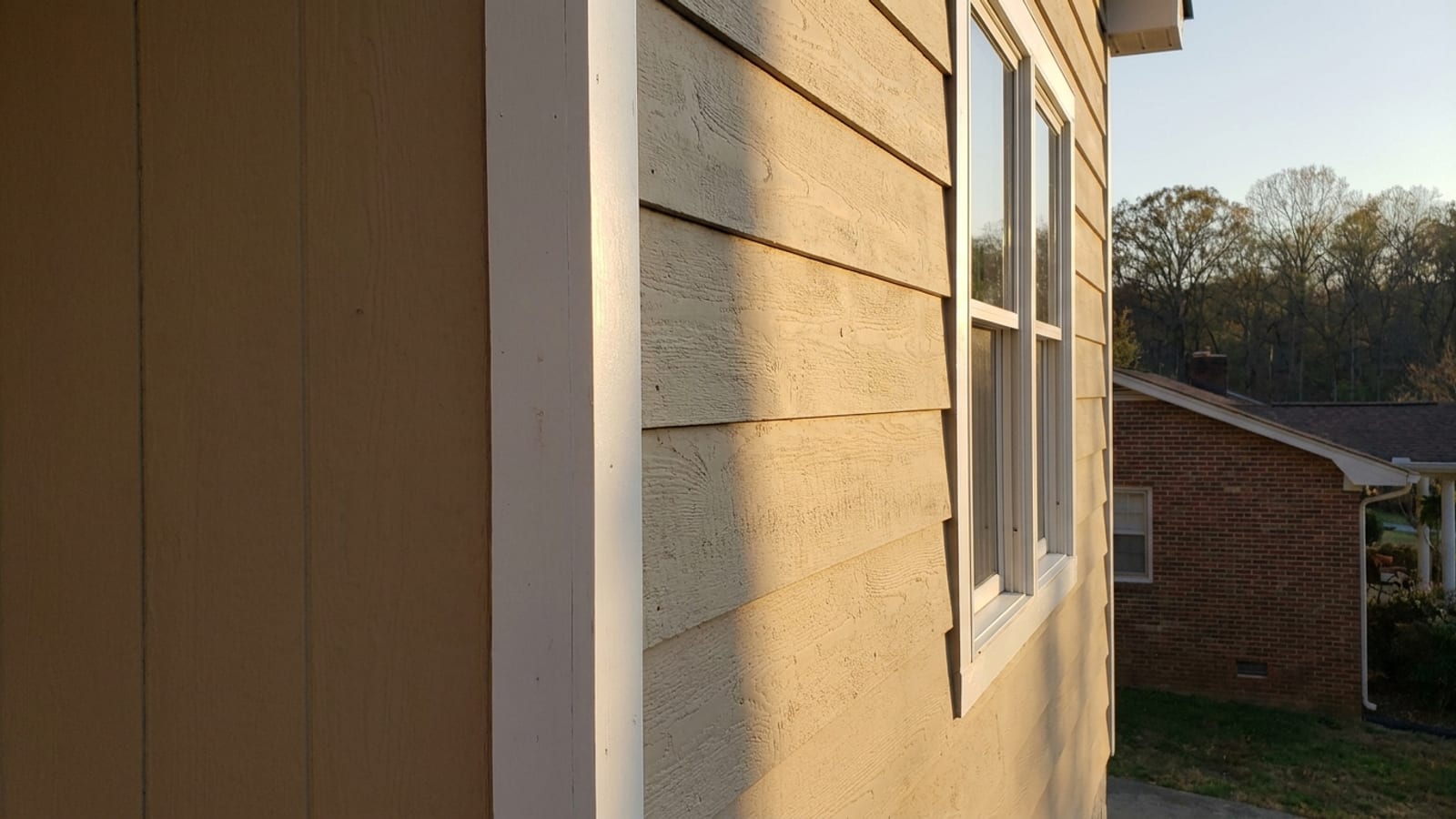
Fiber cement in particular needs a solid, flat nailable substrate with the fastening pattern and clearances the manufacturer specifies. Old lap siding is neither flat nor a reliable nail base. Furring strips can be added to create one, but that adds cost and thickness, which brings the next problem.
Everything gets thicker
Add a layer and the wall grows. Now every window and door sits deeper than its trim, and every jamb needs extending. Every penetration — hose bib, dryer vent, electrical, light fixtures — needs a block or an extension. Corners and terminations get more complicated. This is where the promised savings quietly go.
Moisture gets trapped in the middle
The old cladding ends up in a sandwich that does not dry well in either direction. In a humid Southeast climate that is a poor assembly and a slow problem.
The warranty usually will not follow
Manufacturer warranties are written around a specified installation. Install outside the specification and the coverage that made the material worth buying stops applying. We are a James Hardie Alliance Select contractor, which means fiber cement gets installed to the fastening and clearance specification the warranty actually requires — not a version of it.
How do the two approaches compare?
| Siding over | Full replacement | |
|---|---|---|
| Sheathing inspected | No | Yes |
| Rot found and repaired | No | Yes |
| New house wrap | No | Yes |
| Windows and doors reflashed | No | Yes |
| Wall thickness | Grows; jambs need extending | Unchanged |
| Manufacturer warranty | Usually void | Intact |
| Tear-off and disposal cost | Avoided | Included |
| What you know when it is done | The outside looks new | The whole assembly is sound |
When do people ask for it anyway?
Three situations come up repeatedly, and each has a better answer.
The budget is tight. Understandable, and the better move is to phase the work by elevation rather than compromise the assembly. Do the worst wall — usually the one taking weather or the one with the visible damage — as a proper full replacement, and come back for the rest. A correctly done half is worth more than a shortcut whole.
Only one wall looks bad. Then find out why that wall looks bad. If it is exposure, the others are on the same path. If it is a water path — a gutter, a roof detail, a deck ledger — siding over it guarantees you will be back.
The house is being sold soon. A cosmetic layer over an unknown wall is a problem you are handing to a buyer and their inspector, and inspectors are good at spotting an added layer at the corners and jambs.
What does a full replacement cost and involve?
Full siding replacement with us runs $12,000 to $25,000 for a typical home, including trim, soffit, fascia and house wrap. Where a specific house lands depends on square footage, stories and corners, the material, and what is found once the old siding comes off. Most projects run four to seven days.
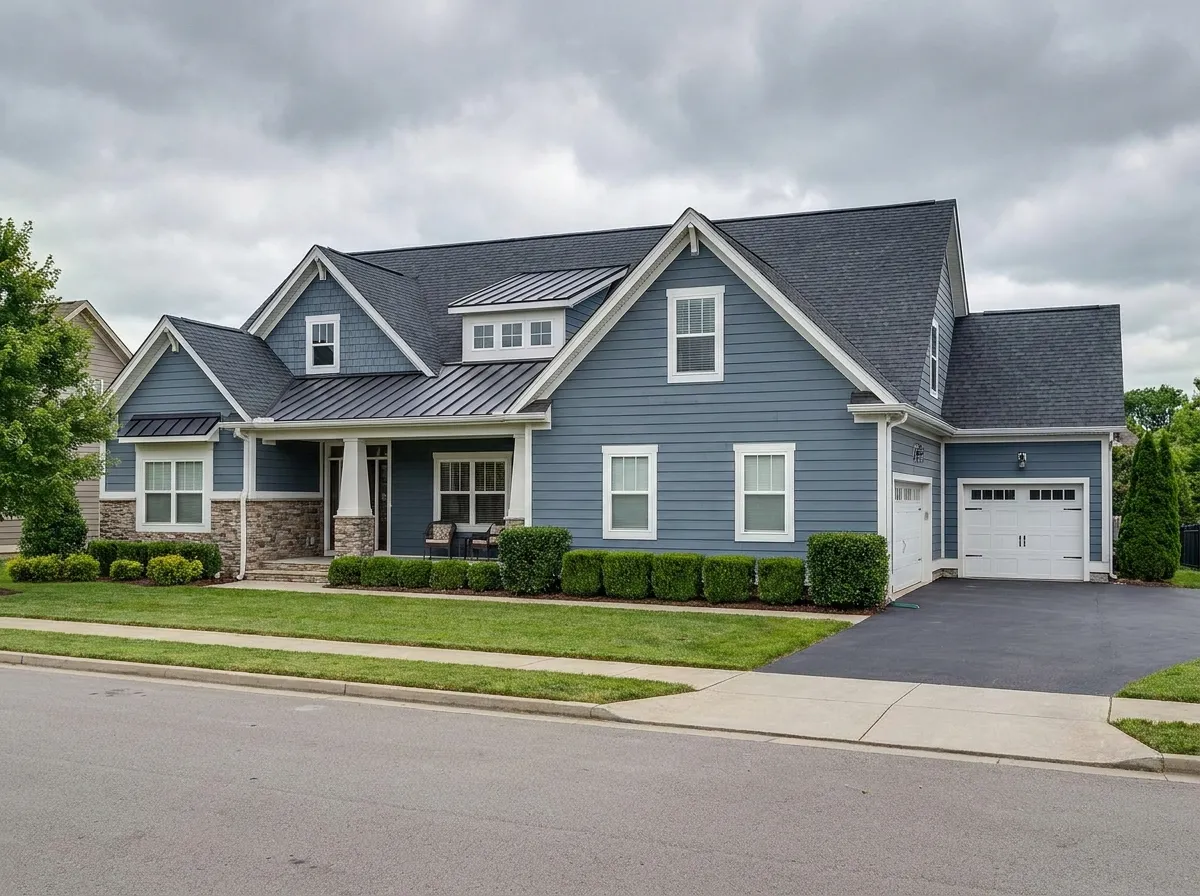
Material choice usually comes down to how long you are staying. Quality vinyl typically lasts 20 to 40 years and James Hardie fiber cement 30 to 50 years when installed to specification. Under five years in the house, vinyl. Ten years or a forever home, fiber cement usually wins on total cost of ownership. Fiber cement on the street-facing elevations with vinyl elsewhere is a common and legitimate compromise, and we install Everlast composite and Royal and Mastic vinyl as well.
Projects this size are commonly spread out with GreenSky financing, which includes no-interest options if paid in full within 6, 15 or 18 months and fixed-rate terms, with zero down for most approved homeowners, subject to credit approval.
Siding is covered in writing under The Patriot's Promise — 30-year material and labor coverage, with $2M insurance on every job.
What is the next step?
Have the walls looked at before you decide anything about method. At a free in-home estimate the estimator walks every elevation, presses the walls, checks the trim, soffit and fascia, and gives you one itemized price with the material and the full scope spelled out. There is no trip charge inside our service area.
When you want a straight answer about your own house, request a free estimate or call (423) 830-7138.